
Note: This website was automatically translated, so some terms or nuances may not be completely accurate.
 Dentsu Inc. and the Fun Nature Positives [3/3]
Where Do Companies Start? Two “DOs” Revealed at the Global Nature Positive Summit 2026
*We would like to express our heartfelt sympathy to all those affected by the recent earthquakes centered in Kumamoto Prefecture. We pray that a peaceful daily life will return as soon as possible.
Changes in nature caused by climate change could result in sales losses of up to 50 billion yen for the coffee industry.
Such concerns are beginning to be voiced by Japanese companies as well.
The loss of nature is leading to a loss of corporate value— reflecting this growing sense of crisis, Dentsu Inc. has seen an increase in consultations regarding how to link “enhancing corporate value” with “activities aimed at nature restoration.” For example, the scope of these consultations is expanding year by year, extending beyond the formulation of environmental policies and information disclosure to include business integration, action development, consumer experiences, and the creation of corporate narratives.
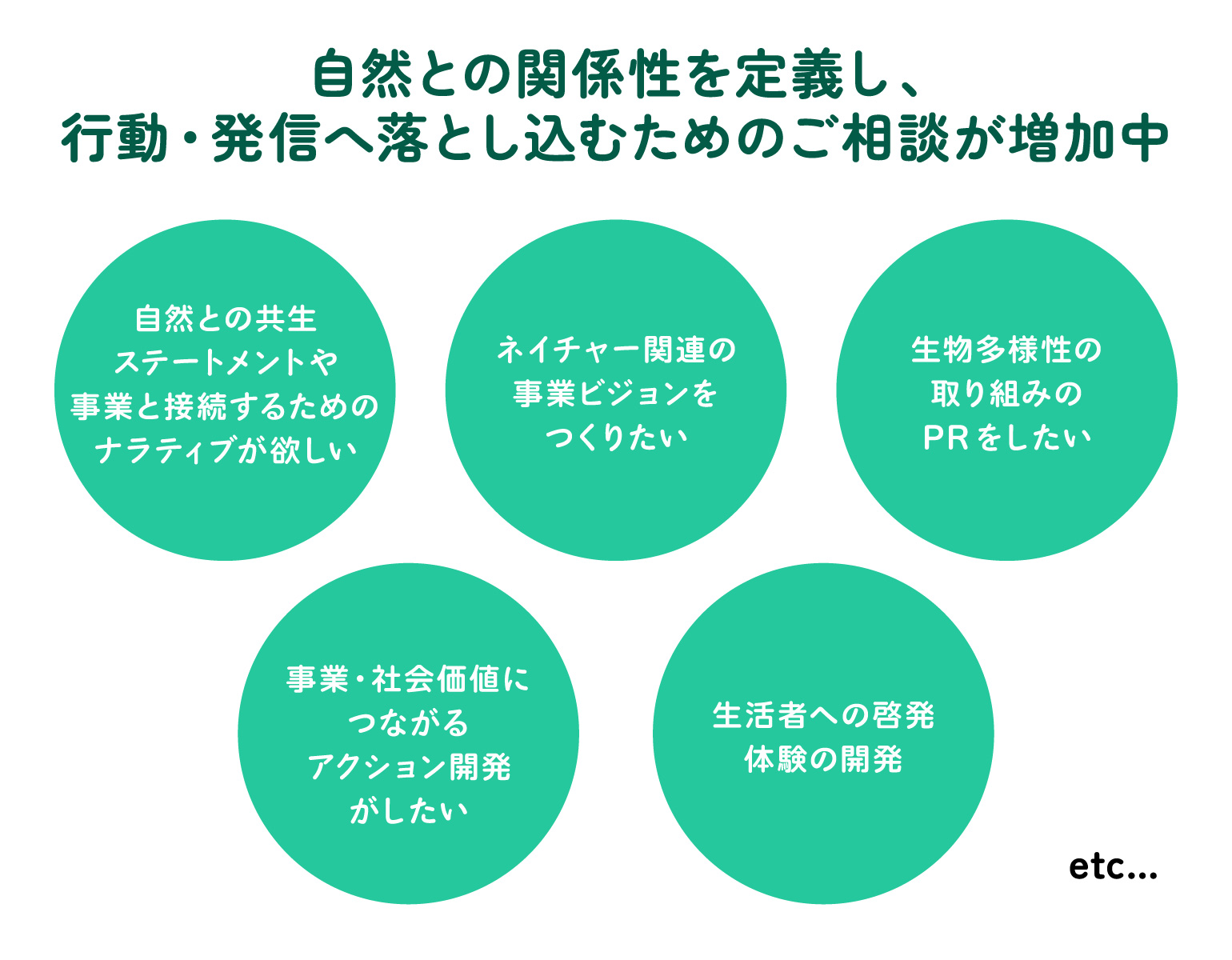
Underlying this trend is the fact that “nature positive” (nature restoration) is shifting from being a “theme addressed by the environmental department” to a “theme prompting companies to reexamine their own businesses.”
This shift was clearly evident at the “Global Nature Positive Summit 2026” (hereinafter GNPS), held in Kumamoto on July 14 and 15, 2026. Companies and NGOs from around the world gathered to discuss not only risks related to nature but also how companies should act through their business operations; Dentsu Inc. also took the stage and participated in an official side event.
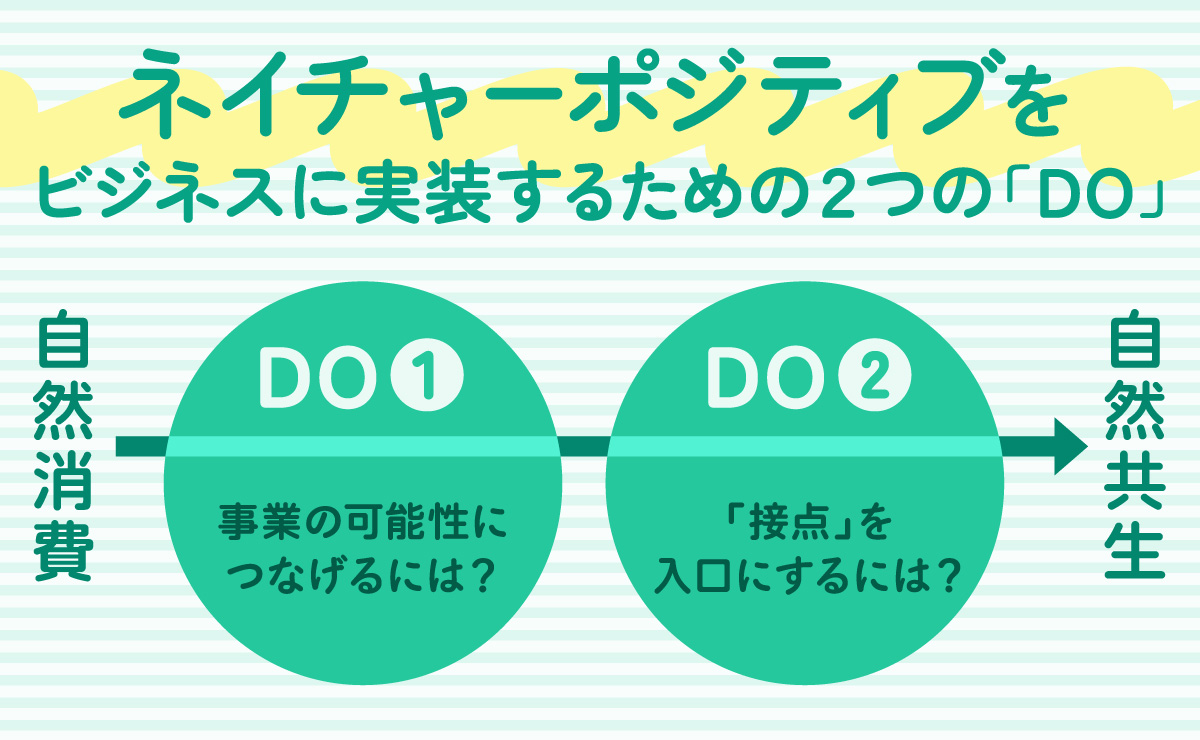
Yurika Mori of Dentsu Inc.’s Sustainability Consulting Office, who authored this article, was strongly struck by the realization that, through the GNPS , “Nature Positive” has shifted from the “CARE” stage—focusing on “being considerate of nature”—to the “DO” stage, where the focus is on “how to act within business operations.” In this article, we explore the insights that emerged from the GNPS.With the 17th Conference of the Parties to the Convention on Biological Diversity (COP17) just around the corner, we encourage you to read this article!
So, where should companies start?
Below, we’ll explain two “DO” actions that emerged from the summit discussions, one by one.
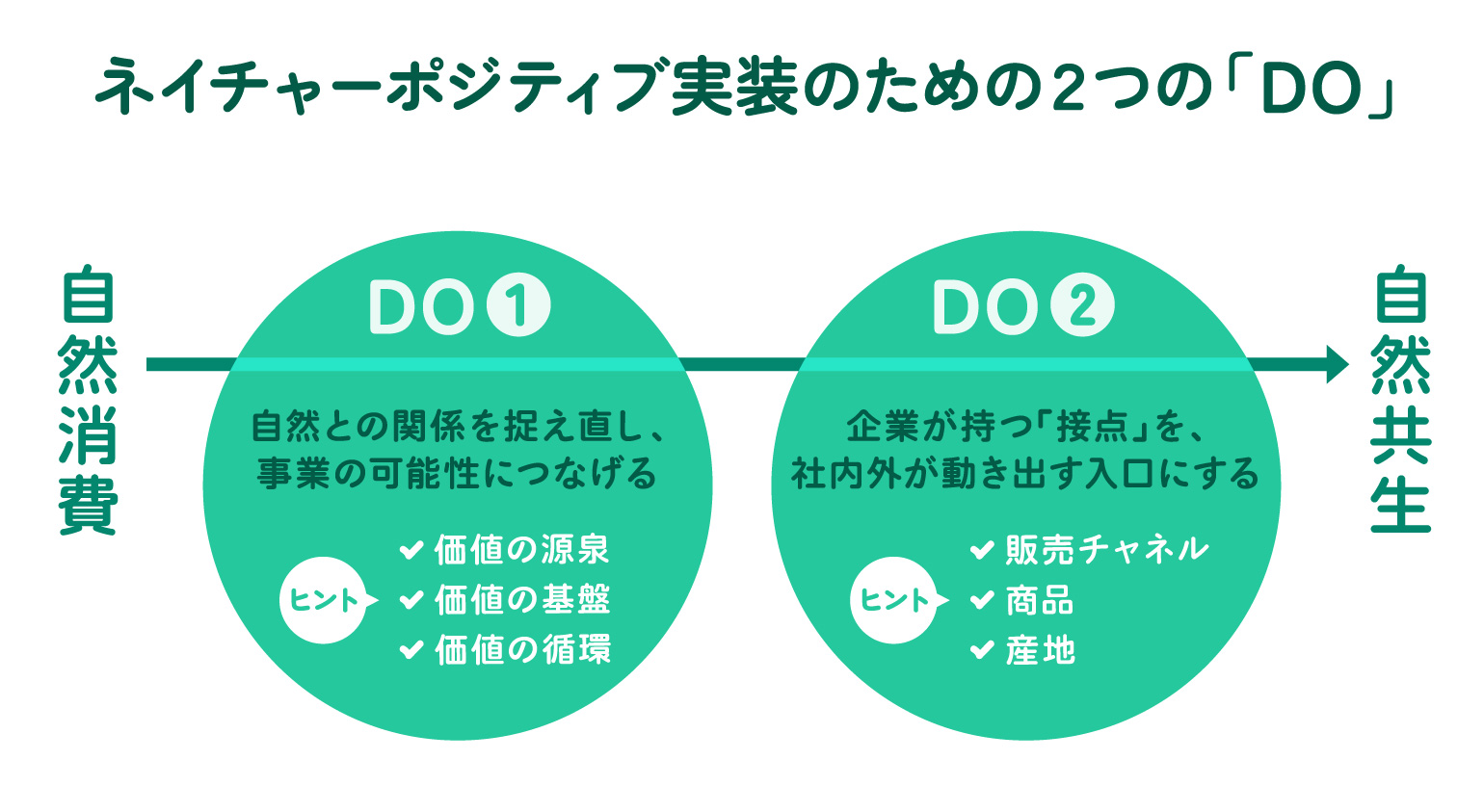
<Table of Contents>
▼DO① Reframe our relationship with nature and connectitto business opportunities
▼DO② Turn a company’s “points of contact” into entry points for action both inside and outside the organization
▼Make communication the “entry point” where initiatives take off
▼Transform “Nature Positive” into a “DO” that reflects your company’s unique identity
DO① Reframe Our Relationship with Nature and Turn It into Business Opportunities
Nature-positive is no longer just a topic about whether or not you’re “aware” of it. What struck me most at GNPS was not so much the call to “halt nature loss and reverse it onto a path to recovery,” but rather the movement beyond that—the drive to “discover business opportunities” in the process.
Indicators that serve as guidelines for integrating this into business operations are also gradually taking shape. Biodiversity, unlike CO₂, is difficult to express with specific numerical values. Precisely for this reason, participants shared an implementation mindset focused on setting goals, taking action, and making improvements while monitoring progress—rather than waiting until it can be measured perfectly.
*State of Nature (SON) Indicators
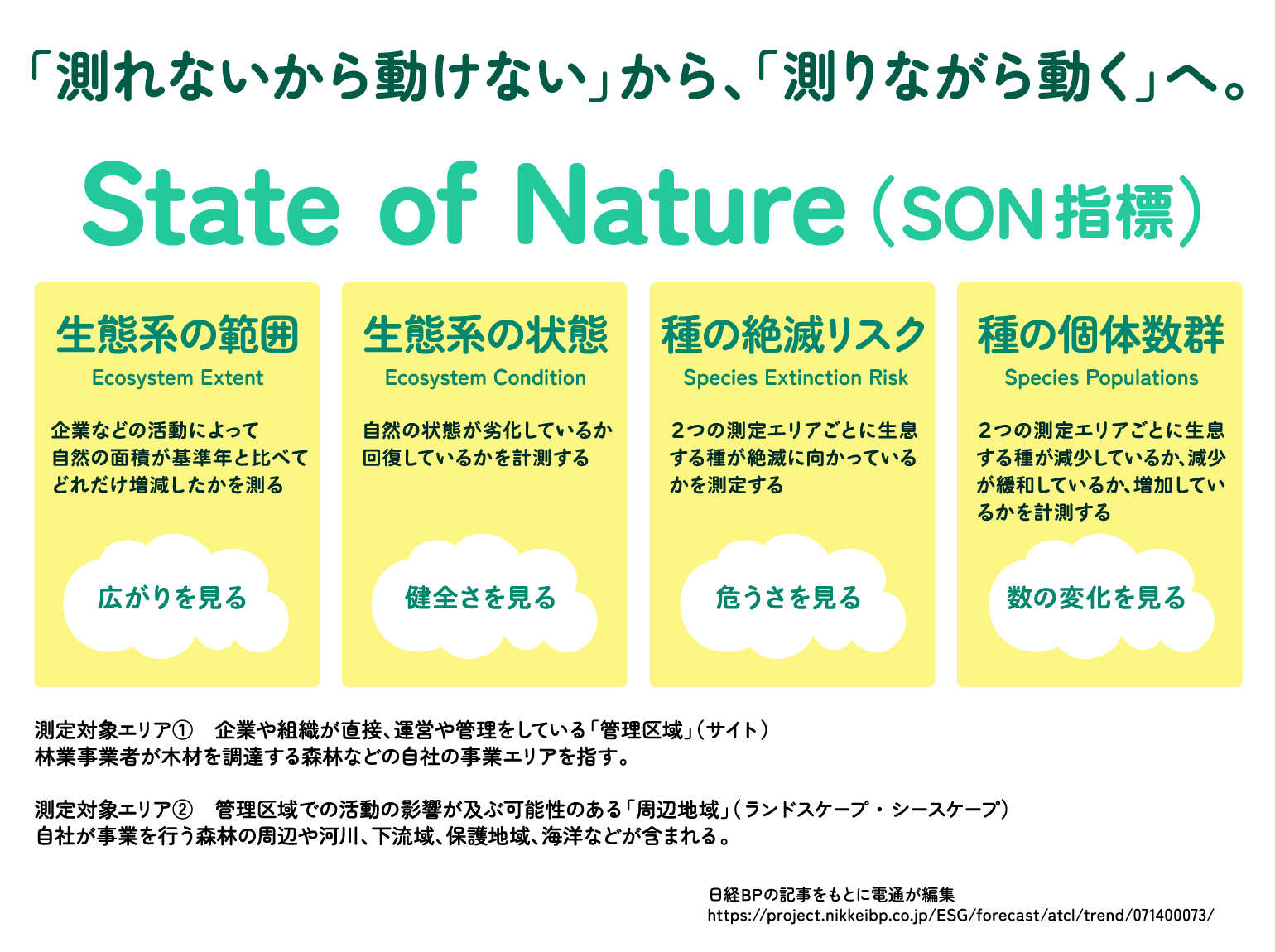
Nature Positive aims to halt the loss of nature and reverse the trend toward restoration . Efforts to achieve this go beyond nature conservation activities . It is also a business theme that involves reframing nature—not merely as a business risk but as a source of new value—and integrating it into corporate decision-making.
So, where should we begin when considering the relationship between our own business and nature? Looking back on the various discussions at GNPS, three perspectives emerge.
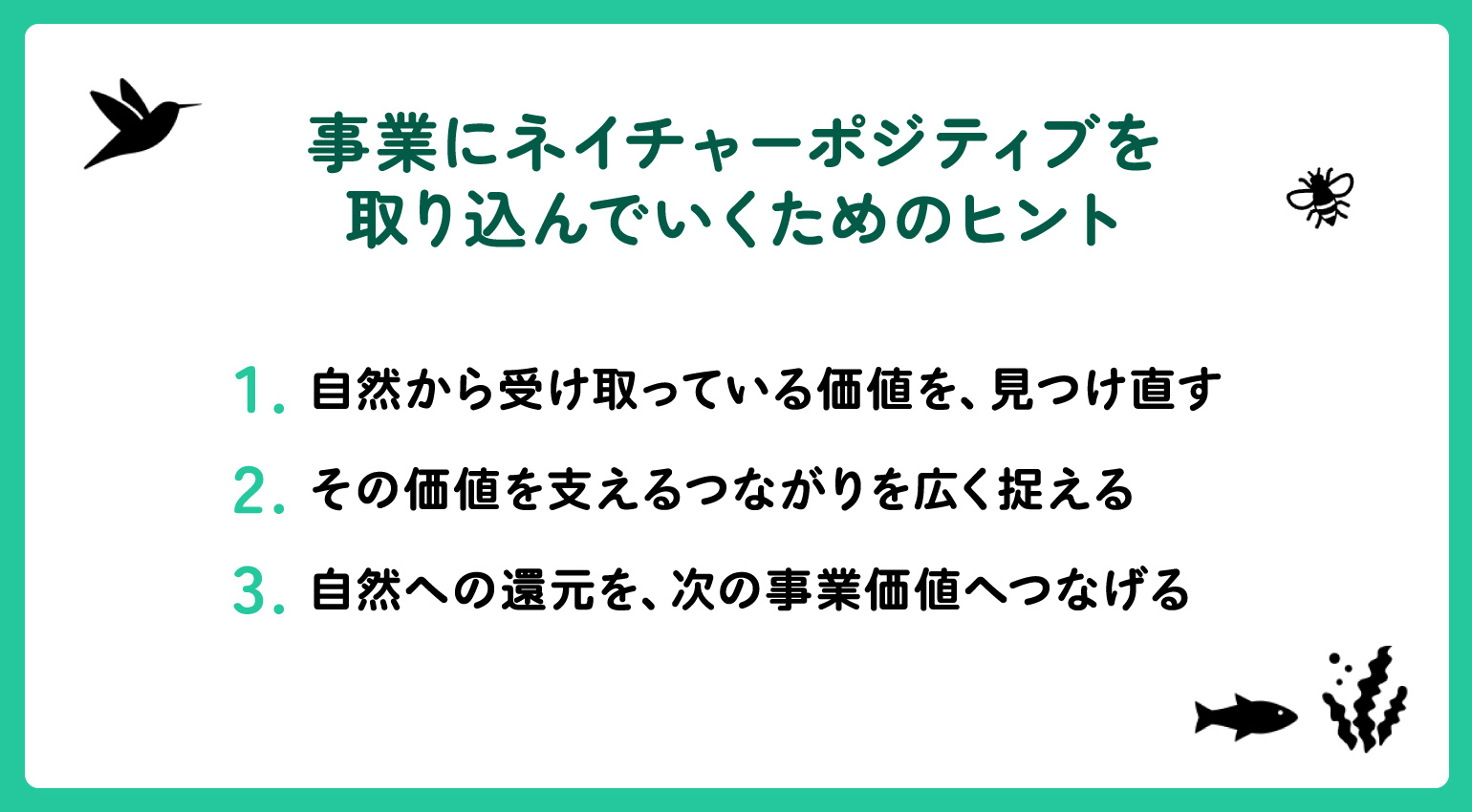
1. Rediscovering the Value We Receive from Nature [Source of Value]
Water, soil, topography, and diverse ecosystems—many businesses are supported by nature. However, in day-to-day business operations, these elements are typically viewed solely as outcomes—such as quality or stable supply—and we rarely turn our attention to nature itself, the very source of that value.
Therefore, we should pause and ask ourselves , “From what aspects of nature do our company’s unique quality and value originate? ”
When we view nature not merely as a “resource” that supports raw material production, but as a “source of value,” our unique strengths and stories become clear.
2. Broadly Understanding the Connections That Support That Value [The Foundation of Value]
Nature does not exist in isolation within a company’s own land. Take a single farm field, for example: it is connected to upstream water sources and forests, surrounding farmland and villages, and downstream rivers and the ocean—all of which are home to living creatures. Events occurring in other places, beyond the boundaries of government or industry, can eventually come full circle to affect the local ecosystem and business operations.
The key question here is : “What natural connections and regional challenges extend beyond the areas where our company is directly involved?”
By broadening our perspective to include not only our immediate business sites but also the ecosystems and local communities that support their value, we can identify challenges that our company alone could not fully grasp, as well as opportunities to collaborate with local communities, government agencies, and business partners.
3. Linking Giving Back to Nature to Future Business Value: [The Cycle of Value]
Restoring nature and business operations—it’s not uncommon for these two to be difficult to balance. On the other hand, enriching nature can lead to improved product quality and stable procurement, deepen relationships with local communities, and create new experiences and services.
Therefore, we should ask ourselves : “Can we simultaneously achieve the enrichment of nature and the enhancement of business value?”
Of course, this is a difficult challenge. However, it would be a waste to rethink our relationship with nature solely for the sake of disclosure. Isn’t it precisely those business units whose operations are inextricably linked to natural capital that have the greatest potential to transform that relationship into new value creation?
However, these possibilities are meaningless if they remain mere concepts. When pursuing a nature-positive approach within business operations, it is essential to work together with a wide range of stakeholders, including employees, business partners, consumers, and local communities. The key lies in the “points of contact” that companies already possess.
DO② Turn a company’s “points of contact” into entry points for action both inside and outside the organization
The “points of contact” referred to here are not limited to advertising or retail stores. They also include products, relationships with suppliers and production regions, dialogue with business partners, and community activities.
In the various initiatives featured in GNPS, companies reinterpreted the significance of these existing touchpoints to expand them into activities where employees, consumers, and local communities could participate, or to differentiate themselves in terms of value and quality.
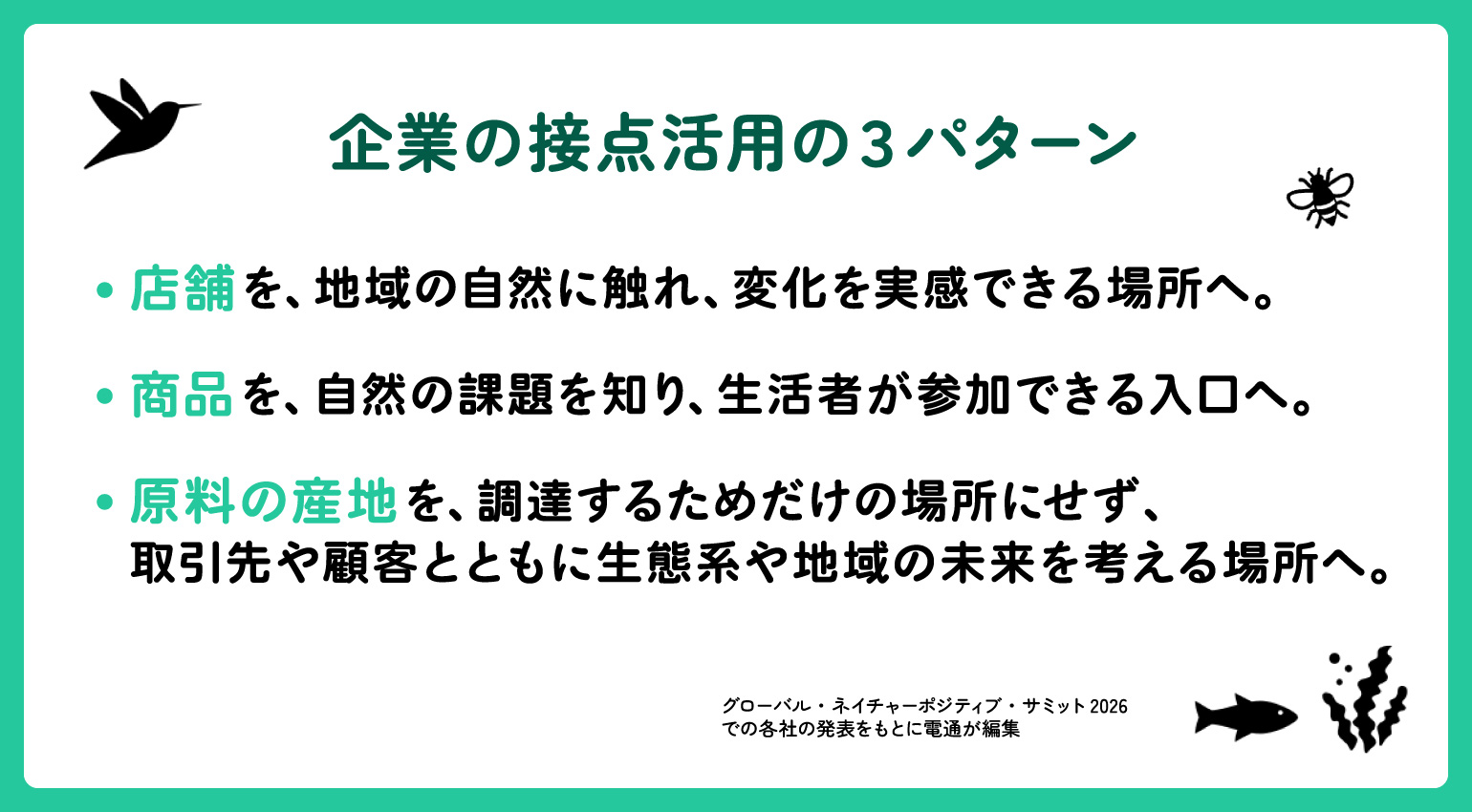
However, simply having a point of contact does not necessarily mean people will take action. What matters is how existing points of contact are transformed into value and experiences—and how the relationship with nature is communicated through them.
These questions were the focus of a discussion at the official GNPS side event organized by the biodiversity media organization ROOTs (*1), featuring panelists from TV Tokyo, CLASS EARTH, and Dentsu Inc. As participants from the distinct fields of media, education, and corporate public relations and advertising engaged in the discussion, ROOTs’ concept of the “information environment” served as a key framework.
*1 ROOTs = General Incorporated Association Rooting Our Own Tomorrows. With the mission of “connecting the future of people and living things through the power of media,” ROOTs researches and visualizes the relationship between media and biodiversity, formulates media guidelines for covering living things, and provides support (such as supervision) during production.
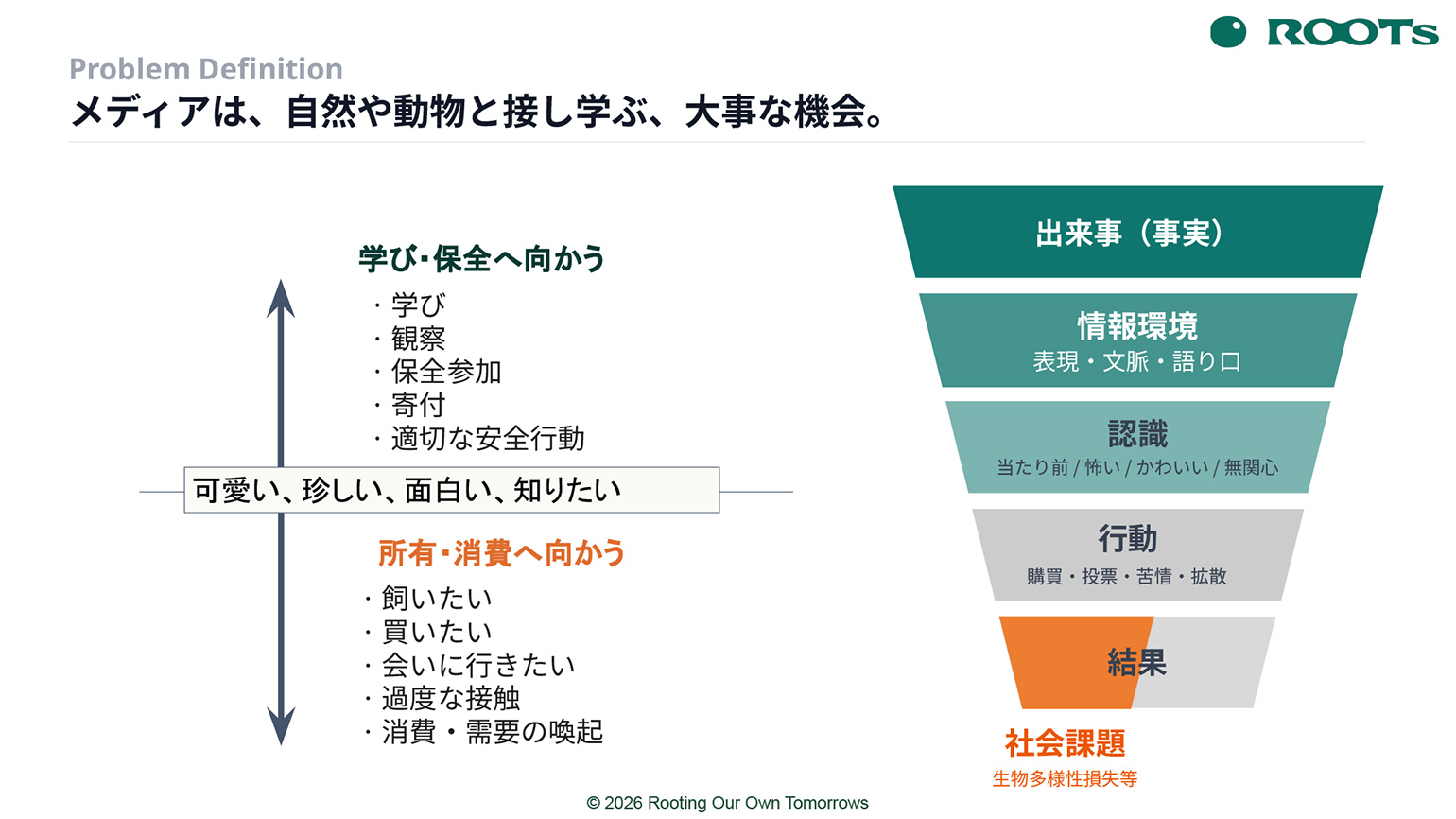
As the diagram above shows, even the same interests—such as “cute,” “rare,” “interesting,” or “I want to know more”—can lead either to learning and conservation or to ownership and consumption, depending on how they are communicated. The “information environment”—that is, what aspects are highlighted and how they are conveyed through language, visuals, and context—is the crossroads that determines this path . How a business handles nature across its various touchpoints influences the perceptions and behaviors of employees, customers, and business partners.
So, how can we create information that leads to the desired actions and decisions, both inside and outside the company?
Make Communication the “Entry Point” Where Initiatives Begin
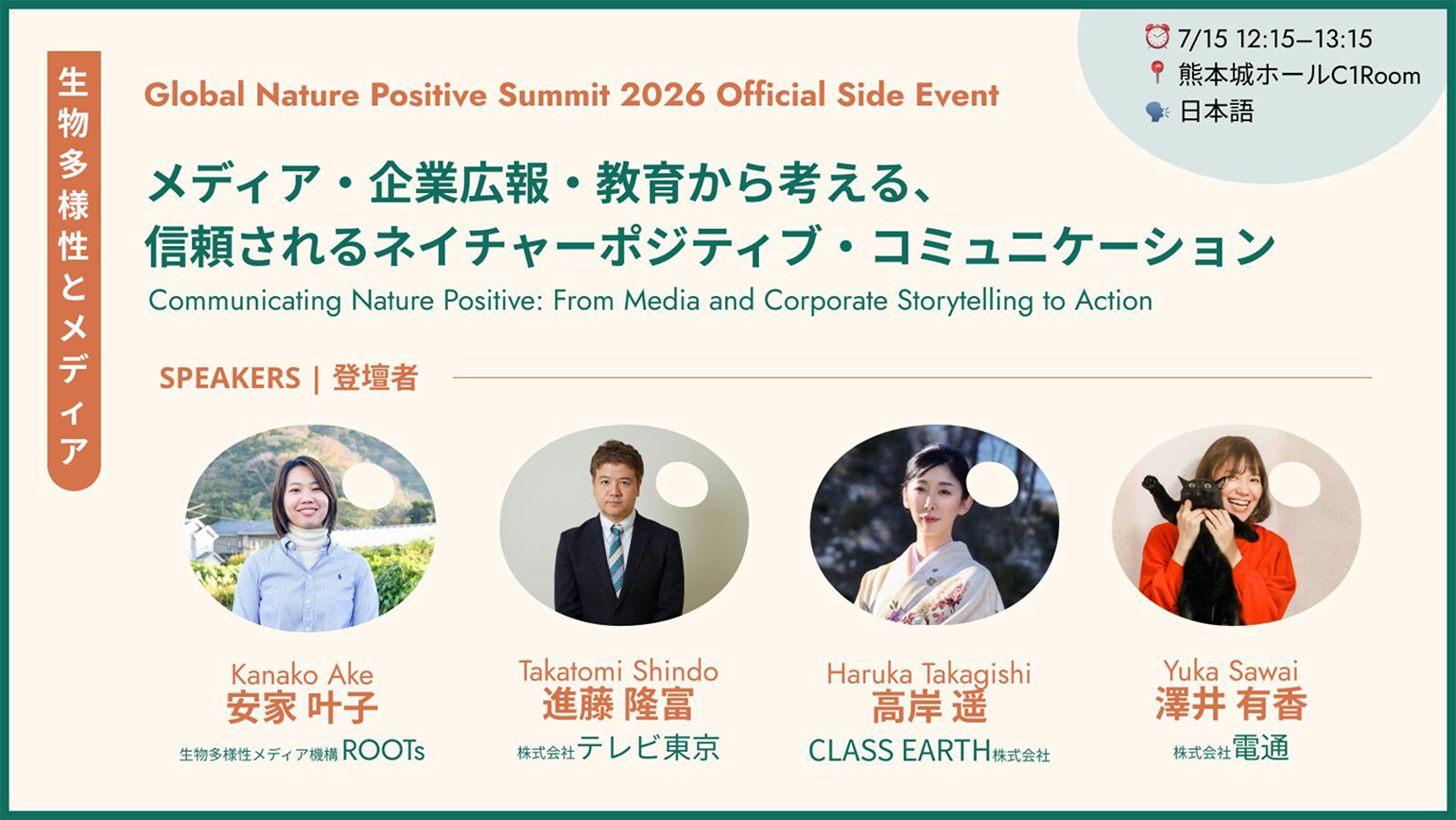
Yuka Sawai of Dentsu Inc., speaking at the event, began by sharing the reality that “simply conveying information accurately is not enough to move people to action.” For example, while awareness of the term “biodiversity” reaches about 80 percent even in Japan, only about 20 percent of people express interest in endangered species or ecosystem collapse ( click here for details ).
This disconnect isn’t limited to the general public. The same phenomenon occurs with other departments within the company and with business partners . Simply presenting data or policies isn’t enough to spur action. People are only motivated when they see how an issue relates to their own work and personal lives.
On the other hand, a survey focusing on college students found that about 60 percent reported that their relationships with friends and family had deepened through experiences in nature ( click here for details). Reframing nature not merely as a “crisis or obligation,” but as a “means of enriching human experiences and relationships” can also serve as a gateway to sparking interest.
Based on these insights, we have summarized three key points for translating this understanding into action both inside and outside the company.
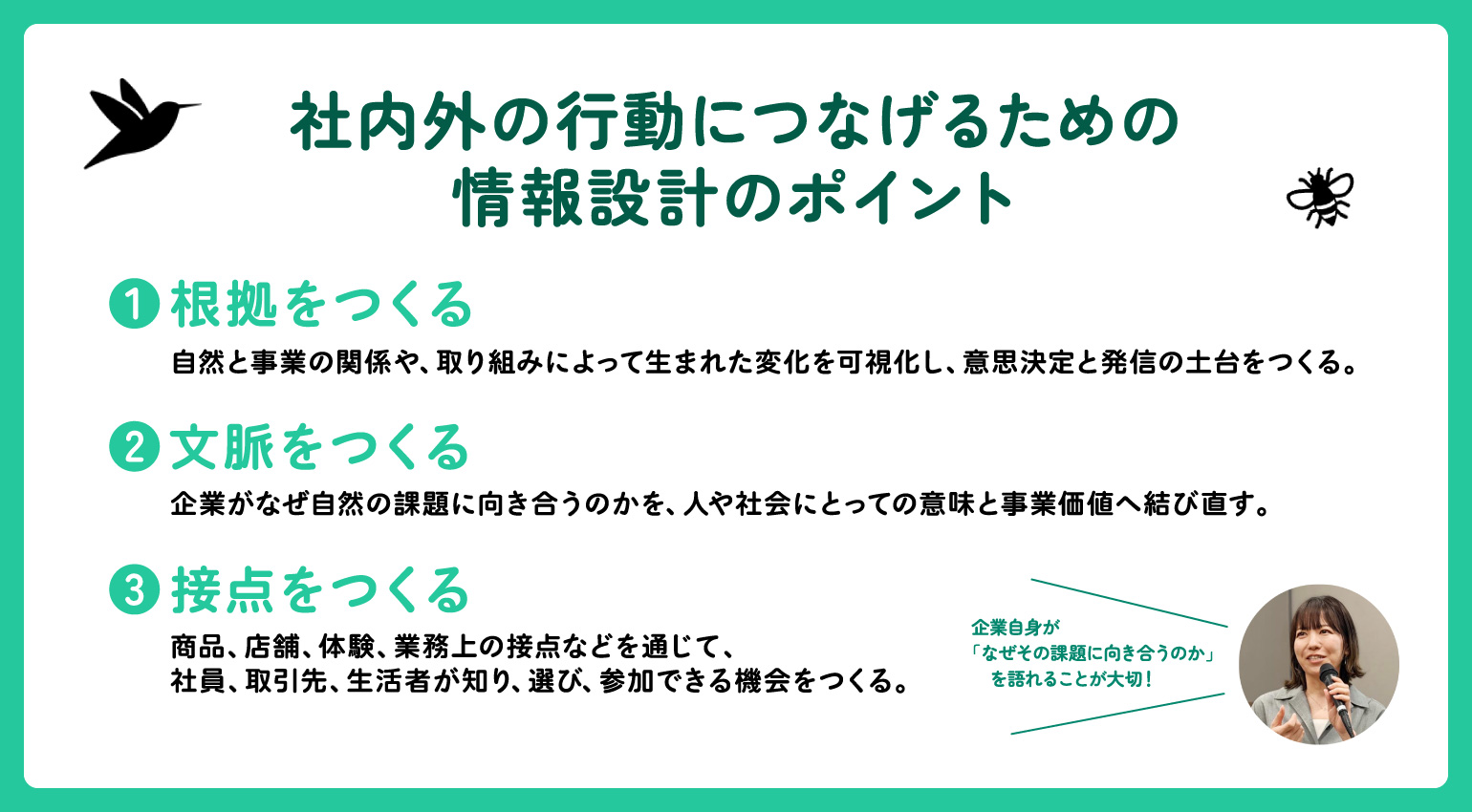
Simply presenting the results of an initiative may leave it feeling distant for both consumers and employees . When crafting a narrative, it is important to start with the question “Why are we addressing this issue?” rather than selecting only the most appealing parts of the story.
At the same time, we must be mindful of the visuals and language we use. Why are we using a particular photo of a forest or a living creature? How does it connect to our business or initiatives? Avoiding vague imagery and ensuring the company itself can provide a solid, evidence-based explanation is key not only to building trust but also to avoiding greenwashing.
Communication is not merely an “outlet” for announcing completed activities. It also serves as an “entry point” that opens up the relationship between the company and nature to society, fostering new values and ways of engaging among employees, business partners, and consumers.
Transforming Nature Positive into Your Company’s Unique “DO”
What I realized through GNPS is that when “Nature Positive” is considered as an integral part of business operations, it naturally leads to concrete actions.
What kind of nature supports our company?
What business opportunities lie there?
And with whom, and through what points of contact, will you begin to take action?
The answers to these questions vary from company to company. That’s precisely why we encourage you to consult with us even at the early stages, before your questions or direction have been fully defined. We’ll work with you to unravel the relationship between nature and your business and chart a path toward a “DO” that’s uniquely yours.
[Contact Information]
Dentsu Inc. Sustainability Consulting Office sus.consult@dentsu.co.jp
Dentsu Inc. Sustainability Consulting Office is a value-creation group that views sustainability as a prerequisite for growth and redefines corporate value through points of connection with society. Starting from the values and aspirations within a company, we support the enhancement of corporate value over the medium to long term by reconnecting these to themes and activities that garner high expectations from society.
Was this article helpful?
Share this article


Newsletter registration is here
We select and publish important news every day
For inquiries about this article
Back Numbers

Author

Yurika Mori
Dentsu Inc.
Sustainability Consulting Office
Creative Writer/Planner

Yuka Sawai
Dentsu Inc.
Sustainability Consulting Office
生物多様性チームリーダー/PRプランナー