Note: This website was automatically translated, so some terms or nuances may not be completely accurate.
 Global Sentiments and Japanese Identity: Japan Brand Survey 2023 [1/2]
Is Japan’s Soft Power the Driving Force Behind the Inbound Tourism Recovery? The Latest Trends in Travel Demand to Japan and Directions for Promotion
More than a year has passed since October 2022, when border controls related to the novel coronavirus were significantly relaxed. According to figures released by the Japan National Tourism Organization (JNTO) on November 15, the number of international visitors to Japan in October was 2,516,500, representing 100.8% of the figure for the same month in 2019.This marks the first time since the spread of COVID-19 that the figure has exceeded the level for the same month in 2019, indicating that inbound tourism to Japan has recovered to pre-pandemic levels.
While the weak yen has certainly played a role, the increase in visitors from Southeast Asia—particularly Singapore—as well as from the Americas, Europe, and Australia, including the United States and Germany, appears to be a key factor behind this strong performance. Will this momentum continue? What kind of people will be visiting Japan in the future? Based on the results of the “Dentsu Inc. Japan Brand Survey” ( click here for details ), I would like to explore the future of inbound tourism in Japan.
<Table of Contents>
▼ Japan is the No. 1 destination people want to visit next, but there are differences by country and region. Repeat visitors hold the key to continued growth
▼ As the impact of COVID-19 fades, “experiences unique to Japan” are gaining popularity. The regions repeat visitors are targeting next are “Hokkaido” and “Kyushu”
▼ Was Japan’s “soft power” behind the recovery of inbound tourism? Japan enthusiasts arriving through diverse channels are experiencing the Japan they love
Japan is the No. 1 destination people want to visit next, but there are differences by country and region. Repeat visitors hold the key to continued growth
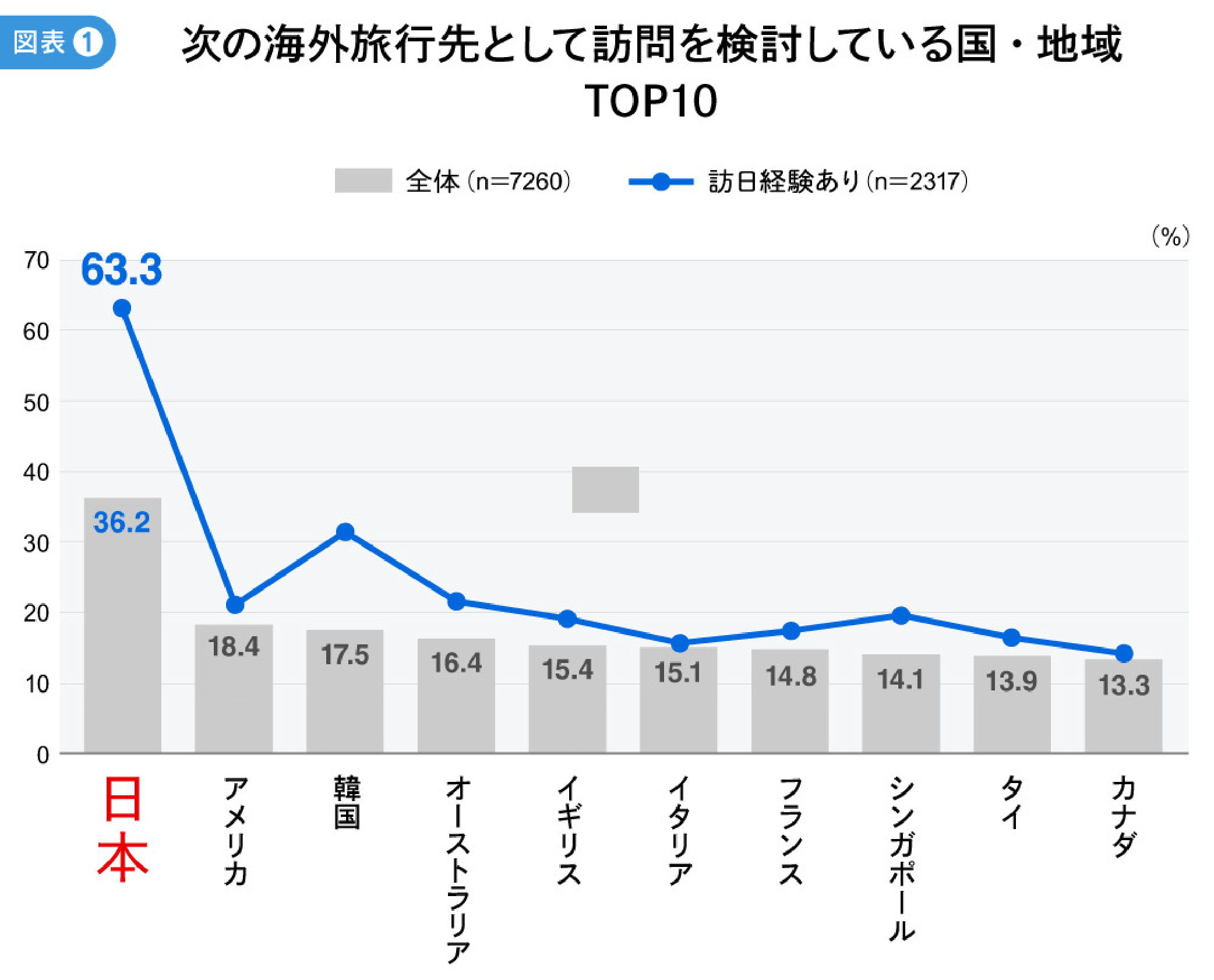
When asked specifically which countries or regions they are considering for their next overseas trip, Japan took the top spot, far outpacing the United States, which came in second. Notably, scores were particularly high among those who have previously visited Japan (Chart 1).
On the other hand, when examining Japan’s ranking by country and region, it ranks fourth in the United States, and there are several countries in Europe where it has not made it into the top five (Chart 2). This indicates that while Japan is recognized as a “destination people would like to visit in the future” (2022 survey), there are still not many people who are specifically considering it as their “next travel destination.”
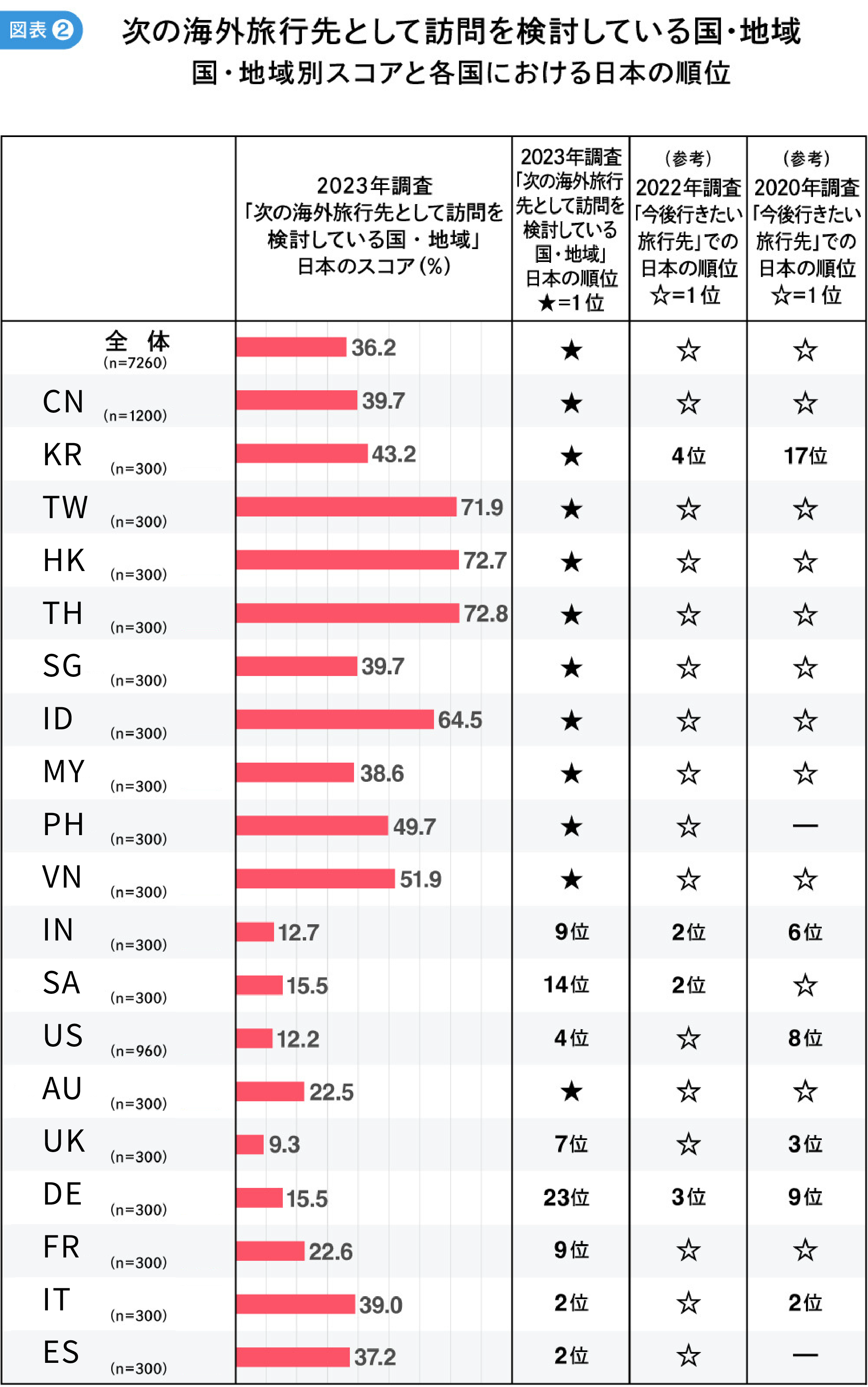
For Japan’s inbound tourism to continue growing in the future, the key challenge will be to encourage people who vaguely “want to go” to take concrete action—specifically, to encourage those who have previously visited Japan and are likely to travel again to return, thereby cultivating them as repeat visitors.
As the impact of COVID-19 wanes, “experiences unique to Japan” are gaining popularity. The regions repeat visitors are targeting next are “Hokkaido” and “Kyushu.”
When we asked respondents again this year about “things they want to do in Japan,” there were changes in the top-ranked items. In the previous survey results, “nature”-related experiences—which had seen heightened interest due to the COVID-19 pandemic—dominated the top ranks and scored significantly higher than other categories.
In this survey, while “nature”-related experiences remain in the top 10, their scores and rankings have dropped. In their place, “theme parks” have risen in the rankings, and experiences such as “staying at a traditional Japanese ryokan” and “food”-related activities have newly entered the rankings (Chart 3).
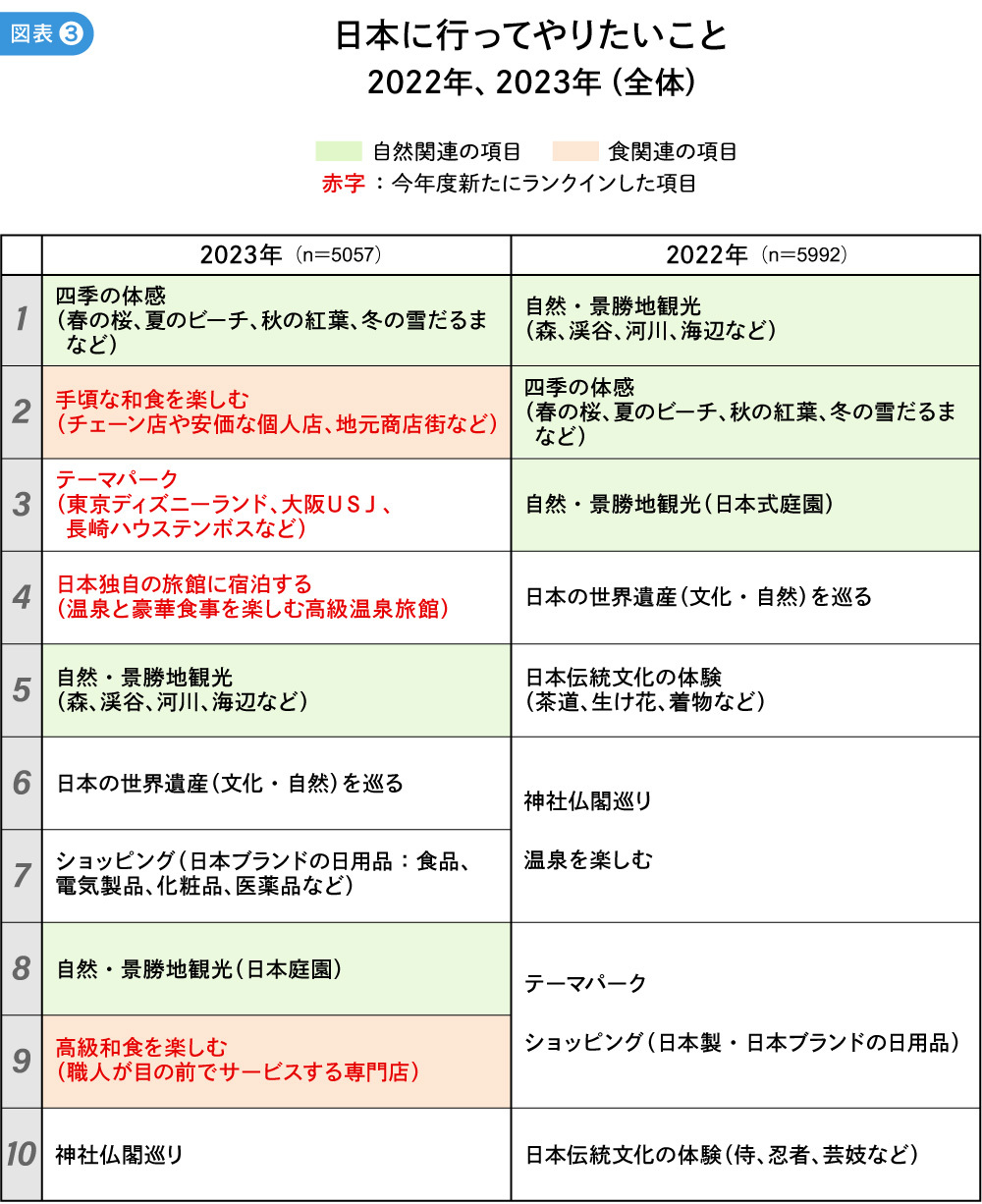
Looking at the results for those who have visited Japan in response to the same question, while the top-ranked items remain unchanged, “nature”-related experiences appear among those with higher scores compared to the overall results, while “food” and “hot spring”-related experiences stand out (Chart ④).
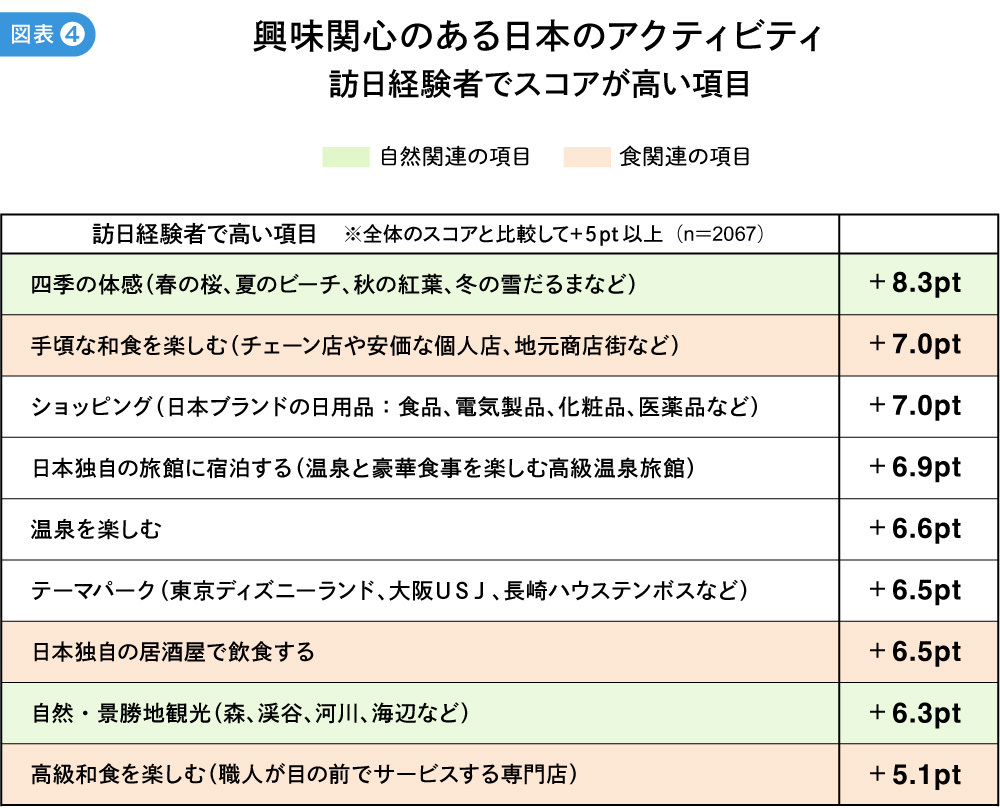
“Food” and “hot springs” are classic activities for travel to Japan that consistently ranked highly before the pandemic. Based on these results, it appears that demand for travel to Japan has returned to pre-pandemic levels, and “experiences unique to Japan”—such as “theme parks” and “izakaya”—that appeal to travelers are becoming even more diverse.As overseas travel is once again becoming the norm and the impact of COVID-19 fades, it appears that there is a growing trend toward seeking “experiences unique to that region”—regardless of whether they are nature-related or not.
So, where exactly in Japan are international visitors heading? The top “prefectures people want to visit” remain “Tokyo,” “Hokkaido,” “Osaka,” “Kyoto,” and “Okinawa,” but when looking at the preferences of those who have previously visited Japan, we see that “Hokkaido” and the “Kyushu region” in particular have higher scores.
A closer look reveals that, in addition to high scores in generally popular areas such as “Hokkaido,” “Okinawa,” and “Kyoto,” scores are also high in “Tohoku” and “Kyushu”—regions visitors have “never visited before”—as well as in “Osaka” and “Nagasaki,” which are “locations with theme parks,” and in “Kanagawa,” “Chiba,” “Saitama,” and “Nara”—places “within easy reach of major cities” (Chart ⑤).
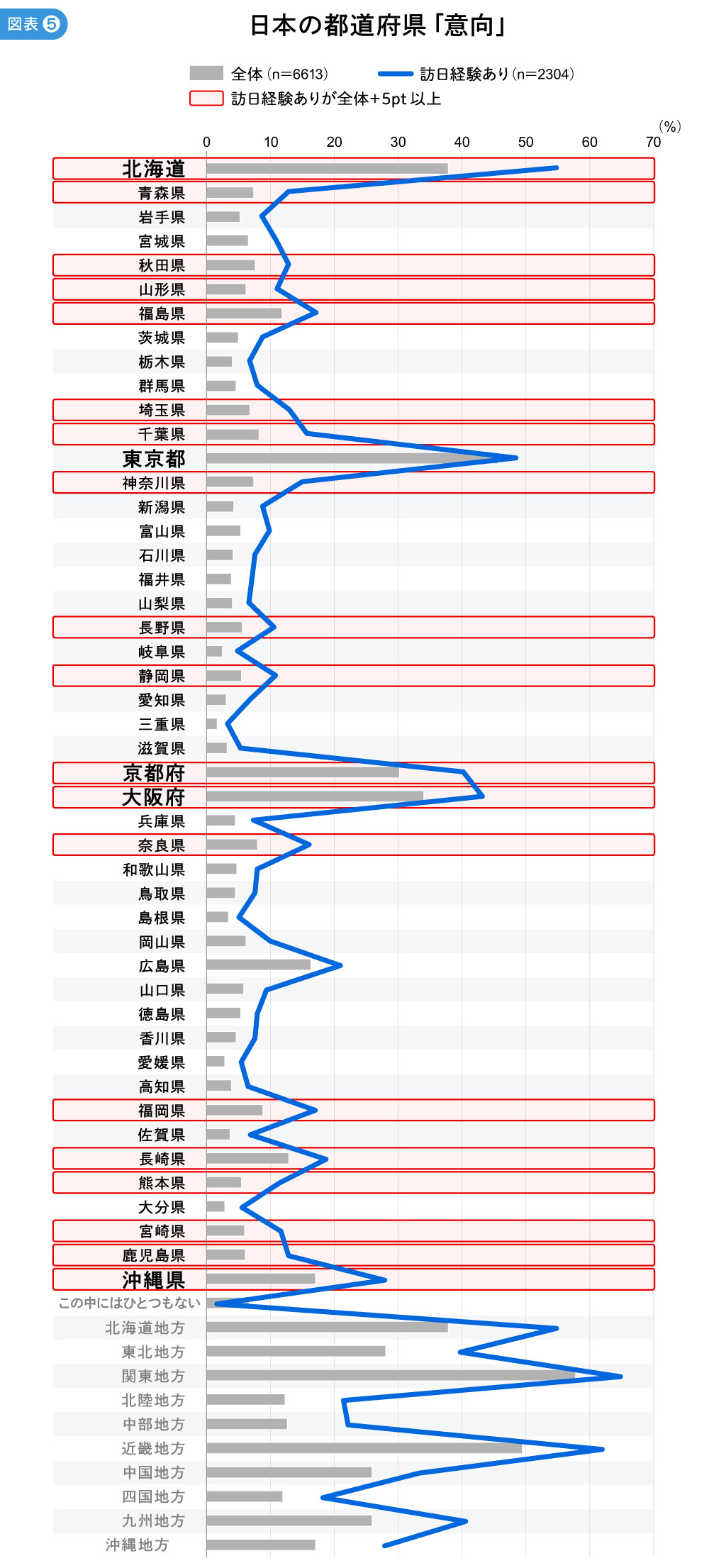
From popular cities like “Tokyo,” “Osaka,” and “Kyoto” to nature-rich areas such as “Hokkaido” and “Okinawa.” Furthermore, repeat visitors tend to explore areas that have not traditionally been frequented by tourists, delving deeper into the aspects of Japan that pique their individual interests. By fostering repeat visitors, we can expect a broader distribution of tourists across diverse regional areas.
Was Japan’s soft power behind the recovery of inbound tourism? Japan fans arriving through diverse entry points experience the Japan they love
What kind of people are “previous visitors to Japan” and “those intending to visit Japan”—that is, repeat visitors or potential repeat visitors? Looking at the impressions of Japan held by “previous visitors to Japan” and “those intending to visit Japan,” we can see that many of them have a high level of favorability toward Japan (Chart 6).
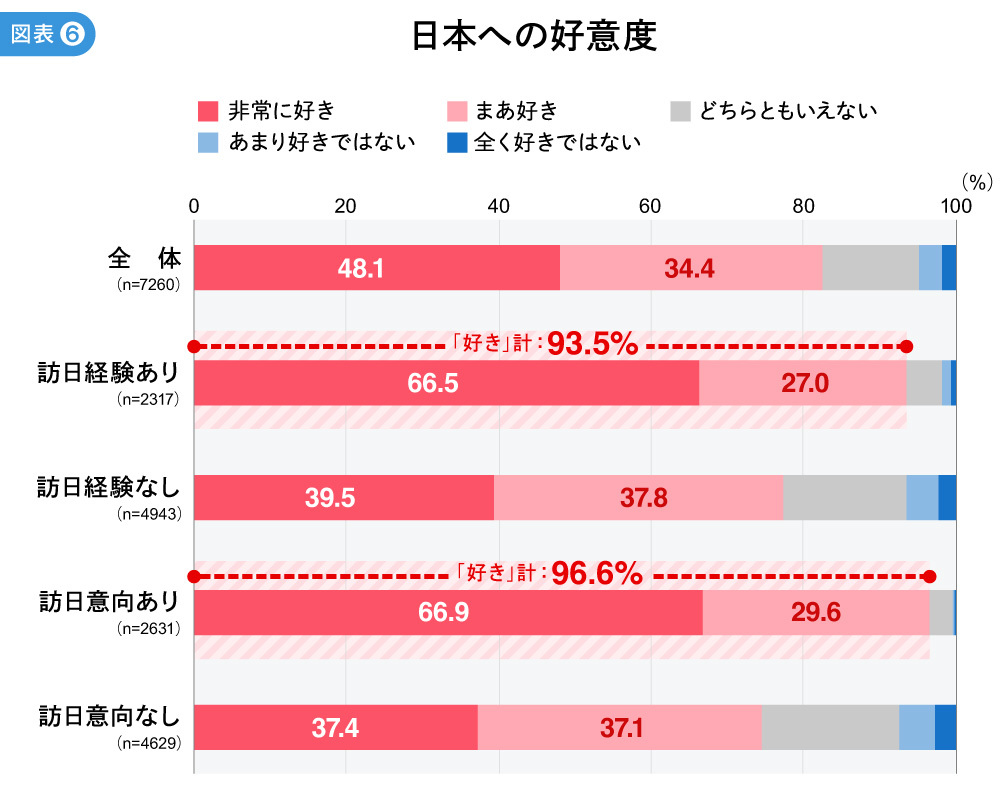
In a 2019 article, I wrote that “people who like Japan are often those who have visited the country before,” and the results of this survey confirm a similar trend.While favorability toward Japan tends to be particularly high in Southeast Asian countries and regions, compared to pre-COVID levels, it has also increased in non-Asian countries such as the United States, the United Kingdom, and Australia (compared to the 2019 survey, the combined score for “like it very much” and “like it somewhat” rose by 5.1 points in the U.S., 9.5 points in Australia, and the score for “like it very much” alone increased by 7.8 points in the U.K.).
As mentioned at the beginning, the number of travelers from Southeast Asia and North America is on the rise, and this growing favorability may be one of the factors driving the number of visitors to Japan to levels approaching pre-pandemic levels.
Furthermore, it has been found that people who like Japan not only have experience visiting the country but also eat Japanese cuisine more frequently (Chart 7) and are more likely to have purchased Japanese products (Chart 8). This trend is even more pronounced among those who have actually visited Japan.
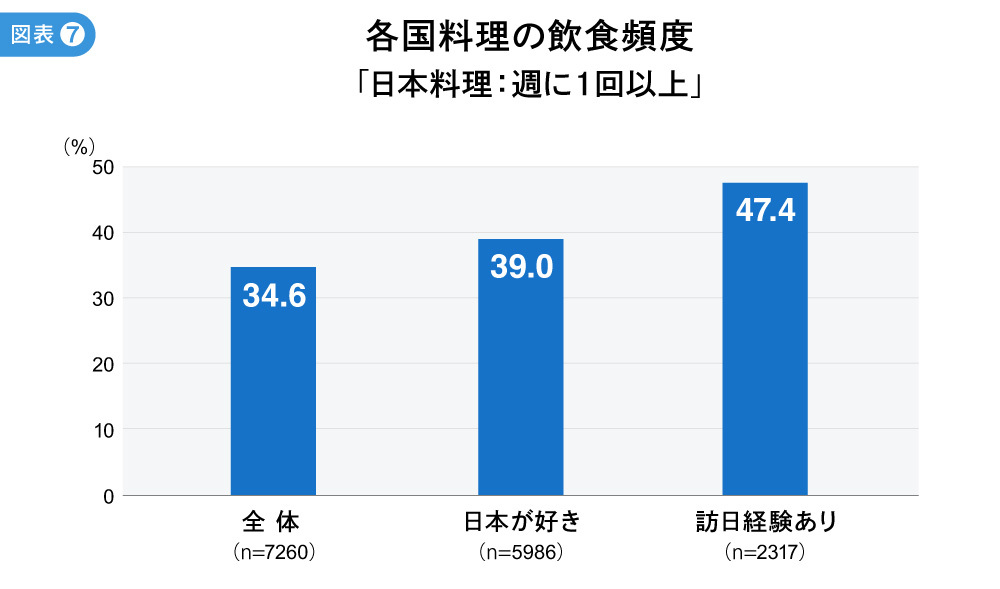
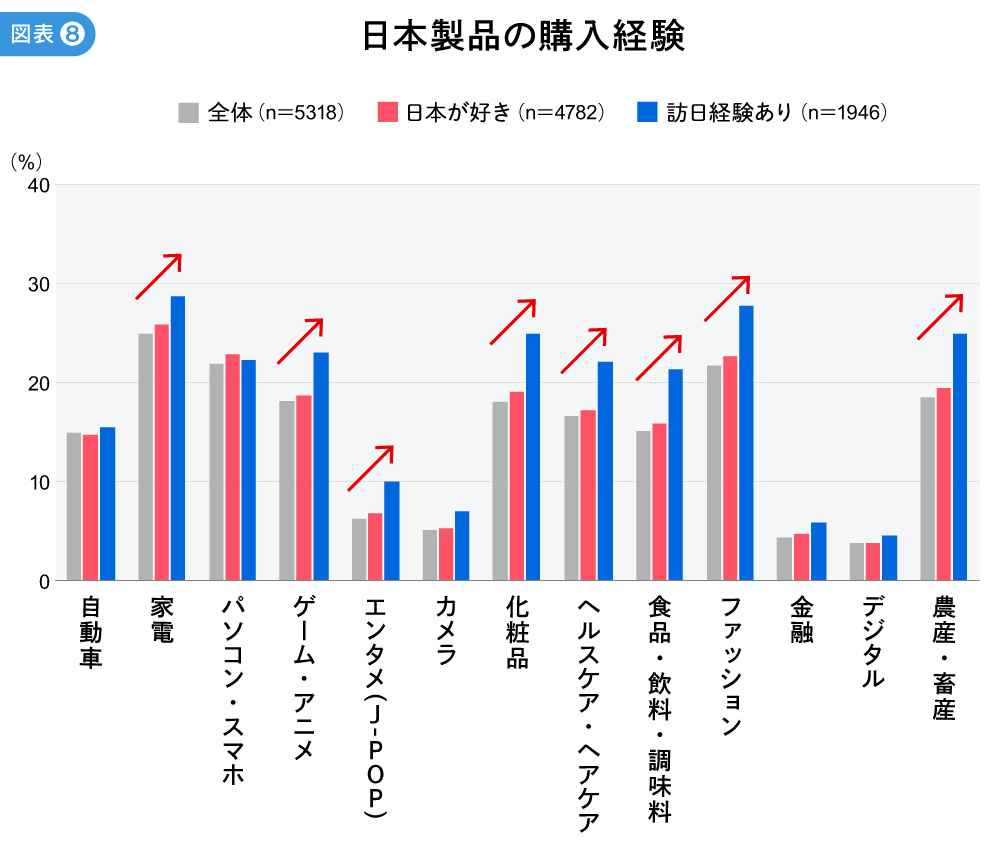
In the aforementioned results regarding “Things I Want to Do When I Visit Japan,” “food” and “shopping” also rank among the top choices. People come to like Japan through various entry points—such as food, products, and content—then visit the country to experience their favorite activities firsthand and purchase the items they love. It appears that Japan’s soft power—including its culture and values—serves as the catalyst for visits to Japan and is driving the recovery of inbound tourism.
Furthermore, once visitors arrive in Japan, they discover new aspects of the country’s appeal and seek out different kinds of enjoyment. This virtuous cycle likely contributes to fostering repeat visitors to Japan and, in turn, expanding business opportunities related to the country.
In future promotional efforts for inbound tourism, planning that takes into account perspectives beyond mere travel needs—such as the distribution of Japanese products and the penetration of Japanese culture and cuisine in target countries—is likely to result in initiatives that lead to more concrete action.
*The names of countries and regions used in this article are intended for a Japanese audience and are presented in accordance with Japanese social norms and business practices.
[Contact Information for Inquiries Regarding This Matter]
Dentsu Inc., Japan Brand Project Team
japanbrand@dentsu.co.jp
Japan Brand Survey Hub Page
https://www.dentsu.co.jp/knowledge/japan_brand/
[Purpose of the Dentsu Inc. Brand Survey]
Launched in 2011—when the Great East Japan Earthquake led to reputational damage affecting Japanese agricultural and marine products as well as inbound tourism—this is Dentsu Inc.’s proprietary commercial marketing research initiative designed to understand how products and services originating in Japan are perceived globally.The Japan Brand Survey regularly assesses overseas consumers’ perceptions and actual behaviors regarding the Japan brand as a whole, covering areas such as overseas travel, inbound tourism, culture, regional revitalization, Japanese cuisine, Japanese products, and lifestyle. By visualizing shifting consumer sentiments as well as the challenges and potential of the Japan brand, the survey contributes to increasingly complex corporate activities and helps promote cross-cultural understanding within Japanese society.
[Dentsu Inc. Brand Survey 2023: Survey Overview]
・Target Areas: 19 countries and regions (United States, Mainland China, South Korea, Taiwan, Hong Kong, Singapore, Thailand, Malaysia, Indonesia, Vietnam, the Philippines, India, Australia, Saudi Arabia, the United Kingdom, France, Germany, Italy, Spain)
・Sample Size: 7,260 (Breakdown: United States 960, Mainland China 1,200, Other Countries and Regions 300 each)
・Survey Period: December 2022 – January 2023
・Eligibility criteria: Men and women aged 20–59 (middle-income and above)
・Survey Method: Online survey
・Research Organizations: Dentsu Inc. (Principal Investigator), Video Research Ltd. (Implementation Partner)
[Notes and Disclaimers]
*1: The target areas in mainland China are primarily Tier 1 cities; in India, they are Delhi and Mumbai; in Australia, the Sydney metropolitan area; and in Southeast Asia, they are primarily metropolitan areas.
*2: Definition of middle-income group: Criteria were established for each country based on average national income figures (such as OECD statistics) and socio-economic classification (SEC).
*3: Samples were collected using equal allocation by gender and age group in each country and region, and the data was weighted to reflect the population distribution.
*4: Since the composition ratios in this survey are rounded to the second decimal place (or to the first decimal place where displayed as whole numbers), the totals may not add up to 100%.
*5: In creating the charts and tables for this survey, the names of the countries and regions analyzed use the international standard ISO country codes (ISO 3166-1 alpha-2/3), with a few exceptions.
United States/US/USA, Canada/CA/CAN, Australia/AU/AUS, United Kingdom/UK/GBR, Germany/DE/DEU, France/FR/FRA, Italy/IT/ITA,Spain/ES/ESP, Finland/FI/FIN, United Arab Emirates/UAE, Saudi Arabia/SA/SAU, India/IN/IND, Indonesia/ID/IDN, Singapore/SG/SGP, Malaysia/MY/MYS, Philippines/PH/PHL, Thailand/TH/THA,Vietnam/VN/VNM, Mainland China/CN/CHN, Hong Kong/HK/HKG, Taiwan/TW/TWN, South Korea/KR/KOR
*6: The names of countries and regions used in this survey report and on our website are based on the Japanese government’s long-standing position, as well as Japanese social norms and business practices.
*7: The names of countries and regions used in this survey are for statistical or analytical convenience only and do not imply any political stance or opinion.
*8: The maps used in this survey (world map and map of Japan) have been partially modified and cropped to suit the analysis content and page layout; therefore, they may not necessarily reflect national borders and territorial boundaries accurately.
*9: As a commercial marketing research study aimed at understanding the lifestyle habits and brand preferences of general consumers, this survey has been conducted consistently since its inception through commissioned fieldwork partners, in strict compliance with local laws, regulations, and public order and morals.Surveys conducted in China are carried out through fieldwork contractors who have obtained the “Foreign-Related Survey Permit” required by Chinese authorities; our company does not conduct market research activities within China itself. Furthermore, we monitor and review our operational procedures as necessary in light of developments such as changes in laws and regulations.
*10: The response data collected through this survey is obtained, managed, and processed lawfully in accordance with the relevant laws and regulations of each target market. The data we receive consists solely of aggregated data that has been anonymized in a manner that does not allow for the identification of specific individuals and cannot be reversed; it does not contain any personal information.
Was this article helpful?
Share this article


Newsletter registration is here
We select and publish important news every day
For inquiries about this article
Author

Katsura Nakazato
Dentsu Inc.
Fourth Marketing Bureau
Communications Director
Japan Brand Survey 2015Reflecting on Japan's Present and Future Through the 2019 Japan Brand SurveyExploring Japan's Potential Through Dentsu Inc. Japan Brand ResearchGlobal Sentiments and Japanese Identity: Japan Brand Survey 2023Global Sentiment and Japanese Identity: Japan Brand Survey 2024Insights from Overseas Residents in Their 15th Year: Japan Brand Survey 2025