Note: This website was automatically translated, so some terms or nuances may not be completely accurate.
 Global Sentiments and Japanese Identity: Japan Brand Survey 2023 [2/2]
The Significance of Food and Japanese Cuisine as Interpreted Through Connections and Facts
This series explores the current state and future potential of the “Japan Brand”—including inbound tourism, Japanese cuisine, and Japanese products—based on the latest data from Dentsu Inc.’s proprietary “Japan Brand Survey” ( click here for an overview ), which targets middle- and high-income foreign residents living overseas. The theme of this installment is “Food.”
<Table of Contents>
▼The Connection Between Food and Knowledge That Exceeds Imagination
▼Off the Eastern Tip of the Eurasian Continent
▼ “Japanese Cuisine” and “Japanese Ingredients” as Global Products
▼Three Different Perspectives on Umami
▼Pairing with Related Fields and Storytelling Are Essential for Food
The Unimaginable Connection Between Food and Knowledge
Three meals a day. Behind this seemingly ordinary, habitual practice of eating lie countless unknown and magnificent stories. More than 2,400 years ago, the rise of the Hundred Schools of Thought in ancient China cannot be discussed without mentioning the existence of “shokaku.”“Shokaku” referred to people who lived as guests in the mansions of local power brokers. As evidenced by the four-character idiom “three thousand shokaku,” it is said that influential figures competed over the number of shokaku they hosted; in exchange for providing food, clothing, and shelter, they expected these individuals to serve as advisors or allies in times of need. Interpreted from a modern perspective, this resembles a diverse and inclusive, role-based organization.
As the saying “When one’s basic needs are met, one can learn propriety” suggests, it is only after the food necessary for survival is secured that people can turn their attention to their inner selves and talents and allow them to blossom to their fullest potential. This blossoming of knowledge occurred not only in China but also in India, the ancient Near East—including Persia—and Greece, all at roughly the same time.From the 8th century BCE to around the 3rd century BCE, India saw the birth of Gautama Siddhartha, the founder of Buddhism, while in Persia, Zoroastrianism—considered the world’s oldest monotheistic religion and founded by Zarathustra—spread widely; it is believed to have later influenced Judaism, Christianity, and Islam.Furthermore, in ancient Greece—which laid the foundation for today’s Western civilization—the Mediterranean civilization produced numerous giants of knowledge, led by the three great philosophers (Socrates, Plato, and Aristotle) who established the unshakable foundations of philosophy.
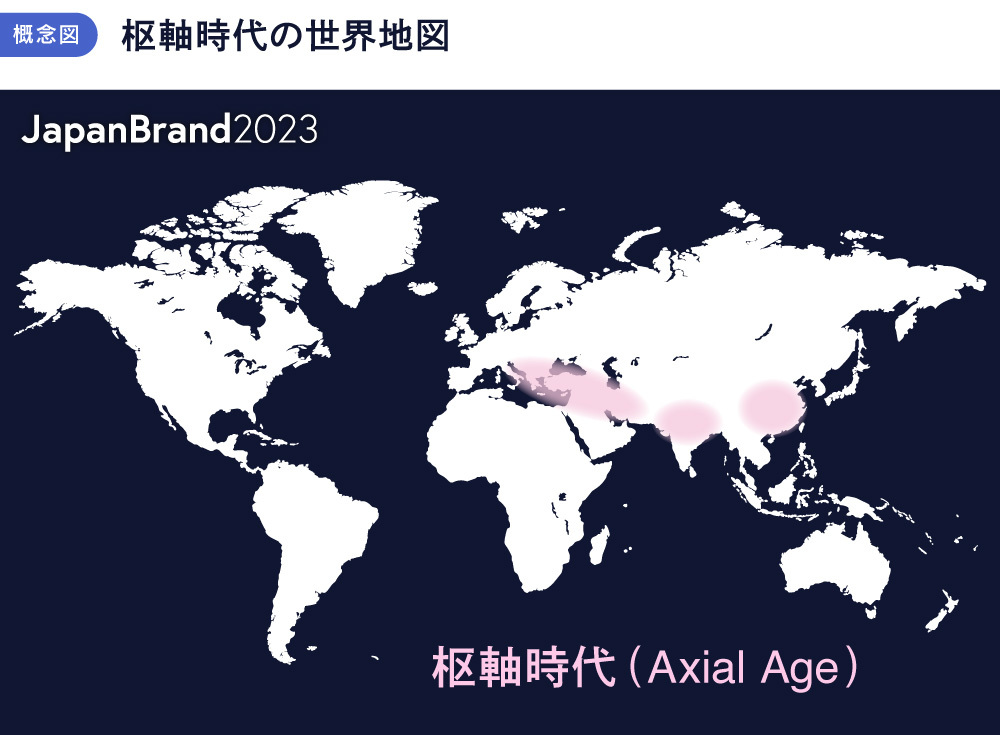
It was in 1949 that Karl Jaspers first proposed designating this “era of serendipitous intellectual proliferation”—a time of great intellectual diversity—as the “Axial Age” (*1), an era that serves as a pivotal axis in world history. The spread of iron led to the development of agriculture, and advances in agriculture not only produced sufficient food but also gave rise to a diverse array of knowledge.The Chinese character for “food” (食) is a combination of the characters for “person” (人) and “good” (良); to make people better and enrich the world—this is the essence of food, unchanged from ancient times to the present.
*1 = Axial Age: The era in which the ideas that form the spiritual foundation of humanity emerged. The concept of the Axial Age was proposed by the German philosopher and psychiatrist Karl Jaspers.
Off the easternmost tip of the Eurasian continent
The sources of knowledge that erupted in various parts of the world slowly flowed, over time, into their respective surrounding regions. Japan, situated off the easternmost tip of the Eurasian continent, transitioned from the Yayoi period to the Kofun period. Confucianism from China and Buddhism from India were transmitted via Baekje (Kudara) and eventually took deep root in Japanese society.Approximately 1,300 years after the introduction of Confucianism and Buddhism, Japan—which was among the first to successfully modernize by embracing Western civilization—has created a unique “cumulative model” characterized by the fusion and coexistence of cultures from all eras and regions, and has undergone its own distinct evolution. The more one is able to view multiple cultures, customs, and values in a relativistic light, the more one is likely to find comfort in the appeal of Japan’s cumulative model.
The same can be said for “food,” the theme of this article. For example, when it comes to culinary genres, the fact that one can easily enjoy high-quality multinational and fusion cuisine at relatively reasonable prices within walking distance can be considered a product of this “layered style.” Being able to savor the diversity of food right at one’s doorstep without incurring high financial or time costs is a truly valuable experience.
Furthermore, Japanese cuisine (Washoku), which has long enjoyed international popularity, is a prime example of this layered worldview expressed in a beautiful way. Exactly ten years ago, Washoku was inscribed on the UNESCO List of Intangible Cultural Heritage (Washoku: Traditional Japanese Food Culture, 2013).The characteristics of Washoku include: “① Respect for diverse and fresh ingredients and their inherent flavors; ② Nutritional balance that supports a healthy diet; ③ Expression of the beauty of nature and the changing seasons; ④ Close ties to annual events such as New Year’s” (*2). In other words, it is a distinctly Japanese concept that seeks not only the pursuit of flavor but also takes into account the multifaceted elements surrounding food to achieve a higher level of harmony.
*2 The four characteristics of Washoku are cited from the Ministry of Agriculture, Forestry and Fisheries’ food culture portal site. Source: Ministry of Agriculture, Forestry and Fisheries; “Washoku” has been registered as a UNESCO Intangible Cultural Heritage.
https://www.maff.go.jp/j/keikaku/syokubunka/ich/index.html
However, even when we speak of “Japanese cuisine” in general, it is difficult to grasp the true nature of this boom without examining it by genre or specific item. In the Dentsu Inc. Japan Brand Survey, Japanese cuisine was divided into “dishes” (9 categories, 42 types) and “ingredients” (9 categories, 54 items), and large-scale surveys were conducted for each. Based on these results, we explored the reality of the Japanese cuisine boom.
“Japanese Cuisine” and “Japanese Ingredients” as Global Products
First, let’s take a quick look at the trends surrounding popular Japanese cuisine.
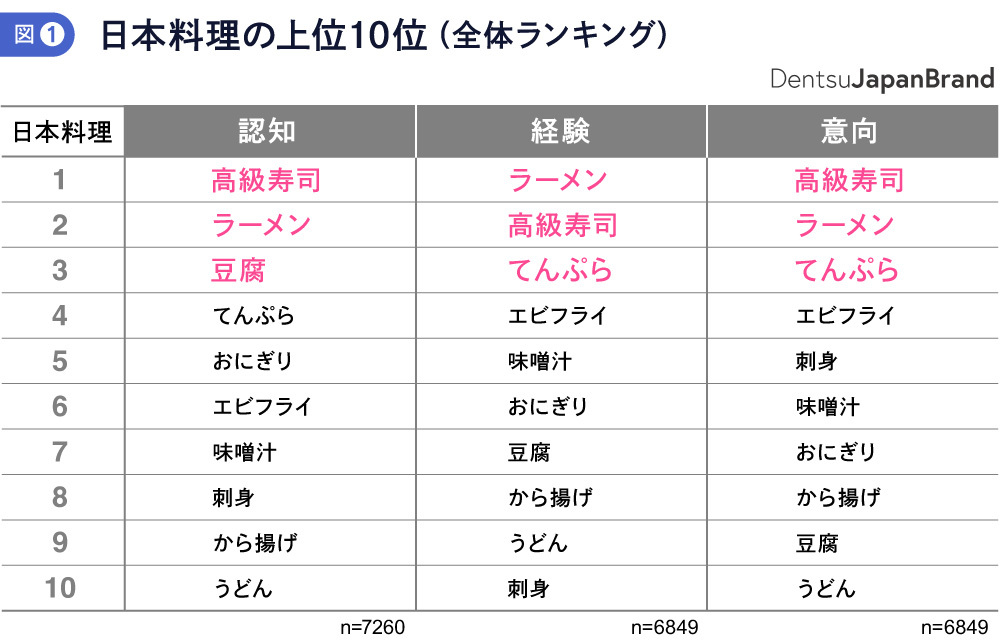
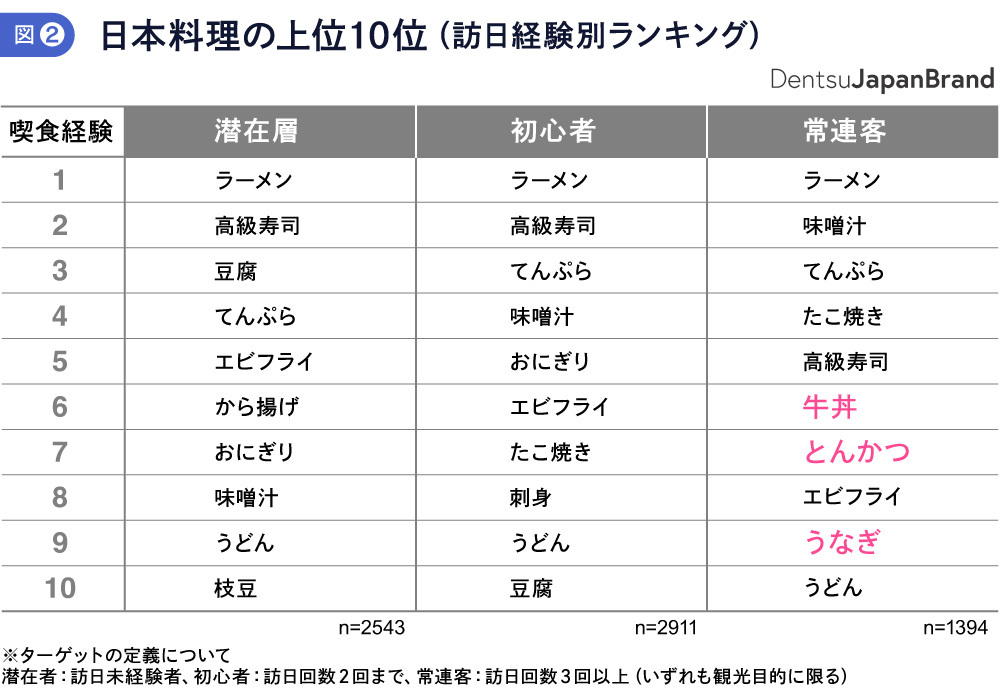
The top 10 dishes ranked by the three indicators—“awareness,” “consumption experience,” and “intention to consume”—were “high-end sushi,” “ramen,” “tempura,” “fried shrimp,” “onigiri,” “tofu,” “miso soup,” “sashimi,” “karaage,” and “udon.” All of these can be considered globally recognized Japanese dishes.
Furthermore, when viewed from the perspective of visit history, among repeat visitors (those who have visited Japan three or more times), the consumption rates for “gyudon,” “tonkatsu,” and “unagi” show a notable increase. Specifically, regarding unagi consumption, the rate among repeat visitors (30.3%) is more than 20 percentage points higher than that of first-time visitors (8.0%) and significantly exceeds the overall average (17.3%).Although they did not rank in the top 10, similar trends were observed for sukiyaki and kaiseki cuisine.
Next, drawing on just a small selection from the vast survey data regarding Japanese ingredients, we will explore Japanese ingredients—which can be considered global products—alongside how they are perceived from an international perspective.
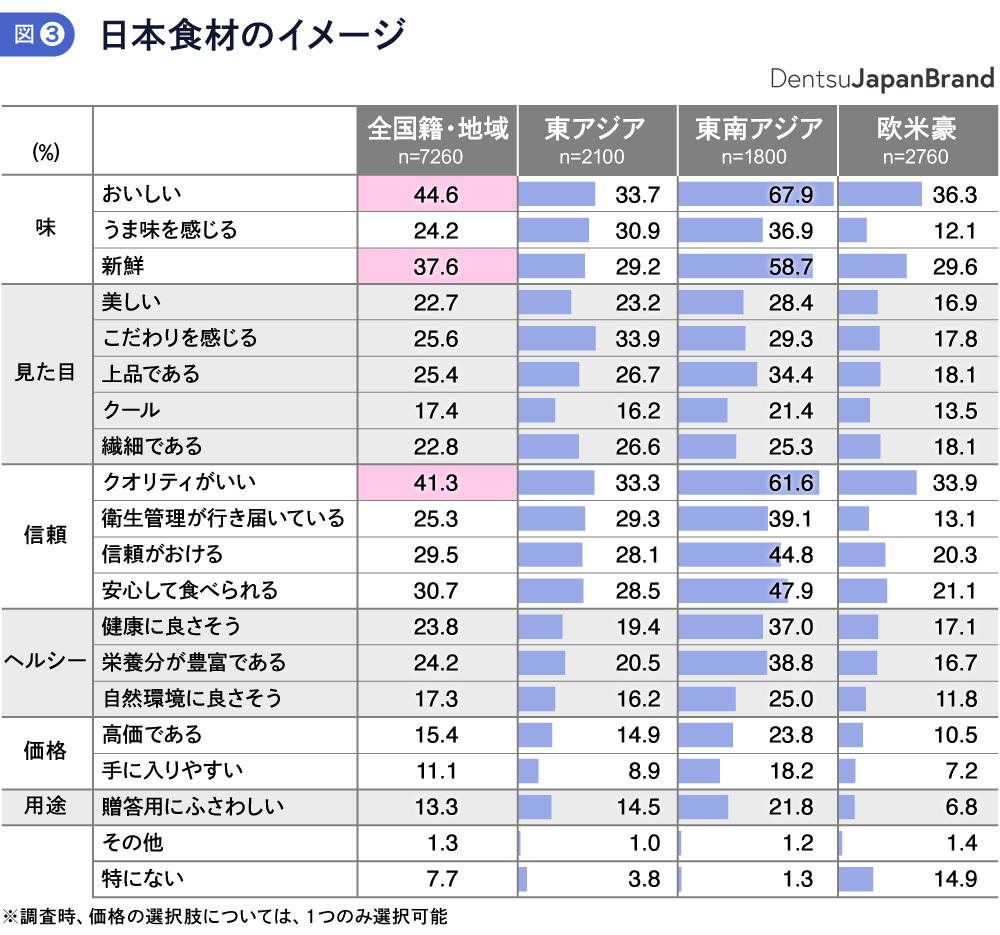
Safe, secure, high-quality, delicious… Do overseas consumers share the same perceptions of Japanese-produced ingredients that Japanese people do? When looking at the global picture, I would like you to remember “Delicious, Fresh, and High-Quality” as the most important keywords. It is no exaggeration to say that these three categories—Delicious, Fresh, and High-Quality—dominate the rankings by a wide margin, reaching the highest possible level in terms of image evaluation for food ingredients.
However, when examined individually, there is significant variation in perceptions depending on the region. While the aforementioned “Delicious, Fresh, and High-Quality” have relatively strong associations in Southeast Asia, Europe, the U.S., and Australia, perceptions in East Asia are generally more subdued, suggesting that no single aspect stands out prominently.
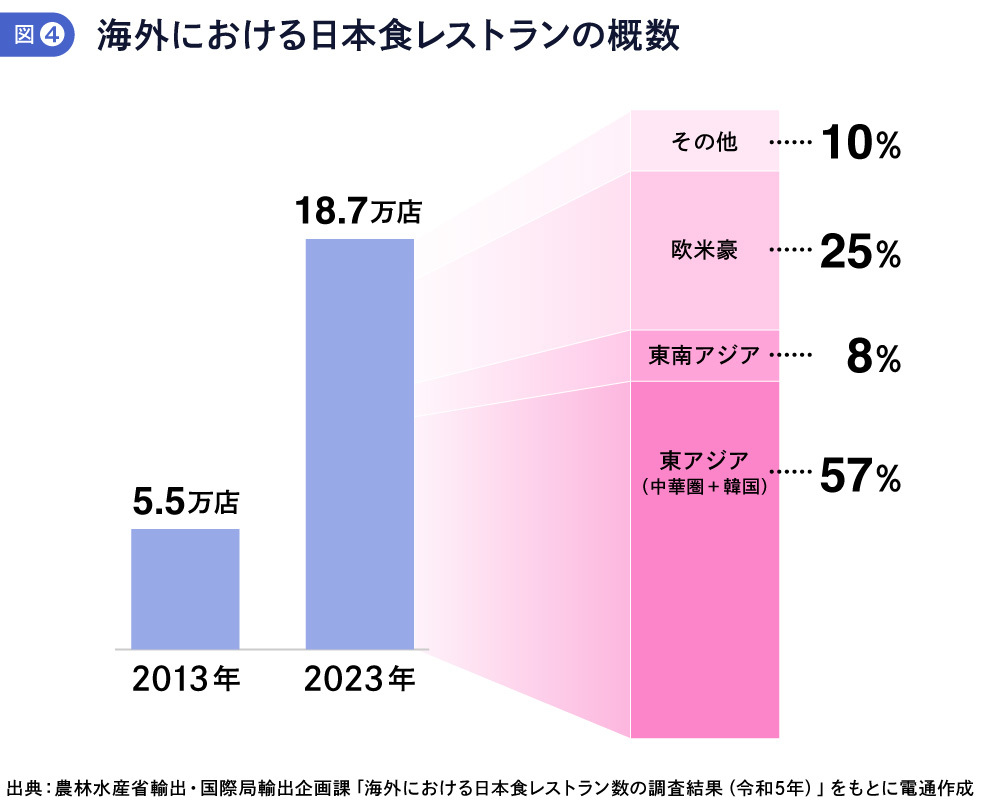
Since the 2010s, the number of Japanese restaurants overseas has surged. According to a survey by the Ministry of Agriculture, Forestry and Fisheries titled “Number of Japanese Restaurants Overseas (*Figure 4),” the number of Japanese restaurants in 2023 (approximately 187,000) had increased by about 3.4 times compared to 2013 (approximately 55,000).Looking at the breakdown, we can see that approximately 57% of Japanese restaurants are concentrated in East Asia. In other words, since consumers in East Asia have more opportunities to experience Japanese cuisine up close than those in Europe, the United States, Australia, or Southeast Asia, it can be inferred that their understanding of Japanese cuisine has become more multifaceted, leading to a diversification and fragmentation of its image.While East Asia is a leading region for Japanese cuisine, it is also viewed as a highly VUCA society where cutthroat competition rages. In that sense, we are inevitably required to strike a balance between three elements: “Japanese-ness,” “individuality rooted in Japanese-ness,” and “survival of the fittest.”
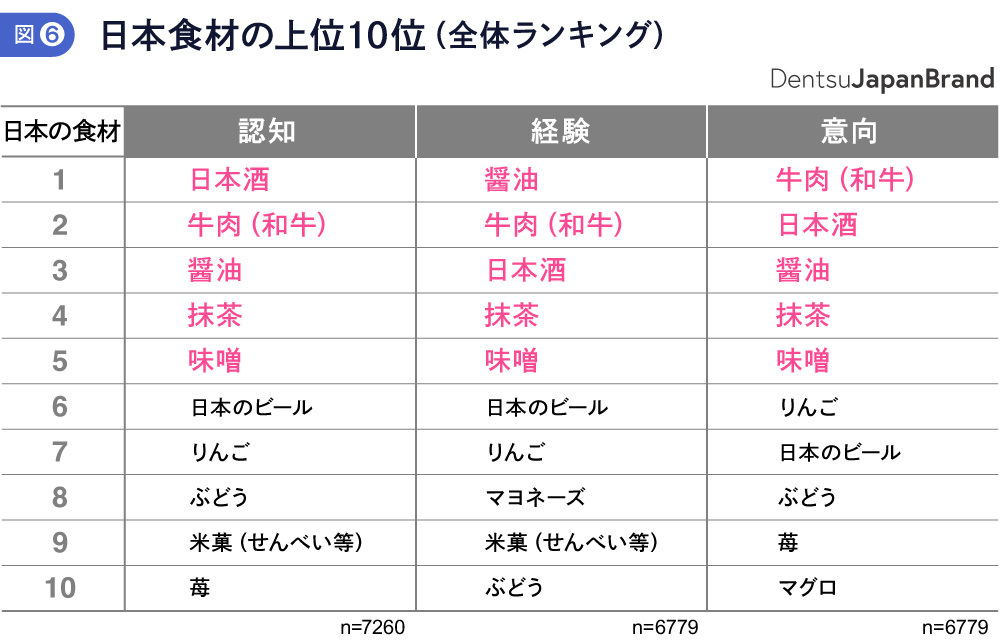
Data reveals that among popular Japanese food items in the European, American, and Australian markets, “beef (Wagyu)” and “sake” are, of course, top choices, but “soy sauce” is also extremely popular. Across all metrics, Australia and European countries significantly exceed the global average.
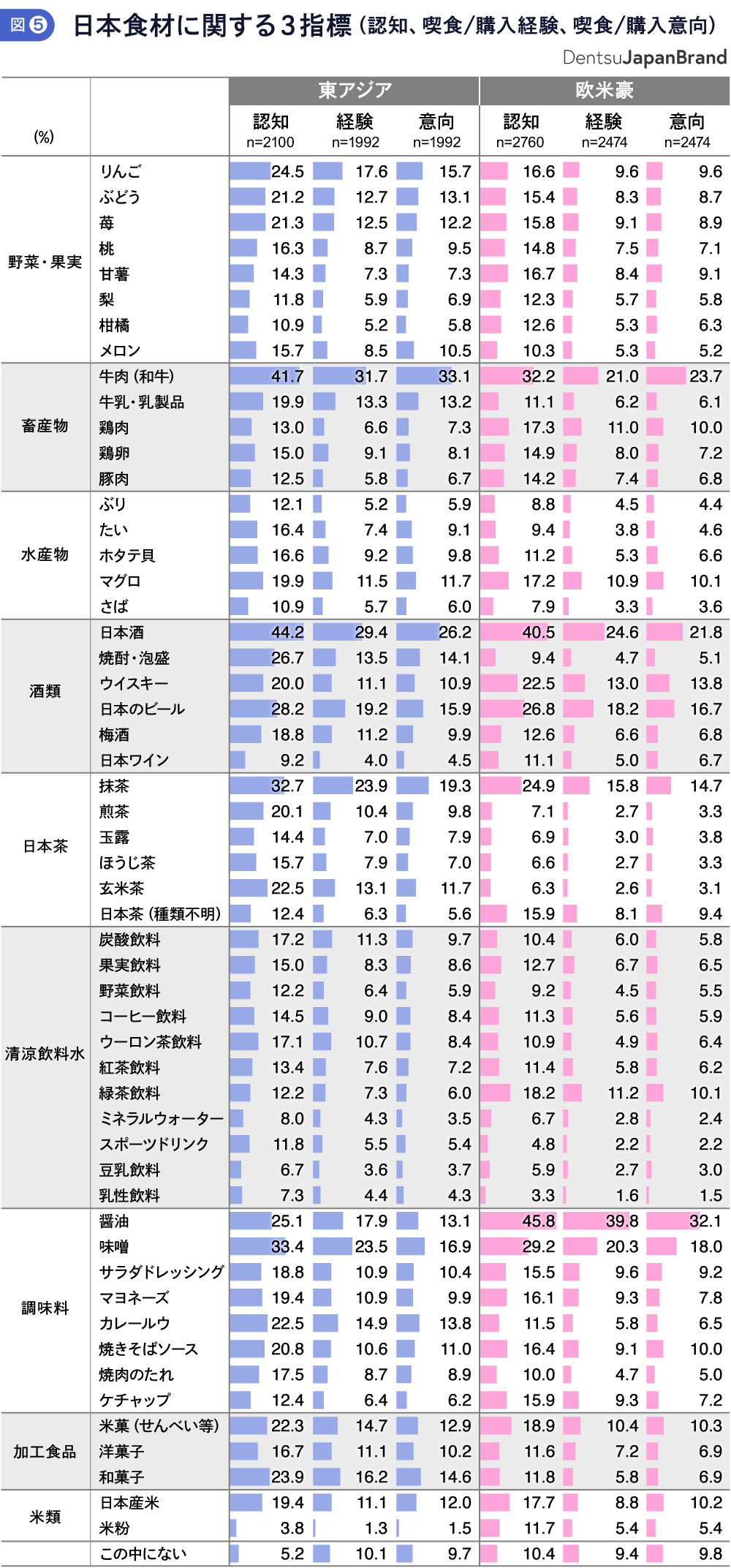
As such, while there are Japanese food ingredients that are universally favored across regions, there are certainly popular items unique to each specific market. Looking at the global picture, “sake,” “beef (Wagyu),” “soy sauce,” “matcha,” and “miso” occupy the top five spots across all three metrics: awareness, consumption/purchase experience, and consumption/purchase intent. These are, so to speak, the global staples of the food ingredients category.
Three Different Perspectives on Umami
We’ll conclude this article by discussing “umami,” one of the great Japanese assets discovered by our predecessors.
Umami is one of the five basic tastes and an indispensable element when discussing Japanese cuisine. Discovered over a century ago, “umami” has now become a common noun known worldwide—retaining its Japanese name in English, French, German, Italian, and other languages.
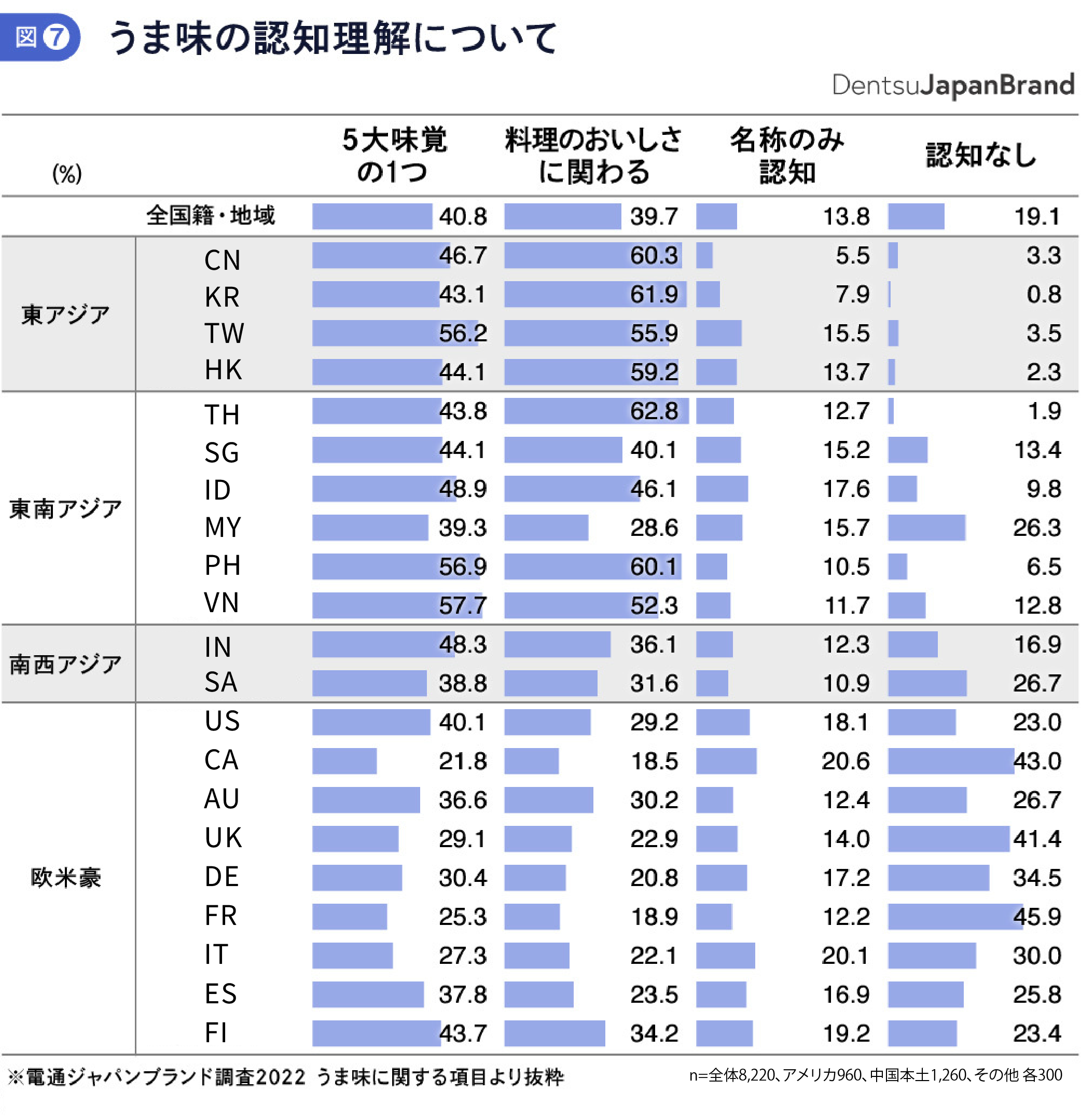
However, I feel it’s difficult to say that umami is a universally understood and easily recognizable taste, like sweetness, sourness, saltiness, or bitterness. In a Dentsu Inc. Japan Brand Survey, based on the hypothesis that the concept of umami—and the relationship between umami and cuisine—is not necessarily perceived in the same way as it is by Japanese people, we examined the level of understanding of umami by country and region.
Overall, about 40% of respondents were aware that “umami is one of the five basic tastes, alongside sweet, sour, salty, and bitter” and that “it plays a major role in the deliciousness of food.” However, when broken down by country and region, there is significant variation: while some countries had only 20–30% awareness, other regions exceeded 50%. Surprisingly, it was also found that just under 20% of respondents were completely unaware of umami itself.In Canada, the United Kingdom, and France, that proportion even exceeds 40%.
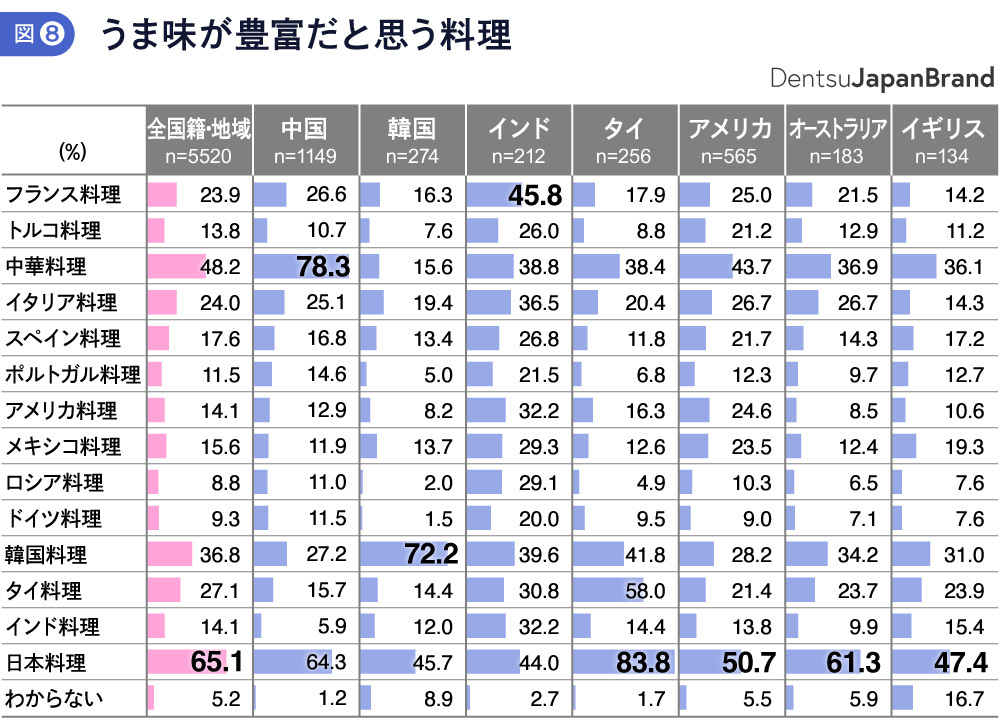
Furthermore, an analysis of the question regarding the extent of differences in awareness and understanding across countries regarding cuisine genres rich in umami yielded interesting results.
In China (which ranks first in the number of Japanese restaurants) and South Korea (which ranks third), an overwhelming majority of respondents believe that their own country’s cuisine is the richest in umami.In India, which is garnering significant attention as a member of the Global South, French and Japanese cuisine are ranked almost equally as umami-rich cuisines. Korean, Chinese, and Italian cuisines rank slightly below these two, indicating that Japanese cuisine’s dominance in terms of umami is not particularly pronounced.
Pairing with related fields and storytelling are essential requirements for food
In recent years, tourism themes have become increasingly diverse and specialized, leading to the development of a wide variety of tourism forms, such as adventure tourism, sustainable tourism, and gastronomic tourism. Among these, gastronomic tourism has the highest level of interest in participation, with the exception of the United States.Furthermore, according to a survey by the Japan Tourism Agency, spending on food and beverage accounts for more than 20% of total tourism expenditure (*3). This survey also revealed that food is a category in which travelers are willing to spend money actively.
*3 Japan Tourism Agency, Ministry of Land, Infrastructure, Transport and Tourism: Survey on Consumption Trends of Inbound Foreign Visitors <January–March, April–June, and July–September 2023 (Preliminary Figures); 2019 Annual Figures (Final Figures)>
https://www.mlit.go.jp/kankocho/siryou/toukei/syouhityousa.html
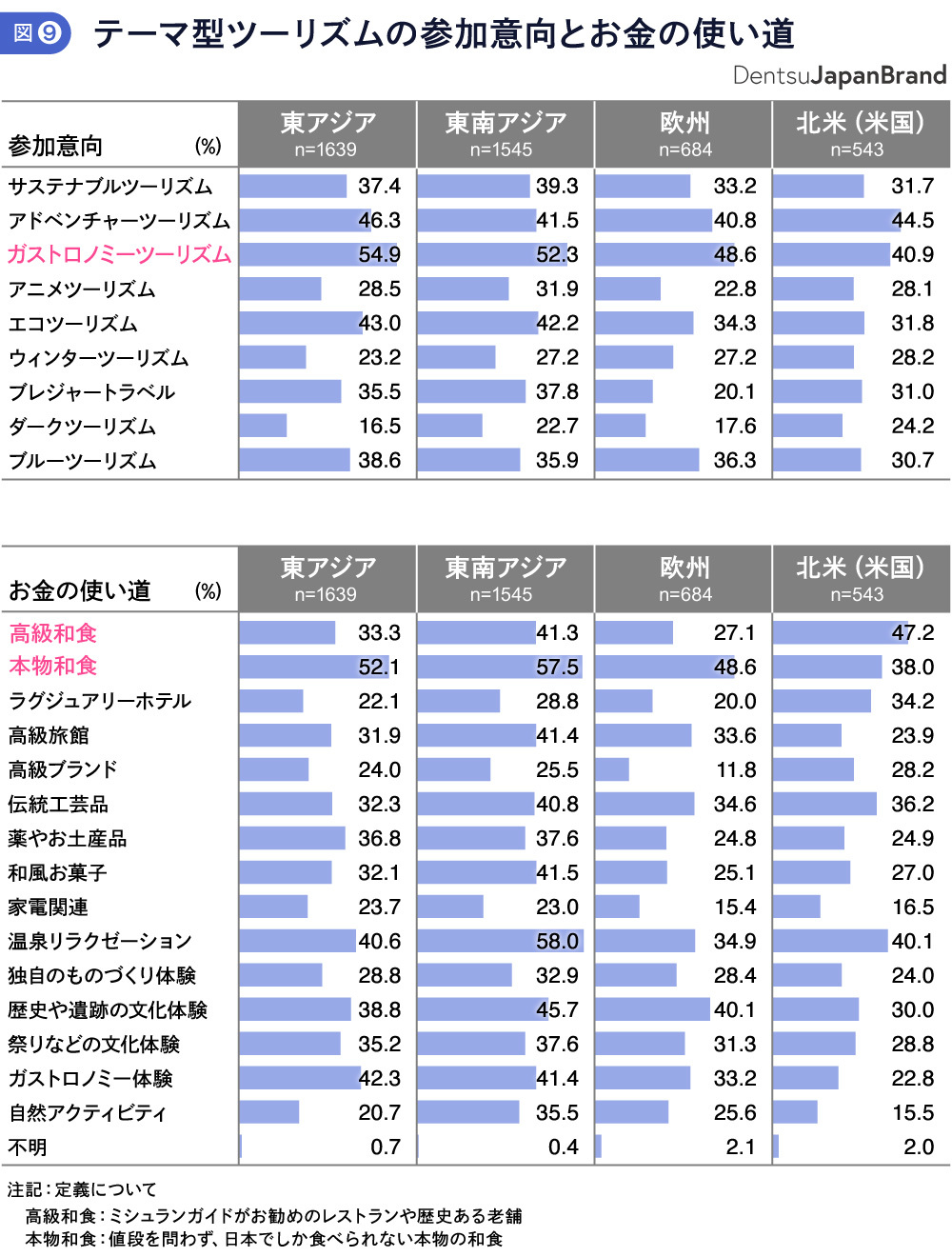
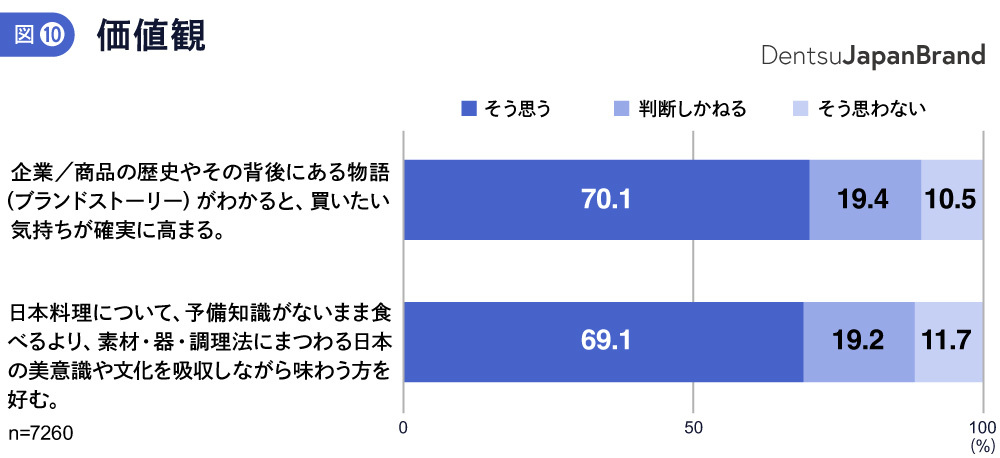
Furthermore, seven out of ten respondents stated that they “prefer to savor dishes after gaining a basic understanding of the ingredients, tableware, and cooking methods,” and that “understanding the history and brand story of a product or company definitely increases their desire to purchase.”In other words, it is appropriate to view initiatives related to food not merely as the act of eating, but as an integrated whole that combines the development of peripheral fields—such as crafts, fine arts, the arts, spatial design, history, culture, and philosophy—with the dining experience (holistic experience design). These peripheral fields should no longer be considered merely “nice to have,” but rather “essential.”
As the latest Basic Plan for Promoting Japan as a Tourism Nation has already indicated, inbound tourism is not only an industry with a broad base but also a strategic sector that contributes significantly to international mutual understanding and peace, in addition to generating foreign exchange (*4). Meanwhile, “food that enriches people and the world” is a category highly compatible with both inbound tourism and overseas exports.Just as food and knowledge have been magnificently interconnected and have supported the progress of global civilizations and societies up to now, they will undoubtedly continue to play an unwaveringly positive role in the future.
*4 Ministry of Land, Infrastructure, Transport and Tourism, Japan Tourism Agency: “Outline of the Basic Plan for Promoting Japan as a Tourism Nation (4th Edition)”
https://www.mlit.go.jp/kankocho/kankorikkoku/kihonkeikaku.html
In practical business terms—whether refining gastronomic tourism or promoting the export of Japanese ingredients and Japanese cuisine—there will be an increasing demand not only to enhance the “resolution” of what foreign consumers understand as “Japanese cuisine,” but also to create diverse pairings with related fields and to craft storytelling that conveys a depth of flavor found nowhere else.
*The names of countries and regions used in this article are intended for a Japanese audience and are presented in accordance with Japanese social norms and business practices.
[Contact Information for Inquiries Regarding This Matter]
Dentsu Inc., Japan Brand Project Team
japanbrand@dentsu.co.jp
Japan Brand Survey Hub Page
https://www.dentsu.co.jp/knowledge/japan_brand/
[Purpose of the Dentsu Inc. Brand Survey]
Launched in 2011—when the Great East Japan Earthquake led to reputational damage affecting Japanese agricultural and marine products as well as inbound tourism—this is Dentsu Inc.’s proprietary commercial marketing research initiative designed to understand how products and services originating in Japan are perceived globally.The Japan Brand Survey regularly assesses overseas consumers’ perceptions and actual behaviors regarding the Japan brand as a whole, covering areas such as overseas travel, inbound tourism, culture, regional revitalization, Japanese cuisine, Japanese products, and lifestyle. By visualizing shifting consumer sentiments as well as the challenges and potential of the Japan brand, the survey contributes to increasingly complex corporate activities and helps promote cross-cultural understanding within Japanese society.
[Dentsu Inc. Brand Survey 2023: Survey Overview]
・Target Areas: 19 countries and regions (United States, Mainland China, South Korea, Taiwan, Hong Kong, Singapore, Thailand, Malaysia, Indonesia, Vietnam, the Philippines, India, Australia, Saudi Arabia, the United Kingdom, France, Germany, Italy, Spain)
・Sample Size: 7,260 (Breakdown: United States 960, Mainland China 1,200, other countries and regions 300 each)
・Survey Period: December 2022–January 2023
・Eligibility criteria: Men and women aged 20–59 (middle-income and above)
・Survey Method: Online survey
・Research Organizations: Dentsu Inc. (Principal Investigator), Video Research Ltd. (Implementation Partner)
[Notes and Disclaimers]
*1: The target areas in mainland China are primarily Tier 1 cities; in India, they are Delhi and Mumbai; in Australia, the Sydney metropolitan area; and in Southeast Asia, they are primarily metropolitan areas.
*2: Definition of middle-income group: Criteria were established for each country based on average national income figures (such as OECD statistics) and socio-economic classification (SEC).
*3: Samples were collected using equal allocation by gender and age group in each country and region, and the data was weighted to reflect the population distribution.
*4: Since the composition ratios in this survey are rounded to the second decimal place (or to the first decimal place in some cases where whole numbers are displayed), the totals may not add up to 100%.
*5: In creating the charts and tables for this survey, the names of the countries and regions analyzed use the international standard ISO country codes (ISO 3166-1 alpha-2/3), with a few exceptions.
United States/US/USA, Canada/CA/CAN, Australia/AU/AUS, United Kingdom/UK/GBR, Germany/DE/DEU, France/FR/FRA, Italy/IT/ITA,Spain/ES/ESP, Finland/FI/FIN, United Arab Emirates/UAE, Saudi Arabia/SA/SAU, India/IN/IND, Indonesia/ID/IDN, Singapore/SG/SGP, Malaysia/MY/MYS, Philippines/PH/PHL, Thailand/TH/THA,Vietnam/VN/VNM, Mainland China/CN/CHN, Hong Kong/HK/HKG, Taiwan/TW/TWN, South Korea/KR/KOR
*6: The names of countries and regions used in this survey report and on our website are based on the Japanese government’s long-standing position, as well as Japanese social norms and business practices.
*7: The names of countries and regions used in this survey are for statistical or analytical convenience only and do not imply any political stance or opinion.
*8: The maps used in this survey (world map and map of Japan) have been partially modified and cropped to suit the analysis content and page layout; therefore, they may not necessarily reflect national borders and territorial boundaries accurately.
*9: As a commercial marketing research study aimed at understanding the lifestyle habits and brand preferences of general consumers, this survey has been conducted consistently since its inception through commissioned fieldwork partners, in strict compliance with local laws, regulations, and public order and morals.Surveys conducted in China are carried out through fieldwork contractors who have obtained the “Foreign-Related Survey Permit” required by Chinese authorities; our company does not conduct market research activities within China itself. Furthermore, we monitor and review our operational procedures as necessary in light of developments such as changes in laws and regulations.
*10: The response data collected through this survey is obtained, managed, and processed lawfully in accordance with the relevant laws and regulations of each target market. The data we receive consists solely of aggregated data that has been anonymized in a manner that does not allow for the identification of specific individuals and cannot be reversed; it does not contain any personal information.
Was this article helpful?
Share this article


Newsletter registration is here
We select and publish important news every day
For inquiries about this article
Author

Li Shunshi
Dentsu Inc.
First Business Transformation Bureau
Planner, Producer