Note: This website was automatically translated, so some terms or nuances may not be completely accurate.
 Global Sentiment and Japanese Identity: Japan Brand Survey 2024 [5/5]
Are the Lines Between Pre-Trip, During-Trip, and Post-Trip Blurring? The Reality of Inbound Travel to Japan Becoming More “Spontaneous”
FY24 Japan Brand Survey , Japan was selected as the “country people most want to revisit” worldwide.
In particular, visitors from East Asia and ASEAN countries and regions have already entered the “repeat visit” stage of their travel to Japan.
Consequently, we can see that the “standard” styles of tourism in Japan—as well as the way travelers gather information in advance—are beginning to change.
In this article, we take an in-depth look at how the customer journey and mindset of travelers to Japan have changed before and after the pandemic.
We surveyed travelers from various East Asian countries and regions
Beginners with 1–3 visits to Japan (hereinafter referred to as “Beginners” in this article)
Veterans with four or more visits to Japan (hereinafter referred to as “Veterans” in this article)
and conducted focus group interviews (hereinafter referred to as “FGI”). The results were so fascinating that they challenge conventional wisdom regarding inbound marketing for Japan—so please be sure to read to the end.
[Survey Overview]
・Target Areas: 4 countries and regions (Mainland China, Hong Kong, Taiwan, South Korea)
・Eligibility criteria: Men and women aged 20–49
・Sample Size: 6 participants per country/region, for a total of 24
*Breakdown of the 6 participants: 3 “beginners” (1–3 visits to Japan) and 3 “veterans” (4 or more visits)
・Survey Method: Online focus group interviews (FGI)
・Survey Period: October 16–24, 2024
[Dentsu Inc. Global Business Center – Regional Representatives]
South Korea: Li Gang
Hong Kong: Yasuhiro Yamauchi
Taiwan: Takuya Sugiyama
Mainland China: Hiroshi Masuda
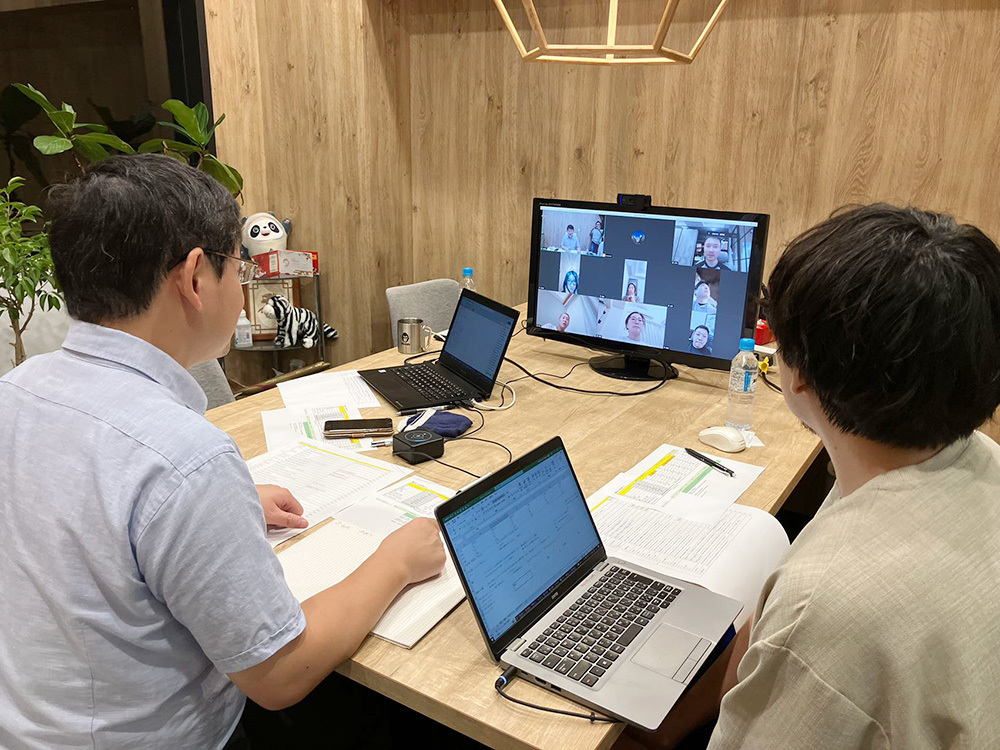
Although a wide range of opinions were exchanged during this roundtable discussion, we found that responses varied significantly depending on the country or region and the frequency of visits. With this in mind, we will focus on presenting the most notable findings.
<Table of Contents>
▼No More Decisions “Before the Trip”!? What Was That Surprising Answer?
▼Using Apps to Flexibly Adjust Plans Even During the Trip
▼Relying on “Location + Purpose” Searches on Social Media Instead of Influencers for Information
▼Is the “shopping list” a thing of the past?
▼“Amulets” Are the Popular Souvenirs; Buy Sweets in Bulk at Airport Duty-Free Shops
▼“Fan Activities” Cross Borders—Reasons for Visiting Japan (2024 Edition)
▼Reflections from each member after the roundtable discussion
▼Summary
No More Decisions Before the Trip!? What’s the Surprising Answer?
The traditional approach to inbound tourism marketing for Japan has been based on the idea that “travelers plan their trip about one to two months before arrival, create a shopping list beforehand, and then follow a largely predetermined schedule once in Japan.” However, this survey revealed that—regardless of whether respondents were first-time visitors or seasoned travelers, and regardless of their country or region of origin—the vast majority answered, “I book my hotel and flight more than a month in advance, but I decide where to eat, where to shop, and what to buy only after arriving in Japan.”
Furthermore, the timing for deciding on a destination varies depending on who they’re traveling with. Many respondents said that when traveling with family or friends, they need to coordinate everyone’s schedules, so they decide 2–3 months in advance; whereas when traveling alone, they can adjust their schedule freely, so they decide 1–2 weeks in advance. In particular, as travelers become more experienced, they tend to take spontaneous solo trips more often, so there seem to be more instances where they make a last-minute decision and head to Japan on the spur of the moment.
Using Apps to Flexibly Adjust Plans Even While Traveling
One factor behind the shift toward a “decide after arriving in Japan” travel style appears to be the use of apps for gathering information.
In this survey, when asked, “What apps did you use while visiting Japan?” the app that was consistently mentioned across all countries and regions was “Google Maps.” It was used in a variety of ways—not only for searching for transportation options but also for finding information on nearby tourist spots and checking reviews of restaurants.
Furthermore, seasoned travelers from Taiwan, Hong Kong, and South Korea also frequently used “Tabelog.” Although Tabelog is available only in Japanese and English, they appeared to be using the Japanese version, explaining, “I can sort of make out the kanji,” or “If I don’t understand the words, I use a translation app or ask a friend living in Japan who understands Japanese.”
Among the seasoned travelers, there were even some die-hards who, in order to obtain more in-depth information, stated, “When it comes to information about Japan, I only follow accounts on social media that are run by Japanese people.” Based on these results, it is believed that, particularly for restaurants, strengthening the management of their Google Maps Business Profiles and ensuring their information on platforms like Tabelog is up to date will be effective in attracting visitors to Japan.
Even among non-restaurant visitors, comments such as “There was a fireworks display nearby, so I changed my plans” or “There was a festival near my hotel, so I canceled my original plans” were frequently heard regardless of whether the traveler was a beginner or a seasoned visitor, indicating that their behavior has become highly flexible.
It’s highly likely that travelers’ plans will change during their stay in Japan due to some trigger, and this tendency seems even stronger if the event is near their hotel. Some travelers even mentioned that they became interested after seeing a festival poster displayed at their hotel. Hotels appear to be an important point of contact for engaging travelers during their stay in Japan.
Furthermore, the app most commonly mentioned by Chinese visitors was “Xiaohongshu (RED).” This is likely because Xiaohongshu features many posts by Chinese residents in Japan and offers a wealth of information about the country.
Information Gathering: Relying on “Location + Purpose” Searches on Social Media Rather Than Influencers
In response to the question, “Which media do you use to gather information?” the overwhelming majority of respondents from Taiwan, Hong Kong, and South Korea cited “Instagram” both before and during their visits to Japan, while those from mainland China cited “Xiaohongshu.” Furthermore, a common characteristic of their information-gathering behavior was that they searched using “location + purpose” rather than referring to specific influencers’ accounts.
Hearing these results, one might be tempted to think, “Does that mean influencer marketing isn’t effective!?” but that is not the case. The posts that appear at the top of search results on both Instagram and Xiaohongshu are those that are highly rated by the platform’s algorithms. Rather than simply thinking, “Let’s hire this influencer because they have a lot of followers,” it might be better to consider utilizing highly adaptable influencers who have consistently fine-tuned their content to align with the platform’s algorithms.
Is the “shopping list” now a thing of the past?
This survey revealed that the ability to easily gather information while traveling in Japan is influencing shopping behavior. Not long ago, visitors to Japan would create a “shopping list” before their trip, and it was widely accepted that to be selected for inbound spending, a business had to be included on that list.
Let’s first review the background behind why “shopping lists” gained attention in the first place. For some time after Japan relaxed visa requirements for Chinese nationals in 2010, most visitors from mainland China traveled in groups and were required to shop at designated locations within a limited timeframe. Furthermore, since means of obtaining information about Japan were still scarce at the time, they needed to research where and what to buy in advance to shop efficiently.
Nowadays, however, visitors to Japan from various countries—including mainland China—can easily access information about Japan simply by checking social media, so the need for “shopping lists” has diminished. Looking at the results of this survey, it would not be an exaggeration to say that “shopping lists” have become a thing of the past.
"Amulets" are popular as souvenirs. Sweets are typically purchased in bulk at airport duty-free shops
When asked, “What did you buy as souvenirs for friends, family, or yourself?” respondents from all countries and regions answered “amulets.” The reasons cited included: “It’s a unique part of Japanese culture,” “You can only buy them there,” and “They make it easy to convey your feelings to the recipient, such as wishes for romantic success or good health.”
Furthermore, in recent years, an increasing number of shrines have begun selling photogenic amulets, and it seems that more visitors to Japan are making shrines and temples their destinations, saying, “I’m going to this shrine because I want to buy this amulet.” Many respondents also mentioned collecting goshuin (shrine stamps).
We also heard many responses about buying snacks at airport duty-free shops right before departure at the end of a trip. This is likely driven by the desire to keep luggage as light as possible by making purchases just before returning home. In these cases, the overwhelming majority of respondents said they bought whatever caught their eye first on the sales floor, rather than purchasing items they had decided on in advance. For retailers looking to capture souvenir demand, placing point-of-purchase (POP) displays and promoting specific items on the sales floor are highly effective strategies for increasing sales.
“Supporting Your Favorite Idol” Transcends National Borders ~ Reasons for Visiting Japan: 2024 Edition ~
In response to the question, “Why did you choose Japan as your travel destination?” answers such as “The food is delicious,” “It’s close,” and “It’s safe” remained as common as ever. However, as answers unique to 2024, at least one person from each country or region cited “The yen is weak” or “My favorite idol is having a concert here.”
In particular, since Korean-style idols have limited opportunities to hold concerts in Taiwan and Hong Kong, fans reportedly time their visits to Japan to coincide with their concerts here. Of course, the same applies to concerts by Japanese idols and artists. Some ardent fans even stated they “buy all the merchandise.” Keeping track of the schedules for these idol and artist concerts in advance may be crucial for marketing to visitors to Japan. “Idol fandom” truly transcends borders with ease.
Reflections from Each Member After the Roundtable Discussion
Yamauchi (Responsible for Hong Kong)
Listening to these discussions today made me realize that “travel is becoming more seamless.” I heard repeatedly from people who have visited Japan that they “look things up on their smartphones and plan their activities after arriving,” and I was surprised to learn that their behavior is more flexible than I had imagined.
From the perspective of conveying corporate and brand messages, there seem to be many opportunities during the trip itself. However, since time is limited while traveling and travelers typically have a general itinerary or potential destinations in mind before they arrive, I believe a comprehensive communication strategy is essential.
Another thing that struck me was that several of the people I spoke with this time cited “a concert by their favorite artist” as their reason for visiting Japan. This reaffirms my belief that leveraging the power of content presents a significant opportunity.
Lee (in charge of South Korea)
Comparing the four countries and regions this time reaffirmed that utilizing NAVER-related sites is crucial for strategies targeting visitors from South Korea. In particular, the online community “Flying Japan” appears to be used frequently. It was also striking that many participants mentioned the early last trains and the early closing times of restaurants. South Korea has a thriving nightlife and dining culture, so there may be a strong desire among visitors to “enjoy themselves later into the night in Japan as well.”
Furthermore, I felt that “designing serendipity” is key to taking the Japan travel experience to the next level. While this may seem like a slightly contradictory combination of words, for the growing number of repeat visitors to Japan, it is precisely these unexpected and fresh experiences that are the true essence of travel. I felt that it is essential to appropriately capture these moments and reflect them in experience design that moves away from a purely “product-out” approach.
Sugiyama (Responsible for Taiwan)
There were many fascinating stories. One frequent visitor mentioned buying items on Amazon and picking them up at a convenience store, which surprised me—I hadn’t realized some travelers were that well-versed in the system. I also noticed that even first-time visitors to Japan are much more familiar with Japanese apps than they used to be. It feels as though they now view a trip to Japan as an extension of domestic travel. Consequently, I felt that content offering deeper insights—such as “strategies” for avoiding long lines—would resonate more strongly than run-of-the-mill information.
Furthermore, it was a valuable insight to learn that, rather than large items like home appliances, souvenirs that are unique to the region and easy to carry are popular. I also felt that there are still insufficient ways to convey information to them during their travels. There seems to be room for exploration regarding contact points such as hotels and convenience stores. As an aside, while few people remembered Japanese advertisements, one person showed me a photo of an in-train advertisement at Ninnaji Temple, which made me realize once again the importance of nonverbal expression.
Masuda (Responsible for: Mainland China)
Regarding shopping, we heard comments such as, “I plan my strategy in advance for high-end items, but for everything else—including souvenirs—I decide on the spot after seeing them,” and “I tend to be drawn to items recommended by store clerks or on point-of-purchase displays.” As for dining, some said, “If I see a ramen shop with a line, I feel like joining it.”
Although shopping and dining seem like different scenarios at first glance, while both involve impulsive choices, travelers are searching for reviews on their smartphones right then and there. It was striking to see this behavior—a shift from the past—where they “don’t choose based on reviews, but rather use reviews to confirm that their impulsive choice is correct.”
Another major finding was that visitors from mainland China not only continue using Chinese apps while traveling but also demonstrate the flexibility to download and use apps like Google Maps and Tabelog. Recognizing that such traveler behaviors and insights are constantly evolving, I felt it was crucial to design a comprehensive communication strategy spanning the entire travel journey—from pre-trip planning to post-trip experiences—including the accumulation of user reviews.
Summary
This survey revealed that the concept of “pre-trip,” “during-trip,” and “post-trip” is now outdated, and that we need to view their home countries and Japan as “a single market” when formulating marketing strategies. Furthermore, with advances in technology, the experience will become even more seamless in the future, language barriers will continue to disappear, and we may see a future where content created by Japanese people for Japanese audiences is viewed by foreign visitors more than ever before.
These results made me keenly aware that inbound marketing for Japan is evolving daily, so I intend to continue refining our approach on a regular basis.
At the Global Business Center, we can conduct simple qualitative surveys targeting inbound visitors to Japan at an affordable price. We can customize the format (groups, individuals, focus groups), so please feel free to contact us for a consultation.
Was this article helpful?
Share this article


Newsletter registration is here
We select and publish important news every day
For inquiries about this article
Back Numbers

Author

Li Gang
Dentsu Inc.
Global Business Center
Strategist
Born and raised in Japan, of Korean descent. After joining Dentsu Inc., worked in the Strategy Planning Bureau and Sales Bureau. From 2015, spent approximately 10 years stationed at the China office, primarily handling clients in the automotive industry with a focus on strategy. Since 2024, has been engaged in overseas strategy planning for Japanese clients at the Global Business Center Bureau.

Yasuhiro Yamauchi
Dentsu Inc.
Global Business Center
Business Producer
After joining Dentsu Inc., he worked in the Sales Division (at the time) and Media Services / Newspaper Division before taking charge of overseas content business in 2016. He was seconded to Shanghai, China in 2018. While assigned to the global network dentsu X, he handled content sales, content tie-ups with companies and brands, and sports business.

Takuya Sugiyama
Dentsu Inc.
Global Business Center
Integrated Marketing Producer
Spent part of childhood living overseas. After joining Dentsu Inc., was assigned to handle accounts for Japanese automakers while serving two overseas postings in Southeast Asia (Malaysia and Thailand). Upon returning to Japan, has supported various clients' global expansion and branding efforts at GBC, while also actively engaging in initiatives targeting inbound tourism to Japan.

Hiroshi Masuda
Dentsu Inc.
Global Business Center
Digital Solutions Planner
Studied in China during university. Spent a total of 10 years in China between student life and working life. After joining Dentsu Inc., was seconded to Beijing, China in 2018, where I was responsible for developing membership systems for Japanese companies and social CRM systems. After returning to Japan, I worked at GBC providing global support for companies and brands, and proposing and implementing inbound tourism initiatives for Japan.