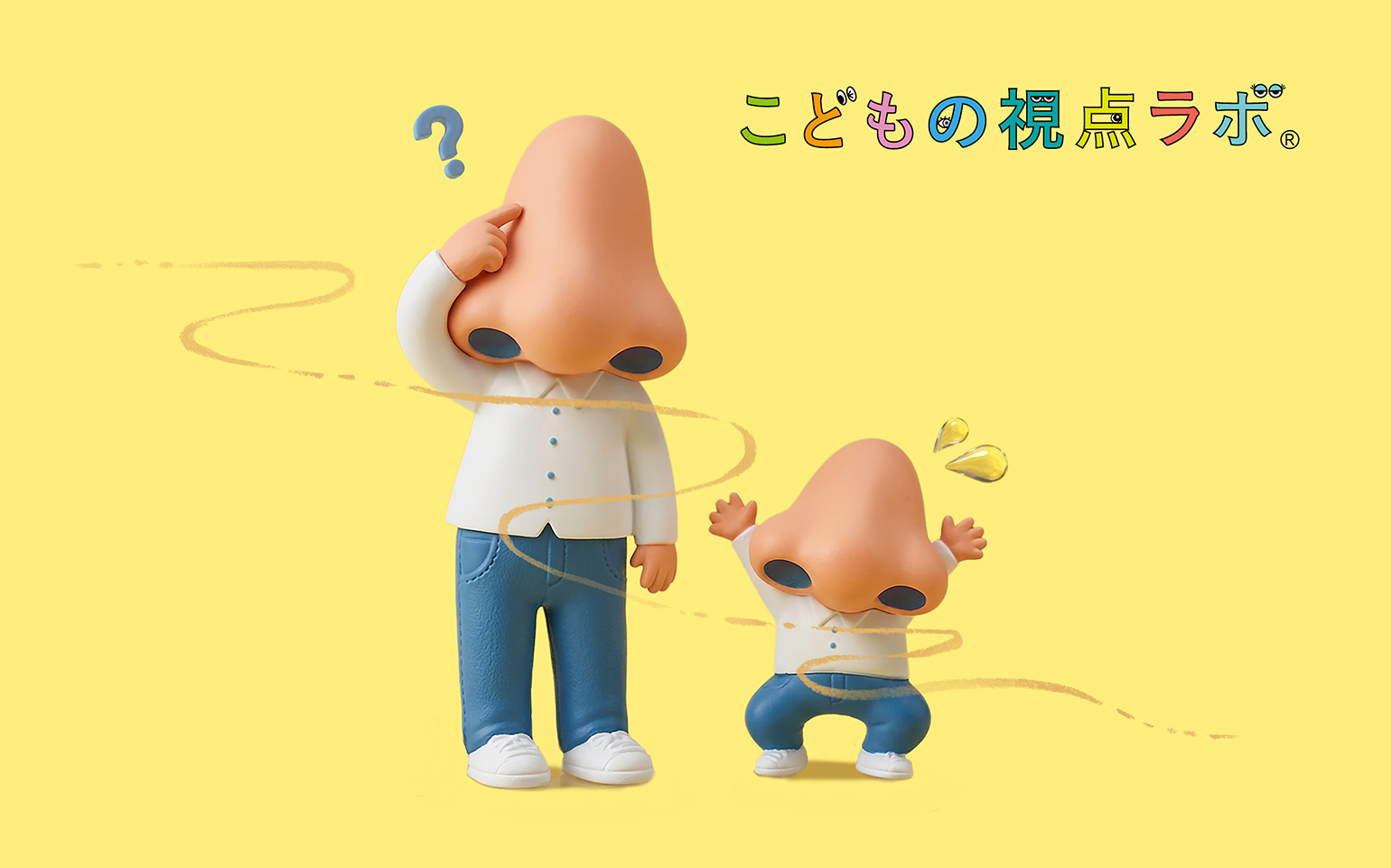
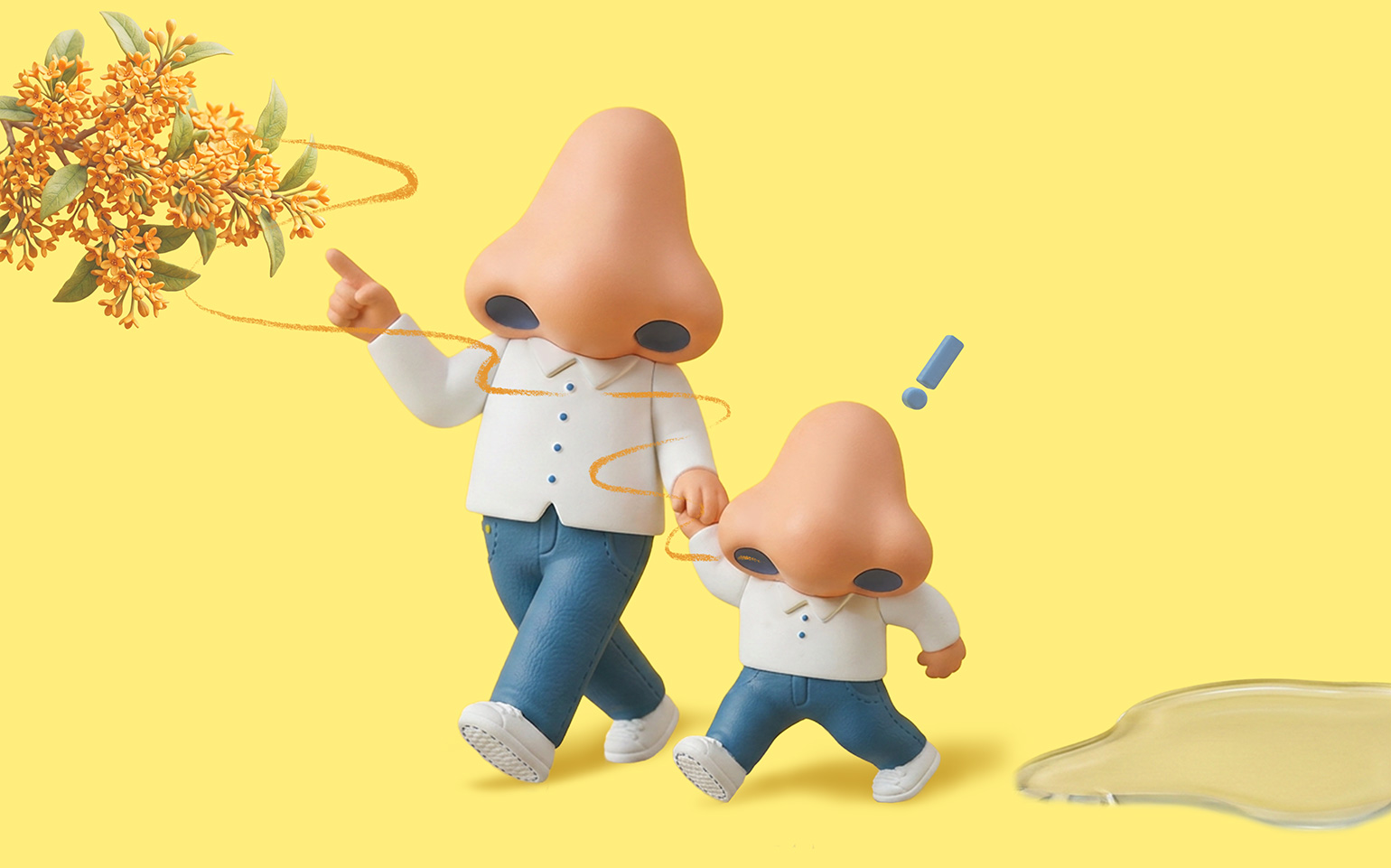
[Children’s Perspective Lab] When we delved deeper into children’s sense of smell, we found it to be far more profound than we imagined— it was a real eye-opener!
The moment they get in the car to go out: “Our car stinks!” The moment you serve a meal you worked so hard to make: “Today’s side dish stinks!” Or in an elevator with other people, they might blurt out, “This elevator smells bad,” leaving me on edge.
Everywhere in our daily lives, my 7-year-old and 5-year-old react to smells that adults don’t notice. Even when I ask, “What exactly smells bad?” the only answer is “It just smells weird…,” which just leaves me even more confused. When I consulted with members of our lab, I found out that many people have had similar experiences.
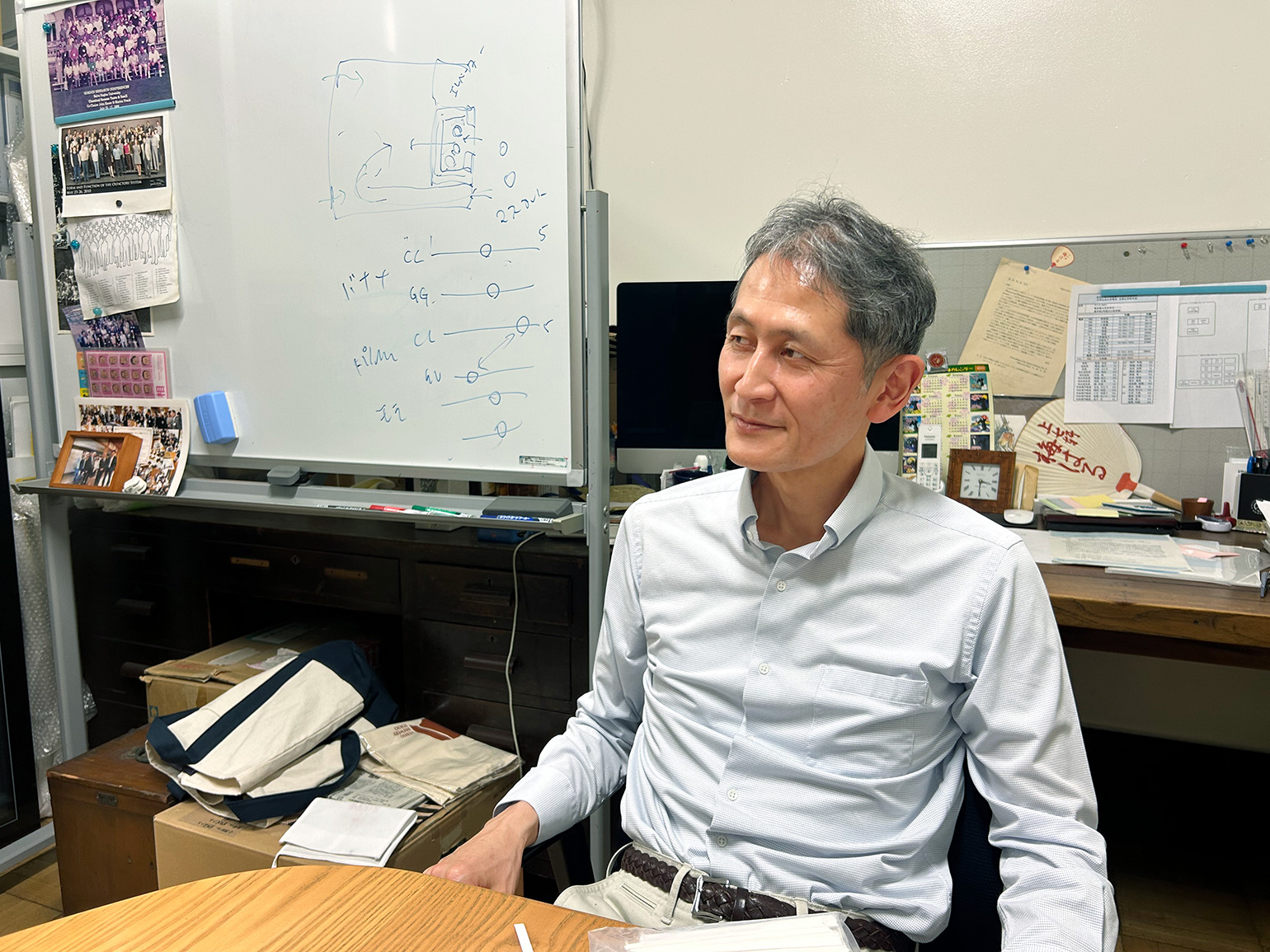
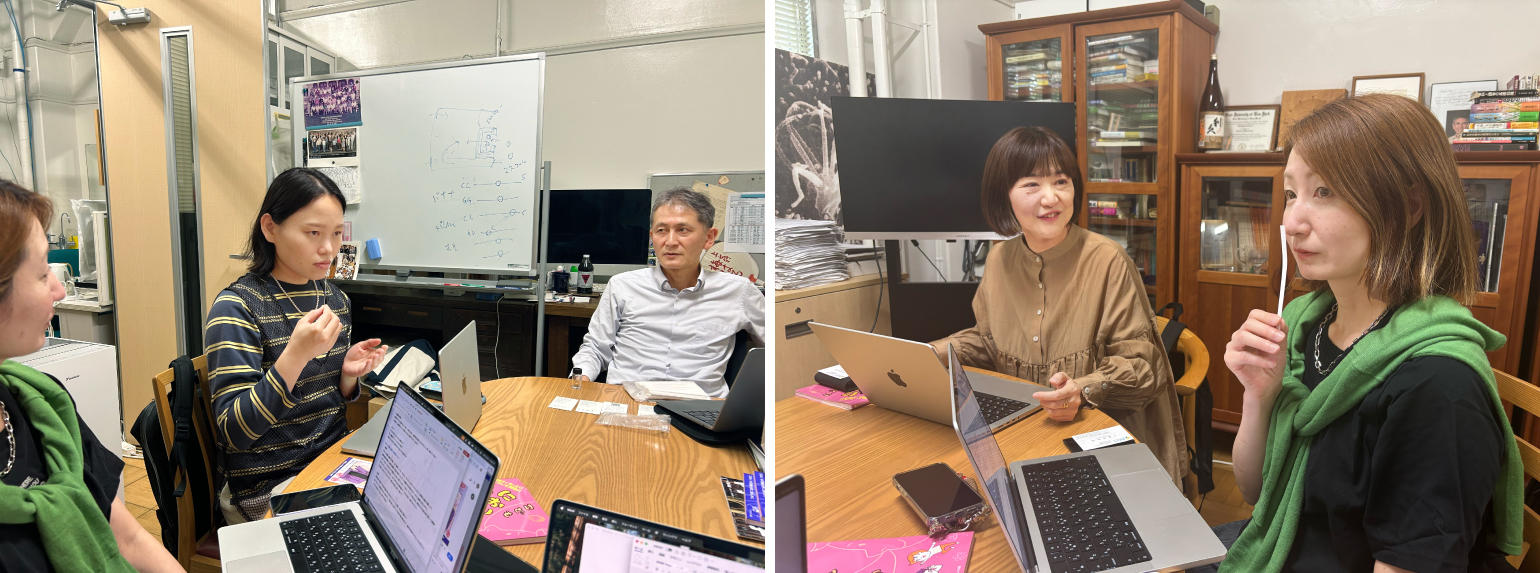
This made me wonder: Could it be that adults’ and children’s sense of smell are fundamentally different? So I decided to dig deeper into children’s sense of smell. For this article, the three of us—Ena Miyaura, Fumiko Ishida, and Kumiko Ota—spoke with Professor Kazunari Higashihara of the Graduate School of Agricultural and Life Sciences at the University of Tokyo, a leading expert in olfactory research.
Did You Know There Are Different Meanings Behind a Child Saying “It Smells Bad”!?
Miyaura: Nice to meet you. I’m here today hoping to find a happy solution to the “kids say it stinks” problem—one that’s likely happening in many households, including my own. My kids immediately react to all sorts of things by saying, “It stinks!” For example, they say it every time we get in the car, but I can’t smell anything, so I don’t know if they really mean it or if they’re just saying it on a whim…
Professor Higashihara (hereinafter, Professor): First, as a general rule , what children mean by “smells bad” isn’t necessarily the same as what adults mean by “smells bad.” For children, the word “smells bad” is used in various ways. For example, there are smells that the child doesn’t actually perceive as bad, but which have been labeled as “smells bad” because a parent taught them, “This is dirty and smells bad, so don’t touch it.”Then there are smells that they instinctively sense as dangerous, as animals do. And there are smells that make them feel anxious or uncomfortable simply because they’ve never smelled them before. Children use the word “smelly” to describe all of these.
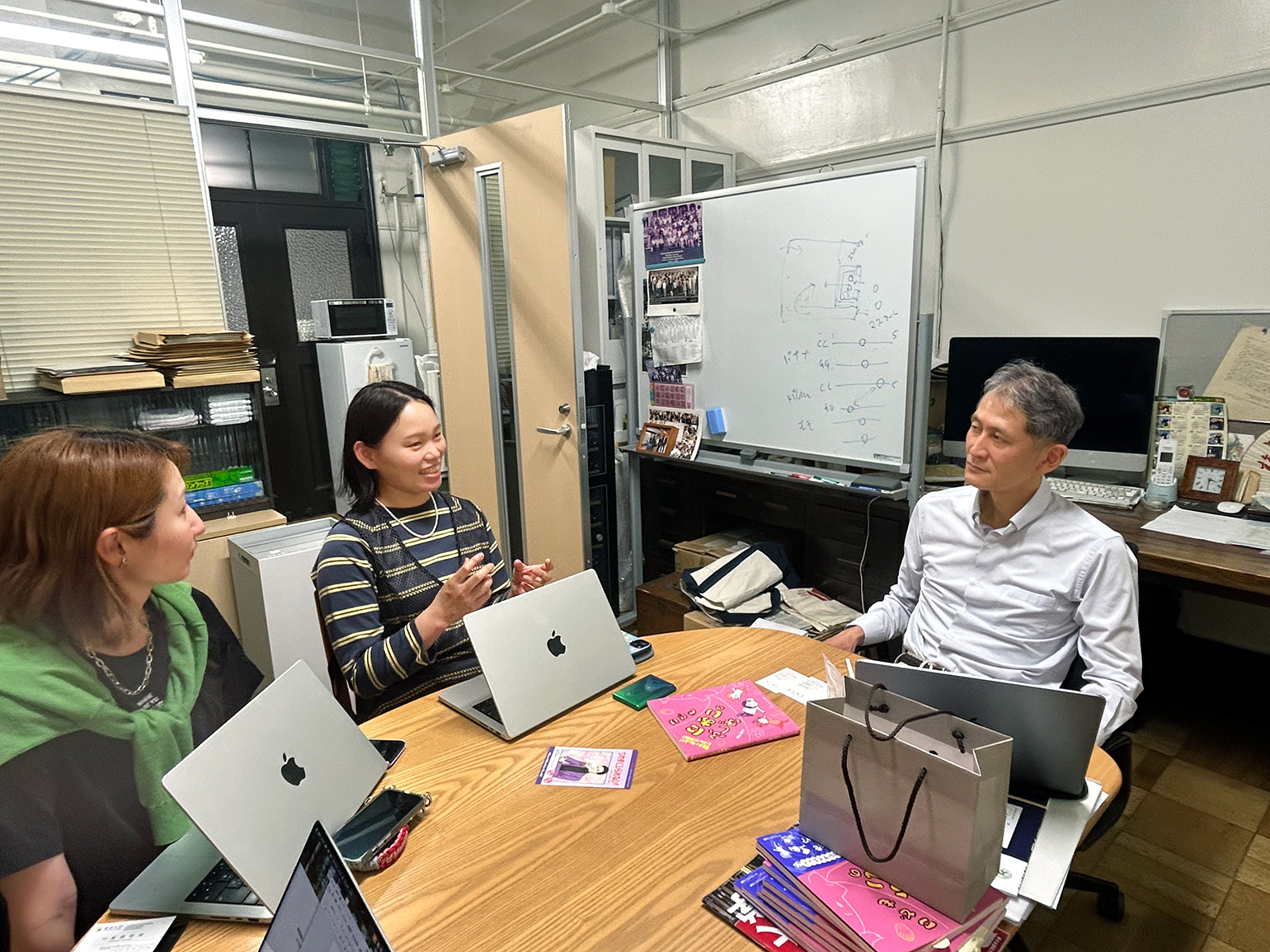
Professor Higashihara explains the difference between a child’s concept of “smelly” and an adult’s
Miyaura: Wow! So even unfamiliar smells end up being “smelly”! Children have far less experience with smells compared to adults, so it makes sense that they’d describe more things as “smelly.”
Ishida: So babies and children are actually more sensitive to smells than adults.
Professor: Yes. Adults are already familiar with a wide variety of smells, so they unconsciously ignore certain ones, but for children, every smell is a new experience, making them more likely to notice them. Also, our perception of smells is greatly influenced by past experiences. Take cars, for example: maybe they felt sick the last time they rode in one, or disliked how cramped it was, or got bored in traffic. If they have lingering negative memories like that from being in a car, I think there are many cases where those feelings combine to make them describe the car as “smelly.”
Ota: So it’s not always that they dislike the smell itself…!
Miyaura: That’s true. My kids don’t really like riding in cars because they can’t move around freely. No wonder putting air fresheners in the car didn’t help. What should we do in situations like that?
Teacher: For example, you could have them enjoy a conversation in the car, have them look out at the scenery, or play their favorite music—it’s a good idea to direct their attention to senses other than smell. If the time spent in the car becomes enjoyable, those unpleasant experiences will turn into positive ones, and before you know it, they might stop saying it “smells bad.”
Ishida: So, rather than trying to deal with the smell itself, it can sometimes be more effective to make the time spent in the car enjoyable. Earlier, you mentioned smells that instinctively signal danger—what kinds of smells are those?
Teacher: Well, for example, the smell of hydrogen sulfide. It’s a colorless gas that smells like rotten eggs, and at high concentrations, it’s a harmful substance that affects the human body. Sulfur-based smells like hydrogen sulfide are also found in daikon radishes, so there may be many cases where children who dislike daikon or takuan pickles actually dislike them because of this smell.
Ishida: The smell of daikon radish? I’ve never really thought about that before.
Teacher: If you find something tasty, you accept the smell and become less sensitive to it. For example, foods like natto and kusaya have strong smells, but once you taste them and find them delicious, the smell doesn’t bother you anymore. Also, as we grow older, our perception becomes more context-dependent, so even the same smell can feel different depending on the situation. Hydrogen sulfide, for instance, might make you flinch if you suddenly smell it in everyday life, but you don’t really notice it that much in a hot spring town, do you?
Everyone: That’s so true!
This nostalgic smell was actually the scent of ○○…!
Professor: Well then, let’s try an experiment. Please take a whiff of this. What do you think? (A bottle containing a mysterious liquid. The professor dips a scent strip into it and hands it to the lab members.)
Ota: I like this smell. It’s kind of like sweets.
Miyaura: It reminds me of a dresser? It’s a soothing scent—I like it, too.
Ishida: It has a nostalgic, Showa-era kind of scent.
The lab members each have their own impressions of the mysterious liquid’s scent
Professor: Actually, this is “old-age odor.”
Everyone: What?! (The group murmurs in surprise)
Professor: Now that you know the answer, please take another whiff.
Miyaura: An image of an older man popped into my head.
Professor: As you can see, our perceptions and preferences regarding the smell changed based on the information we received. This is a substance called “2-nonenal.” It’s produced when lipids in sweat oxidize, which is exactly why you get this scent when changing out your seasonal wardrobe. You can also detect a similar smell from old nuts and oil paintings. There was a time when it was even called “old man smell” because the oil in old pomades would oxidize and produce this scent.
Ishida: It’s fascinating how our perception of smells changes based on the information we have! Conversely, when we don’t understand language yet, we’re less influenced by that information, aren’t we?
Professor: Yes. For example, when a baby poops, since it’s something that came from their own body, they probably don’t find the smell itself unpleasant.
Ota: I heard once, while researching diapers, that the idea that “poop smells bad” is a result of social development. As children begin to understand language, hear their parents say “it smells bad,” and grasp that the toilet is where you go to the bathroom, they gradually start to perceive it as smelly.
Teacher: That’s exactly right. This is the kind of smell I mentioned at the beginning—one that isn’t originally perceived as smelly, but has been labeled as such.
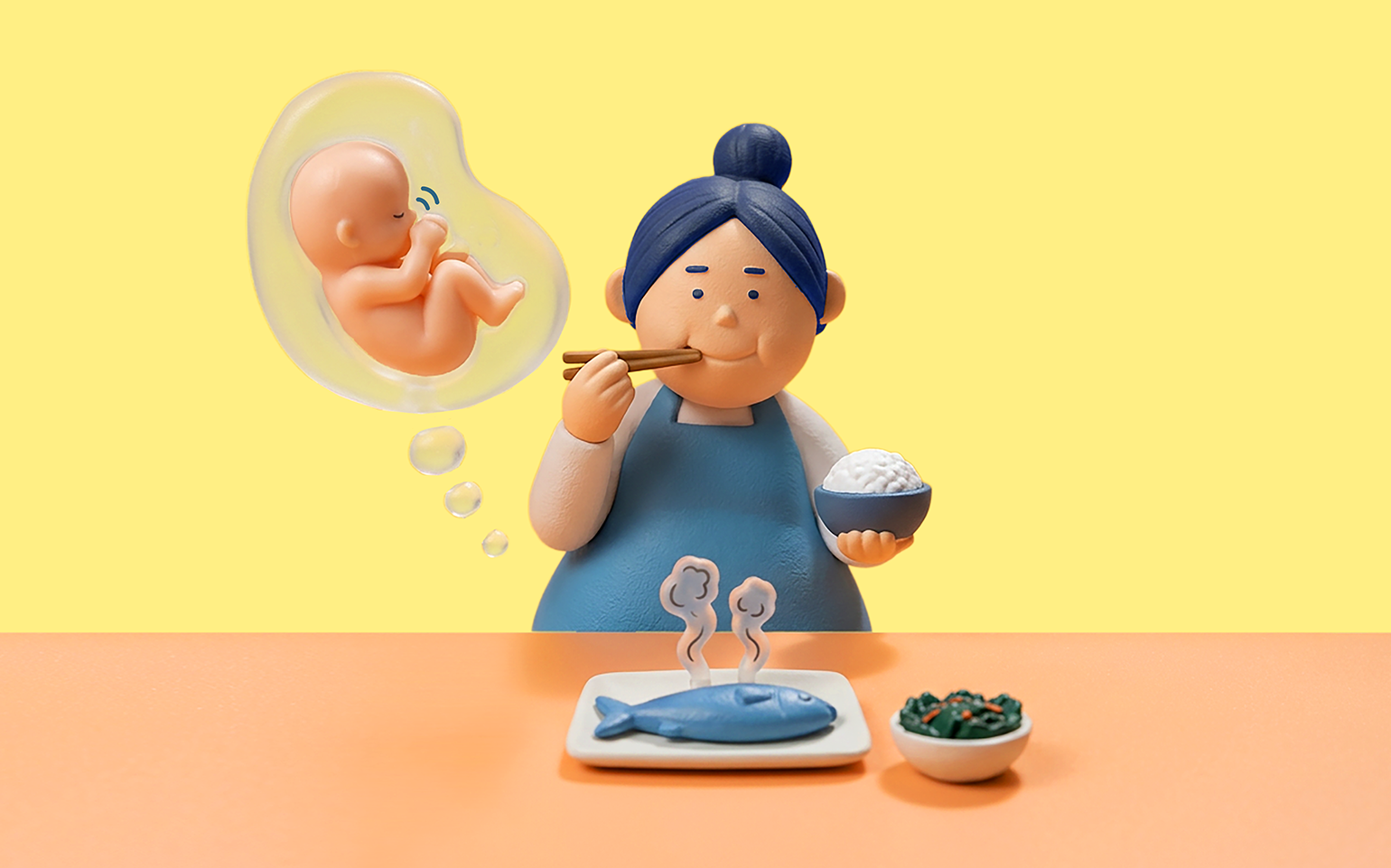
Babies smell the food their mothers eat while they’re still in the womb
Miyaura: The nose is much more complex than I ever imagined… Next, I’d like to ask about the development of the sense of smell. I remember being surprised when the midwife told me after I had my first child, “The baby already recognizes Mom’s scent.” Does the sense of smell develop earlier than other senses, like sight?
Dr. Miyaura: Yes, research has shown that even while in the womb, babies can detect their mother’s body odor and the smells of the foods she eats through the amniotic fluid. That’s why they often don’t find the smells of foods their mother frequently ate during pregnancy to be unpleasant.
Miyaura: Wow! Really? I never even considered back then that a mother’s diet during pregnancy could affect a baby’s sense of smell. For example, if a mother eats a lot of vegetables, will her child be less averse to vegetables?
Doctor: While there aren’t any specific experimental results regarding vegetables, a study conducted in France using the herb anise (a spice with a distinctive aroma) (*) found that babies born to mothers who didn’t eat anise disliked its smell, whereas babies born to mothers who ate it frequently showed no aversion to it. So, it might be a good idea to make a conscious effort to eat vegetables and fish during pregnancy.
*Source: Chem Senses 2000; 25: 729-37
Ishida: I’ve heard about the anise experiment before, during our research on taste. It’s fascinating, isn’t it! ( Click here for a past report on children’s sense of taste)
Miyaura: If only I’d known that information while I was pregnant…! But it’s amazing that babies are connected to their moms through scent even while they’re still in the womb. From that perspective, I suppose dads are inevitably a little behind, but is there anything dads can do after the baby is born?
Professor: It’s definitely about holding the baby a lot and being involved in their care. It’s not just about holding them—it’s also important to provide the basic care they need to survive, like feeding them. The more time Dad spends doing these things, the more the baby will feel secure with his scent and grow attached to him.
Ishida: Even if the baby cries when Dad holds them, I hope dads won’t get discouraged right away—keep trying to hold them often so the baby can get used to Dad’s scent. Go, dads!
Does a baby’s sweet smell actually resemble the scent of fresh oil!?
Ishida: Even if you hold your baby a lot when they’re little so they get used to your scent, once they reach middle school—especially girls—many go through a phase where they say, “Dad smells gross.” Is this because their sense of smell changes as they grow up?
Professor: In this case, it might often be that they’re not actually perceiving the scent itself, but rather just using “it smells bad” as an excuse…
Ishida: I see. That might be true.
Professor: However, one thing we can say for sure is that, over time, both fathers’ and mothers’ body odors change. As children grow into teenagers and then get older, our body odors evolve. So, the scent of a parent that a child remembered and found comforting at birth doesn’t necessarily last forever. This isn’t unique to humans—it’s the same for other animals as well.
Ota: So, changes in body odor are inevitable, aren’t they?
Teacher: Changes in body odor are proof that we’re alive.
Miyaura: “Proof of being alive”—that’s a lovely way to put it…!
Ishida: It’s true—the scent of a baby is completely different from that of an adult. Babies have such a lovely scent.
Professor: Babies have the scent of healthy oils—a fresh scent that hasn’t oxidized. As we age, our bodies become more prone to oxidation, so preventing oxidation is important when it comes to body odor as well.
Everyone: We don’t want to get oxidized~!
Scent is a “trigger” that brings back memories and emotions from childhood
Ishida: Come to think of it, there was a Buddhist altar at my grandfather’s house—I loved visiting him when I was little—and even now, the scent of incense makes me feel incredibly at ease. Why is that?
Professor: As I mentioned earlier, smells are influenced by “information,” but they’re also closely tied to “memory.” This is known as the “Proust effect”—a term derived from a scene in Marcel Proust’s novel *In Search of Lost Time*—and refers to the phenomenon where smelling a specific scent evokes memories and emotions from that time.
Miyaura: Knowing which scents can make you feel warm and fuzzy or help you relax just by smelling them seems like it could lead to better mental well-being and improved concentration, doesn’t it? Having lots of those “scent memories” seems like it would enrich your life.
Ishida: In recent years, concepts like “olfactory education” and “fragrance education” have been gaining attention. What can parents do for their children regarding scents in their daily lives?
Teacher: It’s important to let them experience a variety of scents and ingredients, and it’s not just about the scent itself—the conversation that takes place at that moment is also crucial. By associating the scent with a scene, words, and emotions, it becomes imprinted in their memory as “this scent is from when I was doing X at Y place.”
Ishida: I see. I thought it would be good to actively have conversations with my child, like saying, “That smells like [something],” and even if they say “It smells bad” when I serve a meal, for adults to eat it with relish—that way, we can increase their experience with smells while enjoying it together.
Miyaura: I’m always so pressed for time that I end up thinking, “Just eat it quickly without complaining!” but after hearing this, I realize I need to try to be more patient…
Lab members realize anew the importance of the sense of smell after hearing the professor’s talk
Ota: Hearing your talk really made me realize how important the sense of smell is. It’s such a vital sense, yet it’s strange that while health checkups include tests for vision and hearing, there aren’t any for the sense of smell… Does our sense of smell decline as we age?
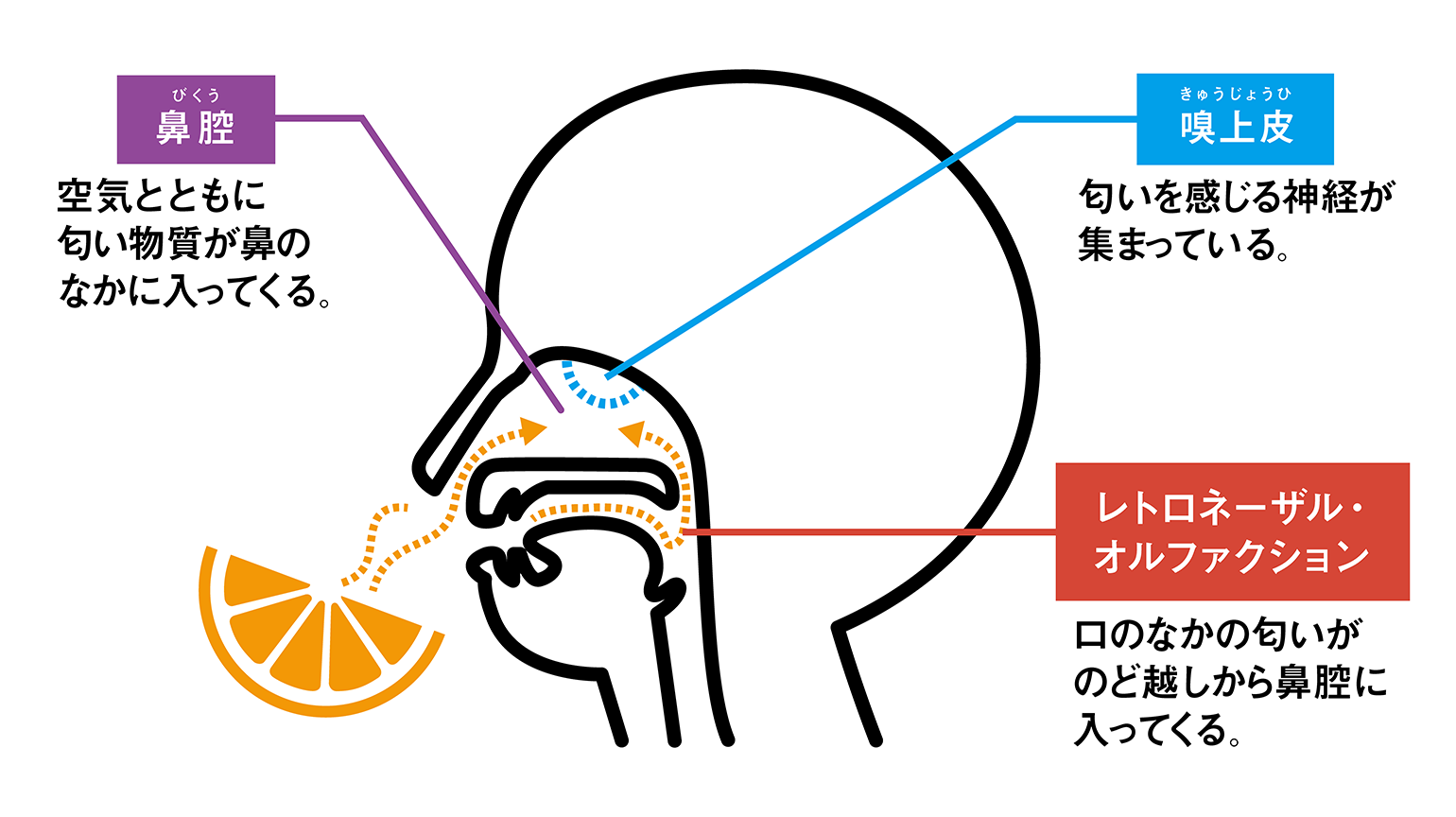
Professor: The number of olfactory receptors (which act like odor sensors) in the olfactory epithelium of the nasal cavity (see figure) is the same for both babies and adults. However, because the number of nerves inside the nose decreases, it’s said that our sense of smell declines to about 80 percent of its original level starting in our 70s and 80s.
Ota: What can I do to slow down the decline in my sense of smell?
Doctor: It’s important to pay attention to scents. For example, even while walking, try to consciously notice what scents are in the air. If you practice this, you’ll eventually be able to sense humidity through scents and even tell if it’s going to rain tomorrow.Also, enjoying food is important . Actually, the ability to enjoy taste and smell simultaneously is a trait unique to humans. Because the airway and esophagus intersect at the throat, humans can detect the scent that travels from the throat to the nose when swallowing food. Dogs, mice, and even chimpanzees—which are closest to humans—have different throat structures, so they cannot smell scents as they pass through the throat the way humans do. Being able to eat delicious food and feel happy is a privilege unique to humans.
Ishida: A privilege unique to humans! I had no idea.
Miyaura: I’m so glad to be human…!
See the illustration in Professor Higashihara’s book *The Mysteries of Smell for Children*
In the age of AI, it’s more important than ever to nurture the five senses, starting with the sense of smell
Ishida: These days, it feels like children are bombarded with so much visual information. For example, when eating out, many families—even though they know it’s not ideal—end up showing their kids videos to keep them from standing up or making a fuss. But you’re saying that unless we make a more conscious effort to let them enjoy smells, their sense of smell won’t develop fully, right?
Teacher: It’s very important to let children experience a wide variety of things, including smells. Especially as AI continues to rise in prominence, sharpening the five senses is crucial for preserving our humanity.
Ishida: That’s true—by the time today’s children become adults, the likelihood that AI will take over human jobs is going to be much, much higher…!
Teacher: Nurturing the five senses is precisely what cultivates the “human qualities” that AI can never possess. After all, AI will never be able to hold onto memories like the scent of walking alongside someone . We’re entering an era where having our senses stimulated and our sensibilities nurtured will make an even greater difference in what it means to be human.
Ota: We really need to let the kids have more diverse experiences…!
Teacher: It’s not just children—it’s also important for adults to occasionally act like kids again and enjoy all sorts of things. If you take a moment to truly experience things you’ve taken for granted, rather than just brushing them off, you might discover something new.
Miyaura: I want to rejuvenate my sensibilities…! From the children’s many expressions of surprise and understanding regarding the “It stinks!” issue, all the way to the things that are essential for them to survive in the future, this was a session full of learning. Thank you so much, Teacher.
Now, here’s a summary of today’s session.
● When children say something “smells bad,” it’s often linked to a sense of unease or anxiety about an unfamiliar smell, or to “unpleasant memories” like motion sickness. It’s important to understand that it’s not just about what adults consider “smells bad.”
● For example, when a child says “the car smells bad,” try redirecting their attention away from the smell—by singing their favorite song together, enjoying the scenery, or having a conversation. It’s effective to help them update that memory to “the car is fun.”
● Babies can sense their mother’s scent even while they’re still in the womb. Dads, even if your baby cries at first, hold and care for them often so they’ll come to associate your scent with a sense of security.
● In the coming AI era, “nurturing the five senses” will be humanity’s greatest asset. Don’t rely too much on sight; instead, join your children in smelling, touching, and experiencing the world to cultivate a rich sensibility.
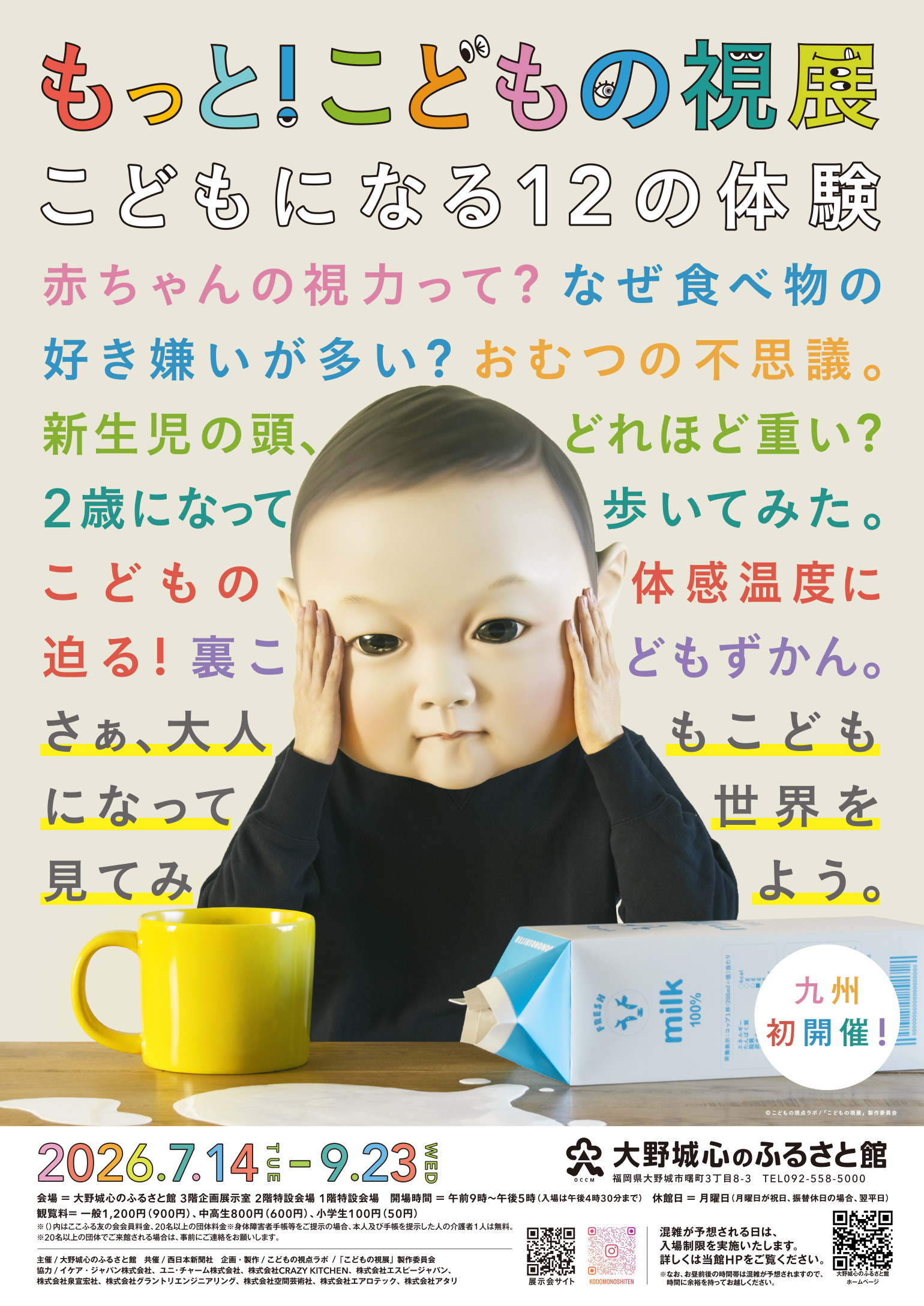
Through this “Sense of Smell” STUDY, we’ve gained yet another deeper understanding of children.Now, here’s an announcement. “More! Children’s Senses Exhibition,” an interactive exhibition where you can enjoy various studies from the Children’s Perspective Lab, is currently touring the country. The fifth stop is set to begin soon in Fukuoka, so please come visit us. (Scheduled to be held from July 14 to September 23, 2026, at the Onojo Kokoro no Furusato Museum.)
After living in Osaka, Canada, and France, he joined Dentsu Inc. As a commercial planner, he has worked on video production for a wide range of products, including cosmetics, home appliances, food, apparel, automobiles, and insurance.She has received awards including the ACC Award, the FCC Award, and the Fuji Sankei Group Advertising Grand Prix. As a member of the Children’s Perspective Lab, she was responsible for writing and planning the lab’s book *Hakkken! Kodomo Seijin* (PHP Institute). She is a mom of three wild kids. She loves comedy, horror, and dogs.
Joined Dentsu Inc. after working at a production company, as a freelance copywriter, and at an advertising agency.
Recipient of numerous awards, including the Senden Kaigi Grand Prix, the TCC Newcomer Award, the ACC Journalist Award, the New York Festival, and the Spikes Asia Gold Award. Representative of the “Children’s Perspective Lab.” The Lab’s publications include the book *What If You Saw the World Through a Child’s Eyes?*, and the picture books *Let’s Become Kids!*, *Sui-chan Is Busy*, *Discovery! The Child Alien*, and *Omucchan*. She is also the mother of Ichchan, a boy with strong preferences.
Primarily an art director, she also works as a commercial planner. Member of the Children’s Perspective Lab. Currently struggling to raise three daughters who look exactly alike. Intrigued by her children’s frequent use of the phrase “yabai,” she planned and produced the picture book *Yabai Yabai* (Poplar Publishing). She also illustrated the Lab’s book *Omucchan* (Gakken).
Graduate School of Agricultural and Life Sciences, Department of Applied Life Chemistry
Biochemistry Laboratory, Professor
Graduated from the Department of Agricultural Chemistry, Faculty of Agriculture, University of Tokyo in 1989. Completed his Ph.D. in Chemistry at the State University of New York at Stony Brook in 1993. Held positions as a postdoctoral researcher at Duke University, a research assistant at the University of Tokyo Faculty of Medicine, a research assistant at Kobe University, and an associate professor at the Graduate School of Frontier Sciences, University of Tokyo, before assuming his current position.He will serve as President of the Japanese Society for Taste and Odor Science starting in 2024 and as Dean of the Faculty of Agriculture at the University of Tokyo starting in 2025. His specialty is olfactory research on odors and pheromones. His major publications include *The Science of Chemical Sensation* (Kagaku Dojin), *The Mysteries of Smell and Taste* (Nijyu-sha), *The Aromas of Wine* (Nijyu-sha), and *The Mysteries of Smell for Children* (Life Science Publishing).

 Children's Perspective Lab Report [15/15]




![[Children’s Perspective Lab] When we delved deeper into children’s sense of smell, we found it to be far more profound than we imagined— it was a real eye-opener!のサムネイル](https://cdn.speedsize.com/e7df76a9-4406-40f5-bc97-57e7c2c2d99d/https://cdn.dentsu-ho.com/1fffc851-e958-4664-894a-e4ad5de59c33/kodomonoshiten15_top.jpg/f_auto,w_3840)