Now that the diversification of media has significantly changed consumers’ information-seeking behaviors, what value and role do newspapers play? With this question in mind, Dentsu Inc. conducted the “Newspaper Media Value Survey ” (hereinafter referred to as the ANCHOR Survey).A key feature of this survey is that it provides a cross-sectional analysis of the diverse channels surrounding today’s newspaper media—including not only “print newspapers” but also “newspapers (digital page viewers),” “newspaper publishers’ paid web articles,” and “newspaper publishers’ free web articles.”
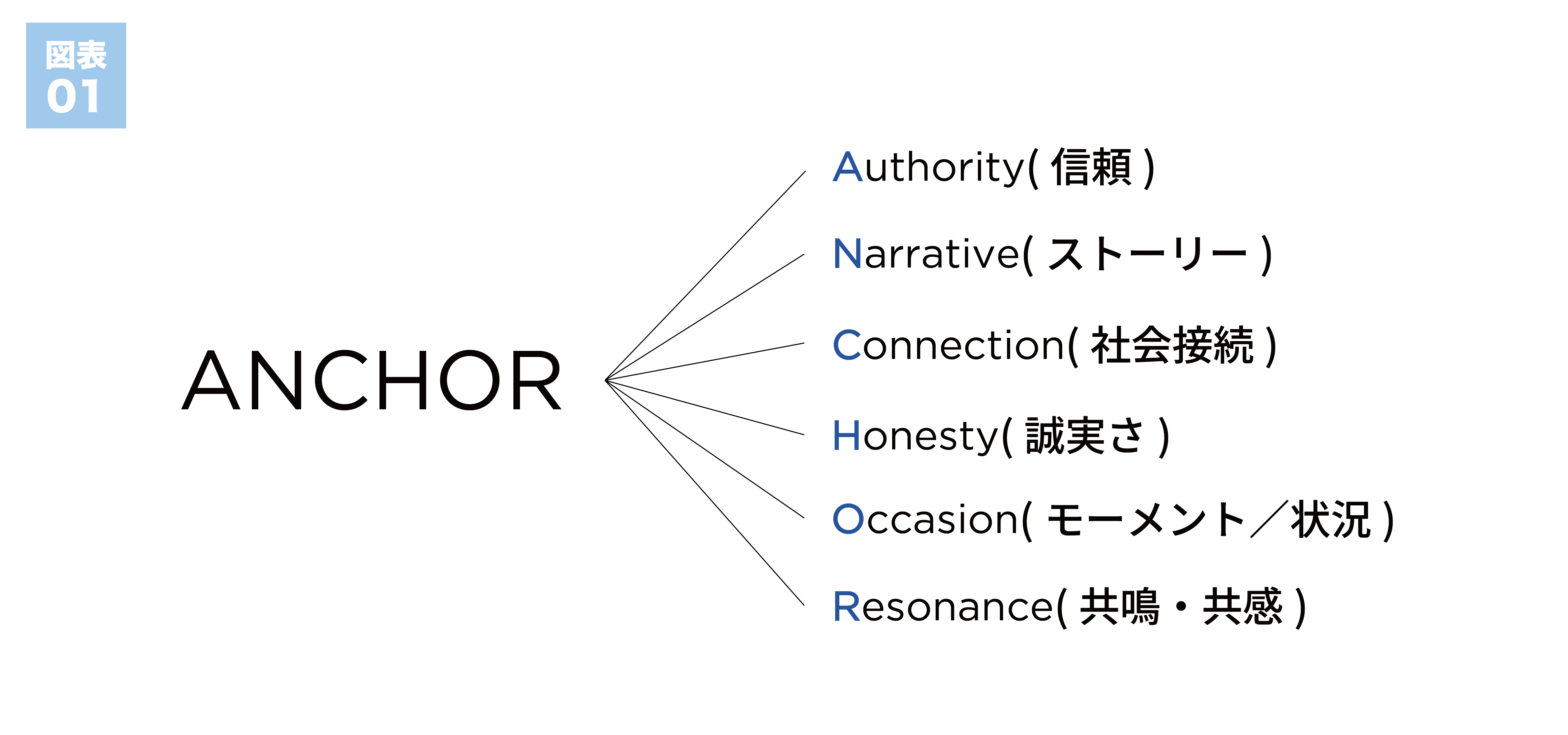
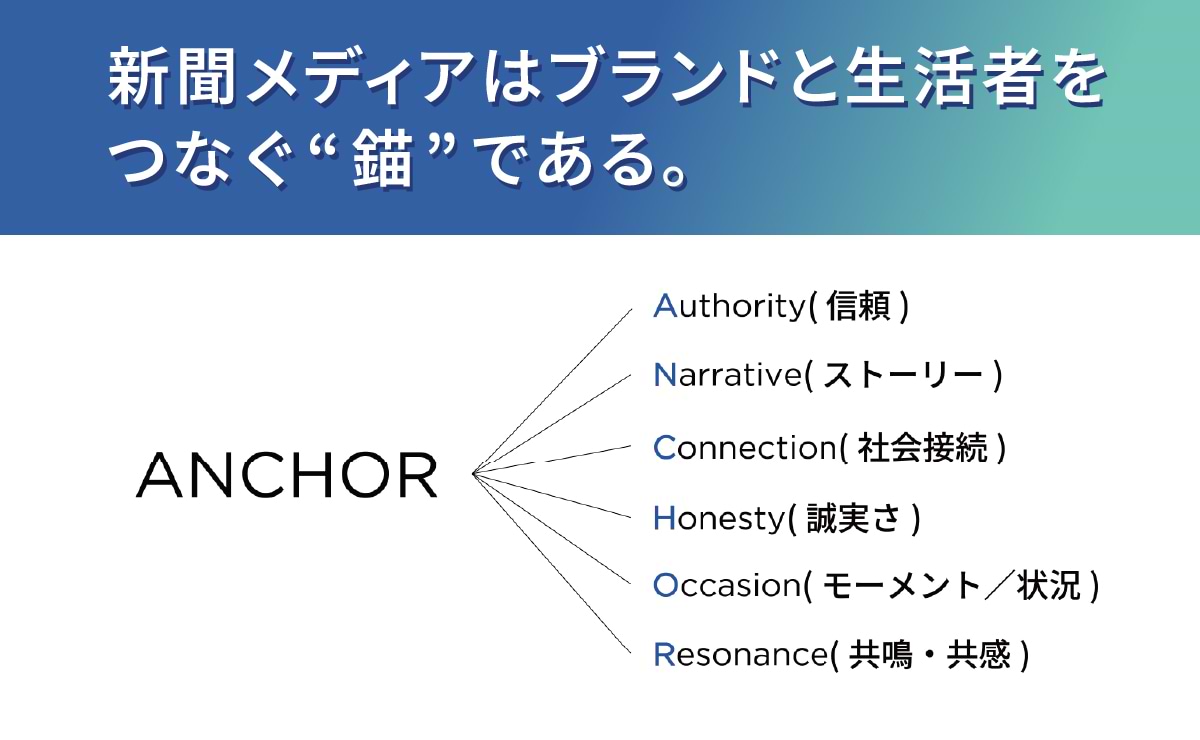
In Part 1, based on “ANCHOR”—the six value axes for newspaper media in the advertising domain proposed by Dentsu Inc.’s Media Services / Newspaper Division—we analyzed consumers’ perceptions of “newspapers” and “newspaper advertising” across each channel and revealed detailed personas of newspaper readers.
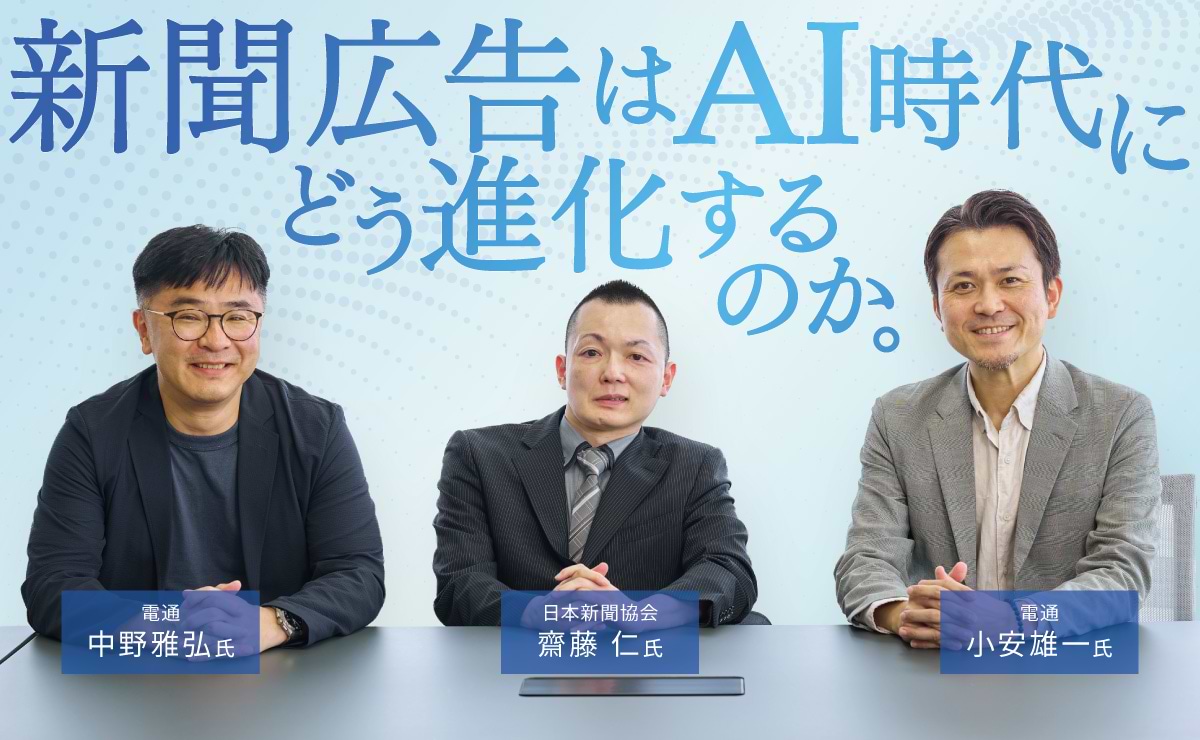
In this installment, building on those findings, we take it a step further with a roundtable discussion on the theme “How should companies and advertisers utilize newspaper advertising?”We invited three experts—Hitoshi Saito of the Japan Newspaper Publishers & Editors Association’s Marketing Strategy Team (Yomiuri Shimbun, Tokyo Headquarters); Masahiro Nakano, General Manager of Dentsu Inc.’s Marketing Division 1; and Yuichi Koyasu of Dentsu Inc.’s Media Services / Newspaper Division—to discuss the new possibilities of newspaper advertising and how it should be utilized in the era of the web and AI.
For details on the survey results mentioned in this roundtable discussion, please see this article.
(From left) Masahiro Nakano of Dentsu Inc., Hitoshi Saito of the Japan Newspaper Publishers & Editors Association, and Yuichi Koyasu of Dentsu Inc.
Newspapers Were Not Merely “Trusted”
—First, what were the key findings revealed by this “ANCHOR Survey”? Please provide a brief overview of the survey along with your insights.
Koyasu: This survey targeted 8,250 men and women nationwide aged 15 to 69. It examined their perceptions of a total of 18 media outlets—including the four major mass media (television, radio, newspapers, and magazines), as well as portal sites, news sites, video services, social media, and outdoor advertising.
Mr. Yuichi Koyasu, Solution Strategy Department, Media Services / Newspaper Division, Dentsu Inc.
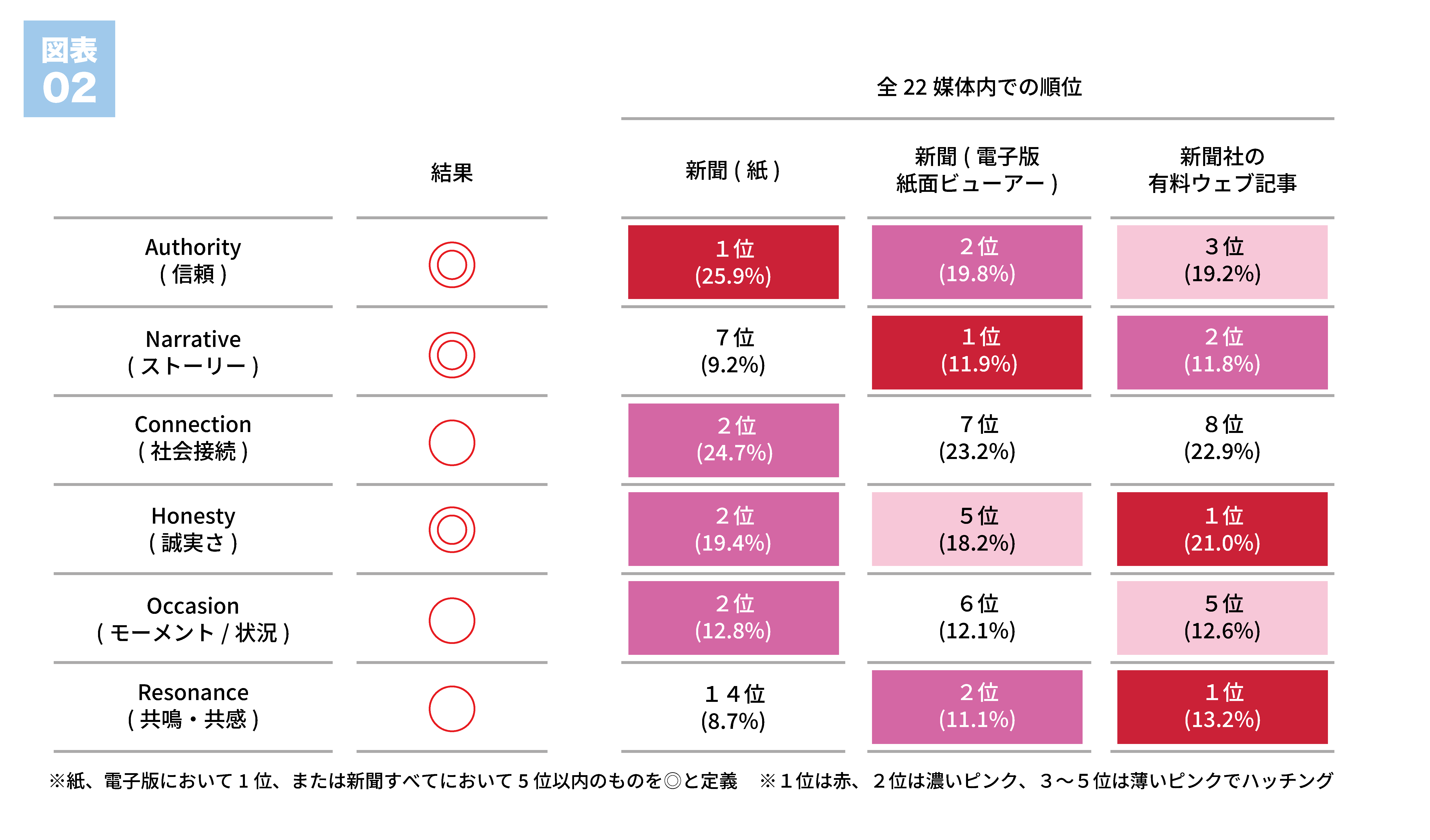
Based on this, Dentsu Inc.’s Media Services / Newspaper Division established a hypothesis called “ANCHOR,” consisting of six value axes, specifically regarding “newspapers” and “newspaper advertising,” which are the primary focus of our division.How are newspaper advertising messages perceived by consumers? Our analysis revealed that advertisements published in “print newspapers,” “newspapers (digital edition page viewers),” and “newspaper publishers’ paid web articles” received significantly higher ratings than other media across all ANCHOR metrics, thereby validating our hypothesis.
“ANCHOR” means “anchor” in English. “We believe that in the realm of advertising, the newspaper media can serve as an ‘anchor’—a force that connects brands and services with consumers through ‘meaning’ and helps them take root in society,” said Mr. Koyasu.
Furthermore, it became clear that newspaper subscribers tend not only to carefully read newspaper ads as a form of content but also possess a high level of understanding of complex current affairs terminology and political and economic conditions. Additionally, it was found that they are highly motivated to discuss information obtained from newspaper articles within real-world communities and to actively share it on social media, often serving as hubs themselves.
In short, it is not merely a matter of “newspapers being trusted.” We view the data we’ve obtained as providing grounds to reevaluate the marketing functions of newspaper media in terms of how they “reach ‘highly literate’ consumers who deeply understand information, generate ‘empathy,’ and lead to dialogue in real-world settings as well as ‘viral sharing’ on social media.”
Hitoshi Saito, Member of the Marketing Strategy Team, Japan Newspaper Publishers & Editors Association
Saito: As someone involved in the Japan Newspaper Association’s “Survey on the Role of Newspapers in the Multi-Media Era and Trends Among Media Consumers,” I agree with that point. The Association’s survey also shows that newspapers score higher than other media on metrics such as “accurate and highly reliable information,” “reassuring,” “broad coverage of current events,” and “neutral and fair.”We, too, have been communicating these points as the value of the newspaper medium. In the context of this ANCHOR survey, I feel that the strengths of the newspaper medium have been reaffirmed in areas related to “Authority,” “Connection,” and “Honesty.”
I also found it genuinely interesting that the survey used the new “ANCHOR” value framework to evaluate multiple media types across the board. While the Newspaper Association’s surveys have previously analyzed users of digital editions and websites by segment, it was refreshing to see “newspaper publishers’ paid web articles” evaluated as a standalone category. Moreover, they ranked first in the “Honesty” and “Resonance” categories.
Furthermore, from the perspective of contributing to consumer behavior, the study indicated the potential for these articles to lead to repeat purchases and increased brand loyalty. Newspaper advertising is a medium that goes beyond “branding” and “delivering corporate messages” to contribute to the “last mile” that drives purchases. I believe that visualizing this potential through data was of great significance in reaffirming the value of newspaper advertising to advertisers.
Serendipity Was Happening on Social Media, Not in Print
――On the other hand, were there any unexpected results from the ANCHOR survey?
Koyasu: Actually, separate from ANCHOR, we had also formulated six hypotheses regarding the characteristics of newspaper readers and the newspaper media.
(1) Newspaper readers have a strong interest in the liberal arts
(2) Newspaper readers have a high level of understanding of complex current events terminology and political and economic conditions
(3) Newspaper readers carefully read newspaper ads and perceive them as content on par with articles
(4) Newspapers are a “serendipity medium,” and many readers find value in encountering content or advertisements they weren’t even aware of
(5) Newspapers are “moment media”; many readers use them to sense seasonal changes and societal trends, which then influence their own actions
(6) Newspapers are community media, and newspaper articles and advertisements tend to boost conversations within the communities to which readers belong to a greater extent than other media do
In conclusion, with the exception of the fourth point—“Newspapers are a medium of serendipity”—the results generally aligned with our hypotheses.
We believed that with a newspaper’s at-a-glance format, even when readers are reading solely for lifestyle information, they naturally come into contact with information—such as international affairs and the economy—that they might not normally be interested in. We considered this to be a unique strength of newspapers. However, on this point, the evaluation was not as high as we had anticipated.
On the other hand, the survey revealed another interesting trend. Newspapers—and paid web articles in particular—are easily shared and disseminated on social media, and newspaper readers themselves tended to actively share information about current events . In other words, serendipity may arise not only from accidentally encountering information while reading the newspaper itself , but also through “encountering new information when someone shares a newspaper article on social media.”
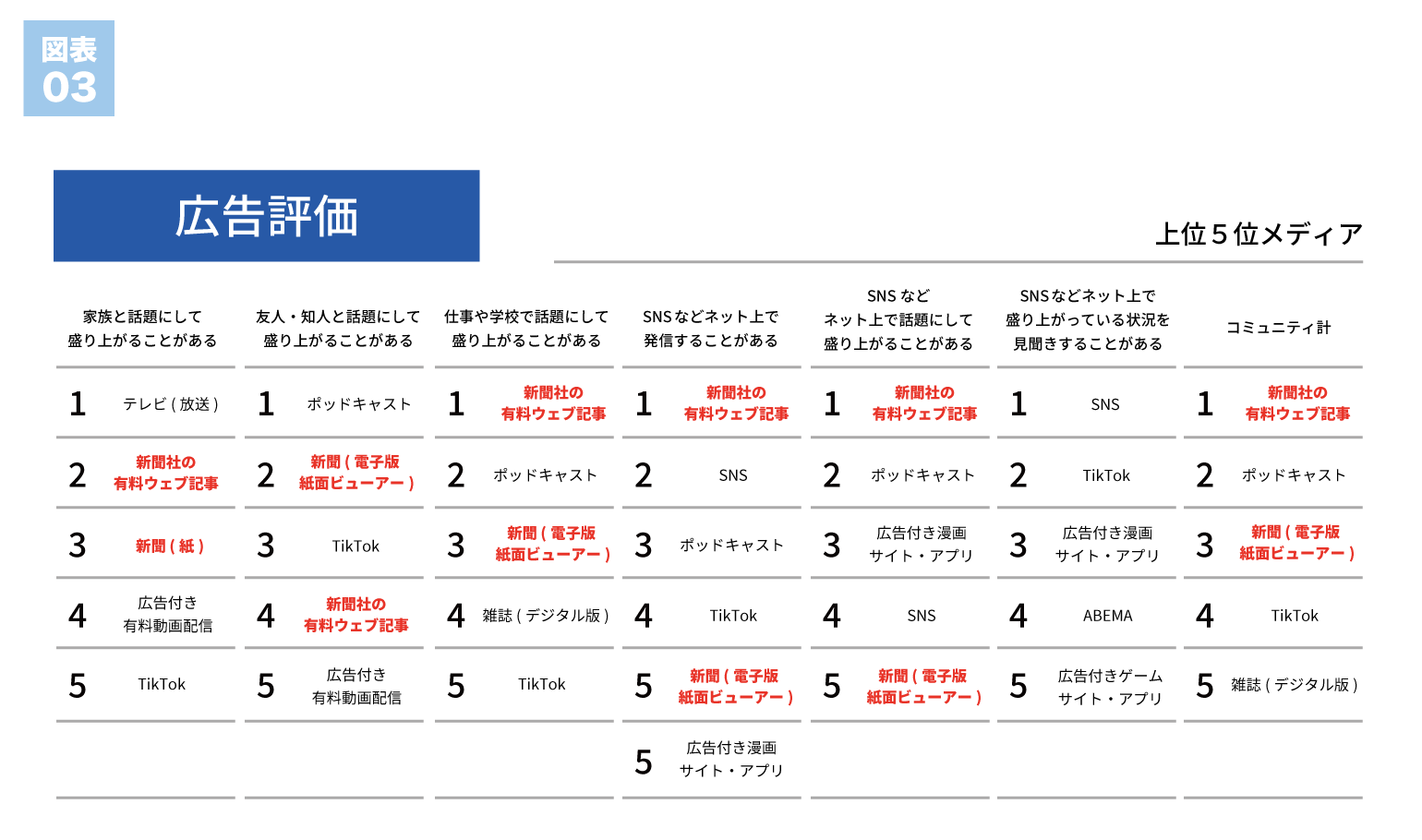
The survey results showed that, particularly regarding the “community media” aspect of advertising evaluation—specifically items related to sharing information and stimulating conversation within communities, such as “I sometimes post on social media or other online platforms”—“newspaper publishers’ paid web articles” received particularly high ratings.
Nakano: I believe that is precisely the essence of how information circulates today. If we look at newspapers in isolation, the level of serendipity may not be as high as we might expect. However, when we consider the entire information ecosystem—including social media—a structure emerges in which newspapers serve as the starting point for information that then spreads outward.
From this perspective, it becomes crucial to design newspaper advertising not merely to deliver the same message to a broad audience, but to first reach “people who are eager to share and receptive to information,” and then use them as a starting point to spread the message throughout society.
Newspapers have the strength to edit and package information in a way that fosters deep understanding. By designing campaigns that combine this value with information distribution channels such as social media, it becomes possible to engage in communication with a view toward ultimately fostering social consensus.
Masahiro Nakano, General Manager, Marketing Division 1, Dentsu Inc.
The Role of Newspaper Media, Redefined in the AI Era
――By the way, I have the impression that this used to be discussed in terms of a “print vs. digital” dichotomy. What strategies do you think could be employed to make the most of both?
Koyasu: Previously, I tended to think that “synergies were unlikely to arise.” This was because I believed that people reading newspapers in print rarely looked at their smartphones at the same time, so simultaneous engagement with print and digital was rare.
However, with more people now obtaining information via social media and generative AI, I feel that premise is changing. As I mentioned earlier, avid newspaper readers—regardless of whether they read the print edition or the website—share the content of articles and advertisements through social media and other channels.
Furthermore, the recipients of this information are increasingly not just people, but also AI. To be referenced by AI, it is of course important for companies to disseminate information “sincerely” through their own media channels; however, in addition to that, whether through advertisements or features in articles, having that information disseminated via a third-party entity—such as a newspaper publisher—further enhances its credibility.
The social trust placed in brands that have consistently published print newspapers, combined with the domain authority of newspaper websites— these two assets, when combined, will enable newspaper media to demonstrate even greater value in the AI era than ever before.
“What is said,” not “who says it”: The social consensus-building power of newspaper advertising
――The high level of acceptance for newspaper ads was also striking in the survey results.
Koyasu: That’s right. Particularly regarding “paid web articles from newspaper publishers,” the ads received high praise, with comments such as “the ads are just as interesting as the content” and “I like the ads.”
In that context, what surprised us even more was the gap in understanding of current affairs terminology. For example, while 25.6% of newspaper readers understood “GDP (Gross Domestic Product),” only 7.2% of non-readers did. There was also a significant difference regarding “negative interest rates”: 22.8% of newspaper readers versus 5.3% of non-readers.
Not only are newspaper ads more likely to be read, but there’s also a higher probability that the message will be accurately conveyed. No matter how carefully a company crafts its message, communication cannot succeed if the audience doesn’t understand it. I believe that newspaper readers’ comprehension skills and information literacy are an incredibly valuable asset for marketers.
――What kind of creative approach is required in newspaper advertising to deliver a message to such readers?
Nakano: When considering this point, “influencer marketing” serves as a clear point of comparison. On social media, “who says it” is what matters. People pay attention precisely because a trusted influencer is speaking.
On the other hand, what matters in newspaper ads is “what is being said.” For example, the 15-column ad is a prime example of this. A company polishes its most important message to the absolute limit and crystallizes it into a single piece of copy. I believe newspaper ads are a medium that, built on the “credibility” inherent in newspapers, can deliver a company’s “philosophy” as a complete package. Then, the people who receive that message spread it to those around them—both in real life and on social media.When combined with influencer campaigns, we can design a strategy that penetrates society by leveraging both “who says it” and “what is said.”
The ultimate goal is to build a social consensus that “this is the kind of company it is” or “this is the kind of brand it is.” I believe newspaper advertising possesses the power to create the words that serve as the starting point for this and to spread them throughout society.
Newspaper advertising should be viewed not as a one-time “placement,” but as a medium-term project
—Please share a message for advertisers who are considering placing newspaper ads in the future.
Saito: As revealed in this ANCHOR survey, newspaper advertising is not merely a means of delivering information about products or services; it also has the unique characteristic of being a “moment-based medium” that is perceived in connection with current social conditions and seasonal feelings.
For example, by communicating social themes—such as starting a new life, disaster preparedness, environmental issues, and regional revitalization—at times when consumers are mindful of seasonal transitions or societal changes, you can foster deeper empathy and understanding. Furthermore, by leveraging the strong influence of newspaper readers as information disseminators, there is a high likelihood that such advertisements will spread as “topics of public discussion.”
On the other hand, in recent years, the very nature of traditional seasonal rhythms and societal milestones has been shifting due to the effects of climate change, such as extreme heat waves. That is precisely why it will become even more important for companies to focus on “social issues” and continuously communicate their stance and purpose. As a platform for this communication, the significance of utilizing newspaper advertisements—which are naturally tied to specific dates and the calendar—is likely to grow more than ever before.
Nakano: I believe newspapers are a medium that can serve as both the “starting point” and the “convergence point” of communication. For some time now, I’ve believed that newspapers should be referred to not as “print media” but as “statement media.” They are a platform for companies to declare to society, “This is who we are,” and once a message is sent out, there’s no turning back. That’s precisely why those words carry such weight.
They can serve as the starting point for a company or brand to first articulate its intentions, and amid the constant flow of information, they can also act as a focal point that consolidates society’s understanding—“In short, this is how this company thinks.” I believe newspaper ads have the power to serve as both the beginning and the end of communication.
Koyasu: Finally, from a practical standpoint, I’d like to emphasize that placing newspaper ads should be viewed not as “media planning” but as a standalone “project.” This is because the results we aim to achieve through newspaper ads cannot be measured solely by short-term conversions, such as the number of inquiries. I believe they should be evaluated using metrics closely tied to non-financial value—such as “brand lift,” “NPS (*),” and even the company’s relationship with society and the trust of its stakeholders.
That is precisely why it is important to clarify and share internally—with the involvement of senior management—what message the company wants to convey to society, and to design a comprehensive communication strategy that encompasses the subsequent dissemination of that information. Only by going through such a process can we achieve medium- to long-term improvements in non-financial value, and only then will the value of newspaper advertising be fully realized.
*NPS: Abbreviation for “Net Promoter Score,” a metric that measures customer loyalty (trust in and attachment to products or services)
Group Leader, Business Strategy Center, Business Bureau, Yomiuri Shimbun Tokyo Headquarters; and Innovation Headquarters
Since 2015, he has been involved in marketing operations for the Yomiuri Shimbun’s business (advertising) division.He has been involved in the operation of “J-MONITOR,” a common newspaper advertising research platform used by major newspaper publishers, as well as initiatives—in collaboration with advertising agencies—to visualize the effectiveness of newspaper advertising based on behavioral logs, working to strengthen accountability for newspaper advertising effectiveness. Since 2022, he has served as a member of the Japan Newspaper Publishers & Editors Association’s Marketing Strategy Team, striving to communicate the value of newspaper media through media evaluations and surveys of audience trends.
Masahiro Nakano
Dentsu Inc.
Director of Marketing Division 1
An expert with many years of experience at Dentsu Inc., where he has been involved in the planning and execution of marketing strategies. His expertise spans a wide range of areas, from corporate brand strategy to consumer behavior analysis and communication design. As Director of the First Marketing Bureau, he proposes optimal solutions that fuse data and creativity to address a diverse array of client challenges. In particular, he has demonstrated exceptional skill in directing integrated campaigns that combine traditional mass advertising with digital marketing.
Media Services / Newspaper Division, Solutions Strategy Department
Senior Producer
I am in charge of strategic advertising planning and media planning utilizing newspaper media. With a deep understanding of the characteristics of newspaper media, I develop creative solutions to address clients’ challenges. I focus particularly on initiatives that integrate with newspaper content and data, as well as on pioneering new business models. I am redefining the value of newspaper advertising and have led numerous projects by designing high-quality communication strategies that connect advertisers with readers.

 The Six Value Pillars of Newspaper Media—Demonstrating “ANCHOR,” Which Generates Empathy, Dialogue, and Outreach [2/2]