Note: This website was automatically translated, so some terms or nuances may not be completely accurate.
 Dentsu Inc. B Team's Alternative Approach [11/11]
Employees’ “B-Sides” Become a Company’s Strength: Dentsu Inc. B Team Holds Its First “B-Side Summit”
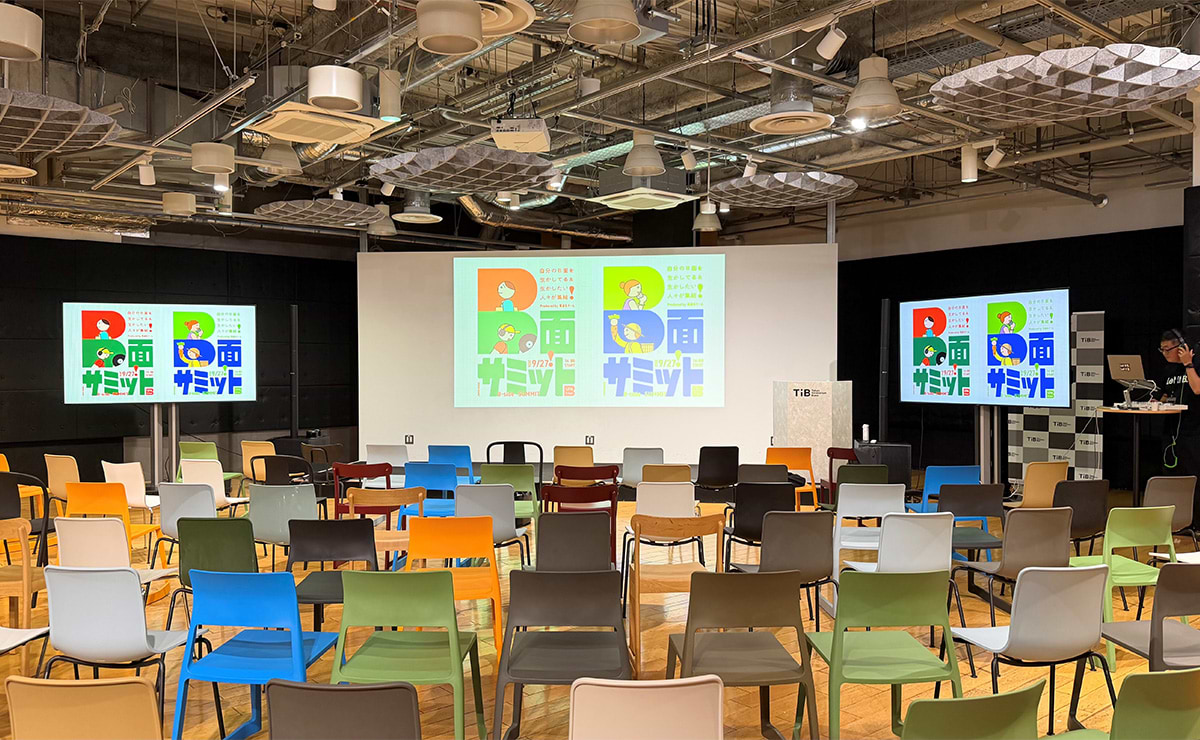
On September 27, 2026, Dentsu Inc.’s B Team held its first “B-Side Summit” at the Tokyo Innovation Base in Yurakucho, Tokyo. Marking the 12th anniversary of the team’s inception, this event was an effort to share the philosophy of “harnessing people’s B-sides”—which has been practiced within Dentsu Inc.—with the outside world and to forge connections that transcend the boundaries of companies and organizations.
<Table of Contents>
▼AnotherSideof Dentsu Inc., Built on Curiosity
▼Now More Than Ever, as the Term “B-Side” Gains Traction
▼When You Set Aside Titles, New Points of Connection Emerge
▼Each Person’s “Strengths” Lead to New Projects
▼5 Steps to Applying Your “B-Side” to Your Main Job
▼Turning Employees’ “Untapped Potential” into Organizational Strength
Another Side of Dentsu Inc., Built on Curiosity
If we consider one’s main job to be the “A-side,” then the “B-side” refers to the aspects of a person’s life separate from their professional title—such as side jobs, hobbies, previous careers, or college majors.Dentsu Inc. B Team is an organization that connects the firsthand insights each member has accumulated throughout their lives. Since its launch in 2014, members have brought together the firsthand insights and experiences gained from their respective “B-sides” to propose “Plan B”—approaches that differ from conventional methods—and have created small-scale experiments and alternative pathways to break through the stagnation that cannot be overcome using “A-side” methods.It is a cross-functional organization within Dentsu Inc. that has prioritized respecting individuals’ interests and strengths while providing new approaches to businesses and society.
Rather than beginning research only after receiving an assignment, members draw on the vast body of knowledge they have accumulated throughout their lives to devise the approaches that are needed. Their strength lies in their ability to quickly generate unique ideas by pooling experiences and professional networks that are difficult to uncover through conventional searches. Today, members with diverse “B-sides” continue to engage in research, concept development, and project creation.
Now that the term “B-side” has become widely accepted,
when we launched the Dentsu Inc. B Team 12 years ago, it was not yet common to refer to one’s main profession as the “A-side” and personal activities, hobbies, previous jobs, or college majors as the “B-side.” Back then, I think the term “B-side” evoked the image of the back side of a record or cassette tape. Hardly anyone used the term “B-side” to describe a person’s special skills, talents, or personal aspects.
After Dentsu Inc. published the book *Mixing “What You Love” Into Your Work: Tips for Applying Your “B-Side” to Your Main Job* (Shoei-sha), the concept of the “B-side” in relation to human resources rapidly spread throughout society.
The significant changes in work styles over the past 12 years have also helped drive this trend. In particular, the rise of side hustles has made it clearer that people are not defined solely by their job titles or roles within a company; they also have activities and areas of expertise outside of that framework. In that sense, I believe the wave of side hustles has helped propel the “B-side” concept forward.
And now, another major change is AI. As AI takes on more and more knowledge and tasks, it conversely becomes even more important to understand what people enjoy, what they’re good at, what sparks their curiosity, and what they’ve continued to do even without being asked. Perhaps the truly important aspects of being human are actually packed into this “B-side.” (The question “Does AI have a B-side?” is also an interesting one, but I’ll save that discussion for another time.)
That is precisely why it’s important not to treat the “B-side” as merely a hobby or leisure activity separate from one’s main job, but rather to leverage the experiences, firsthand knowledge, and unique perspectives accumulated there to enrich one’s primary “A-side” work.
Today, two major societal shifts—the rise of side hustles and the advancement of AI—are converging, making the significance of valuing the “B-side” clearer than it was 12 years ago. That is precisely why we decided to host the B-Side Summit: to create a space where people with a “B-side”—transcending the boundaries of companies and organizations—can meet, learn about each other’s passions and strengths, and spark new opportunities and transformations from those connections.
When you set aside your job titles, new points of connection emerge
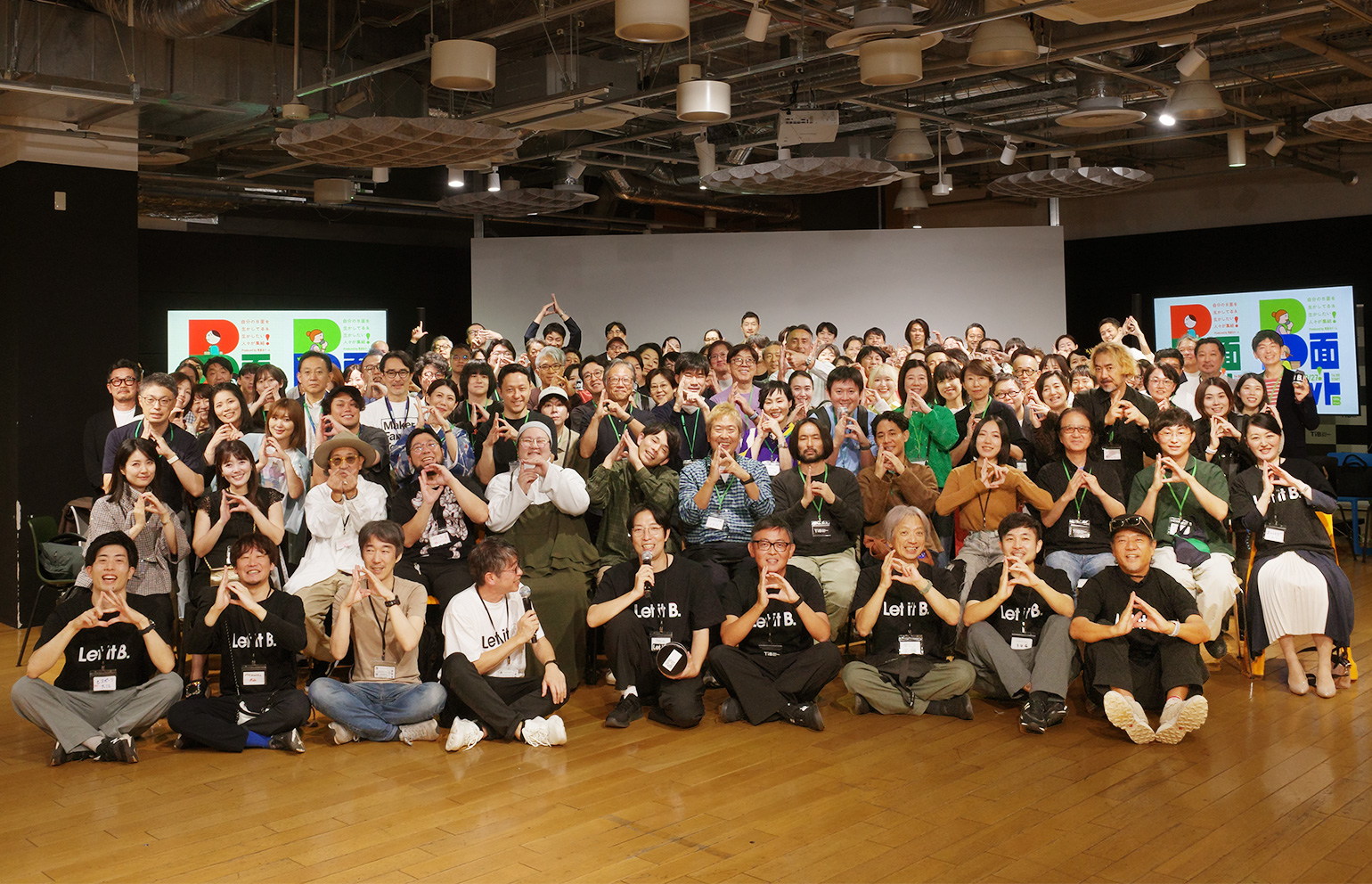
On the day of the “B-Side Summit,” a diverse group of people—ranging from CEOs to college students—each with their own unique “A-sides” gathered. One department head from a company had a “B-side” as a traveling sushi chef, while another person wrote, “My B-side is Nepal.”Many people with “B-sides” that made you want to hear their stories gathered—including a fortune-teller, an elephant trainer, a Shine Muscat grape sorter, and a “BBQ lawyer.” A “B-side” doesn’t necessarily have to be a polished aspect of yourself that you can proudly showcase to others. It could be something you can’t help but keep doing on your days off, a subject you know a little more about than others, or a theme you’ve been pursuing for years for some reason. Even such small curiosities are “B-sides” unique to that person.
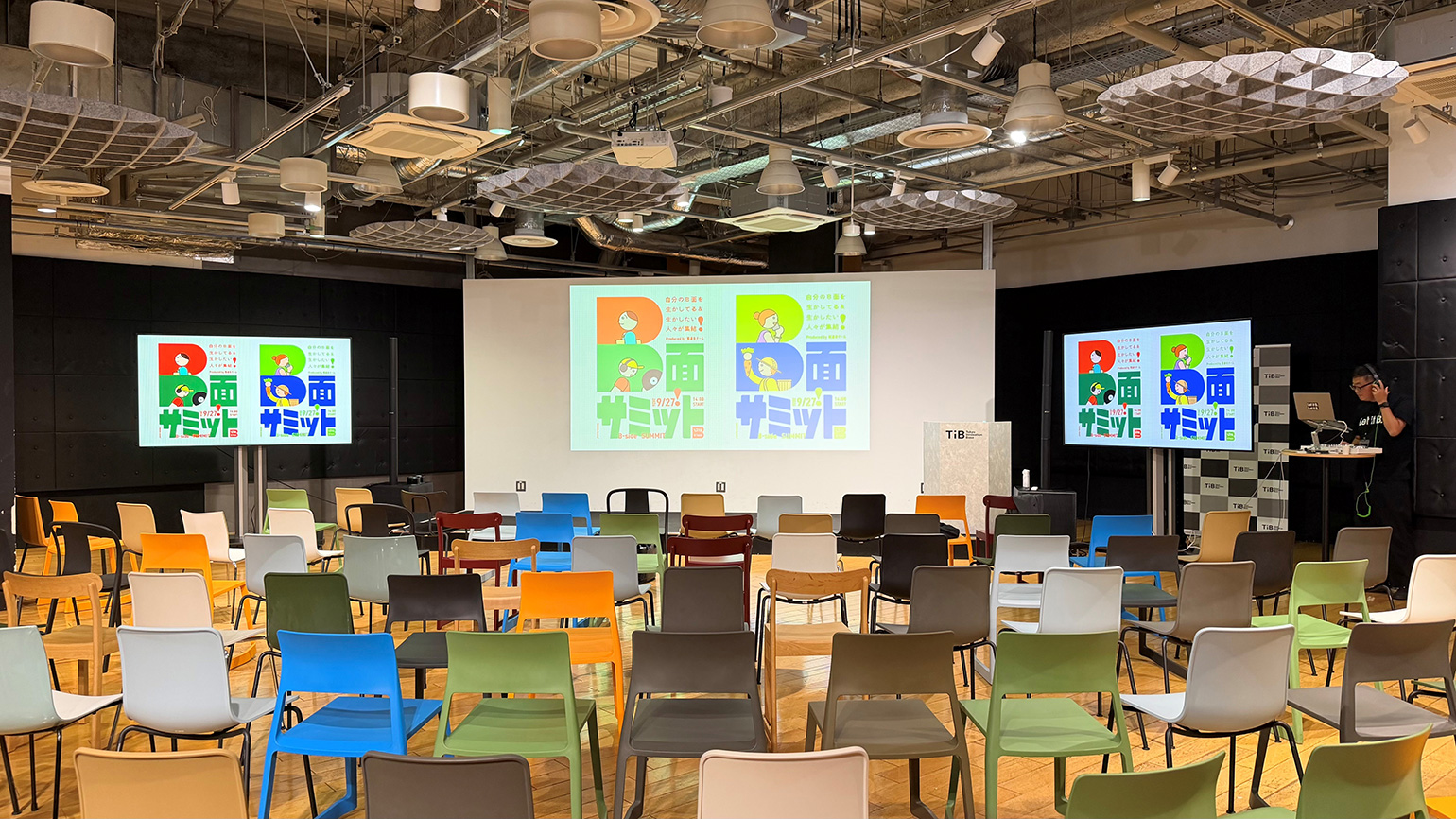
Since so many fascinating people had gathered, following a session reflecting on the origins of the “B-side” concept, we held a “Self-Introduction from the B-Side” session. It was a time to get to know one another not by department or job title, but by asking, “What do you love, and what have you been doing consistently?”
In a typical business card exchange, conversations tend to stay within the scope of one’s current job. However, when you start by talking about your “B-side,” unexpected common ground and possibilities emerge—such as “Actually, I like that too” or “With that topic, maybe I could collaborate with this person.” At the event, participants reached out to one another across organizational and company boundaries, sparking conversations that wouldn’t have happened based on job titles alone.
It was particularly memorable when I asked a woman whose “A-side” was “comedy performer” about her “B-side,” and she replied, “nurse.” It’s fascinating that each person is free to decide for themselves what to present as their “A-side” and what as their “B-side.”
During the networking session, someone with “DJ” as their B-side used music to bring the room together, while someone with a background in comedy skits livened up the stage. We even asked someone whose B-side was “photography” to serve as our photographer for the day (the group photo at the beginning is one of their shots), had someone whose B-side was “flower arranging” prepare the flowers for the event, and borrowed the font for our slides from someone whose B-side was “emojifont creation.”We ran the “B-Side Summit” itself not only with the Dentsu Inc. B Team but also by drawing on the “B-Sides” of everyone who participated that day. The things we’ve built up out of passion became a source of enjoyment for others right there and then, and a force that connects people. The event’s organization itself served as a live demonstration of how to put one’s “B-Side” to use.
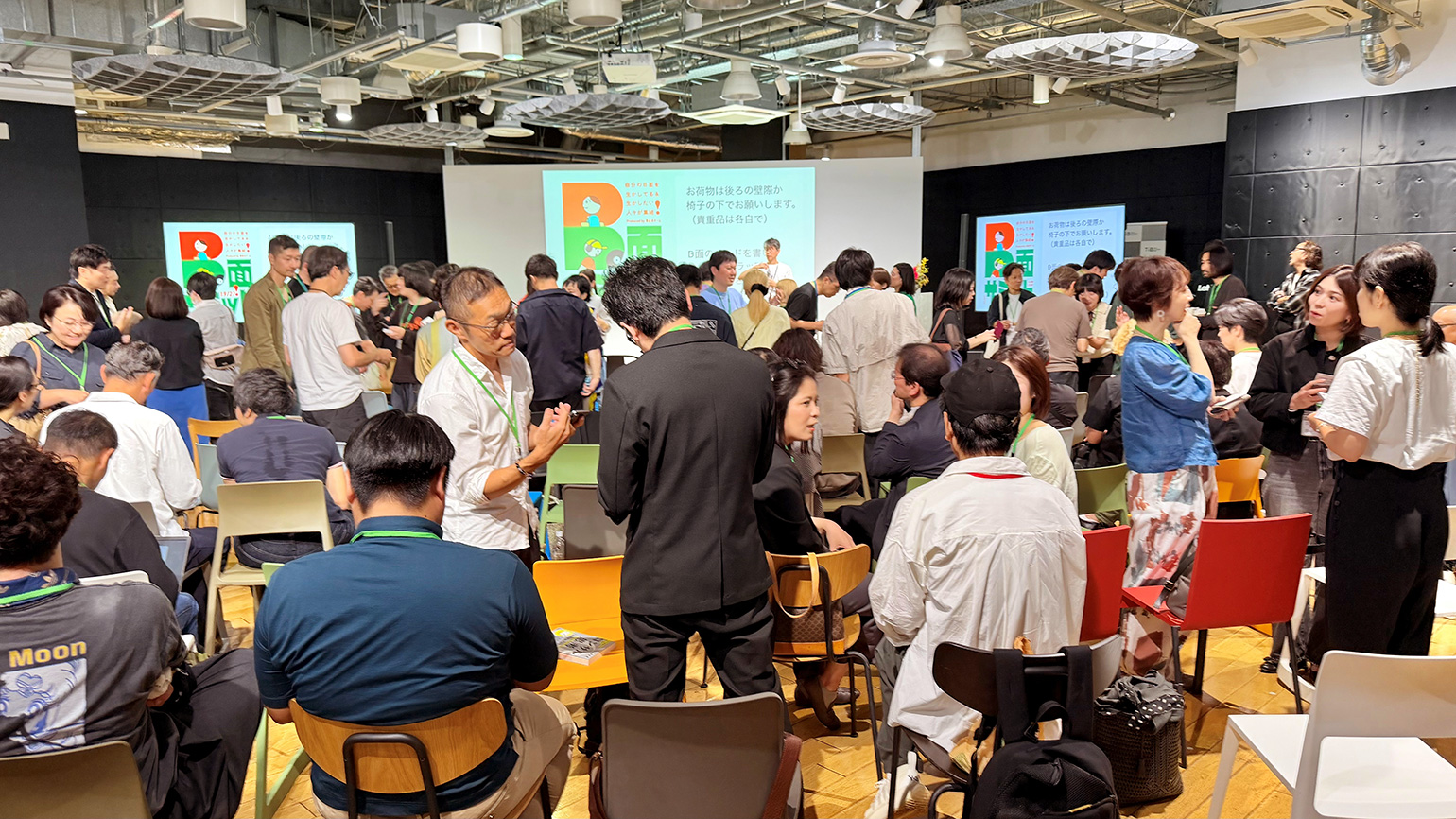
Each Person’s “Strength” Leads to New Projects
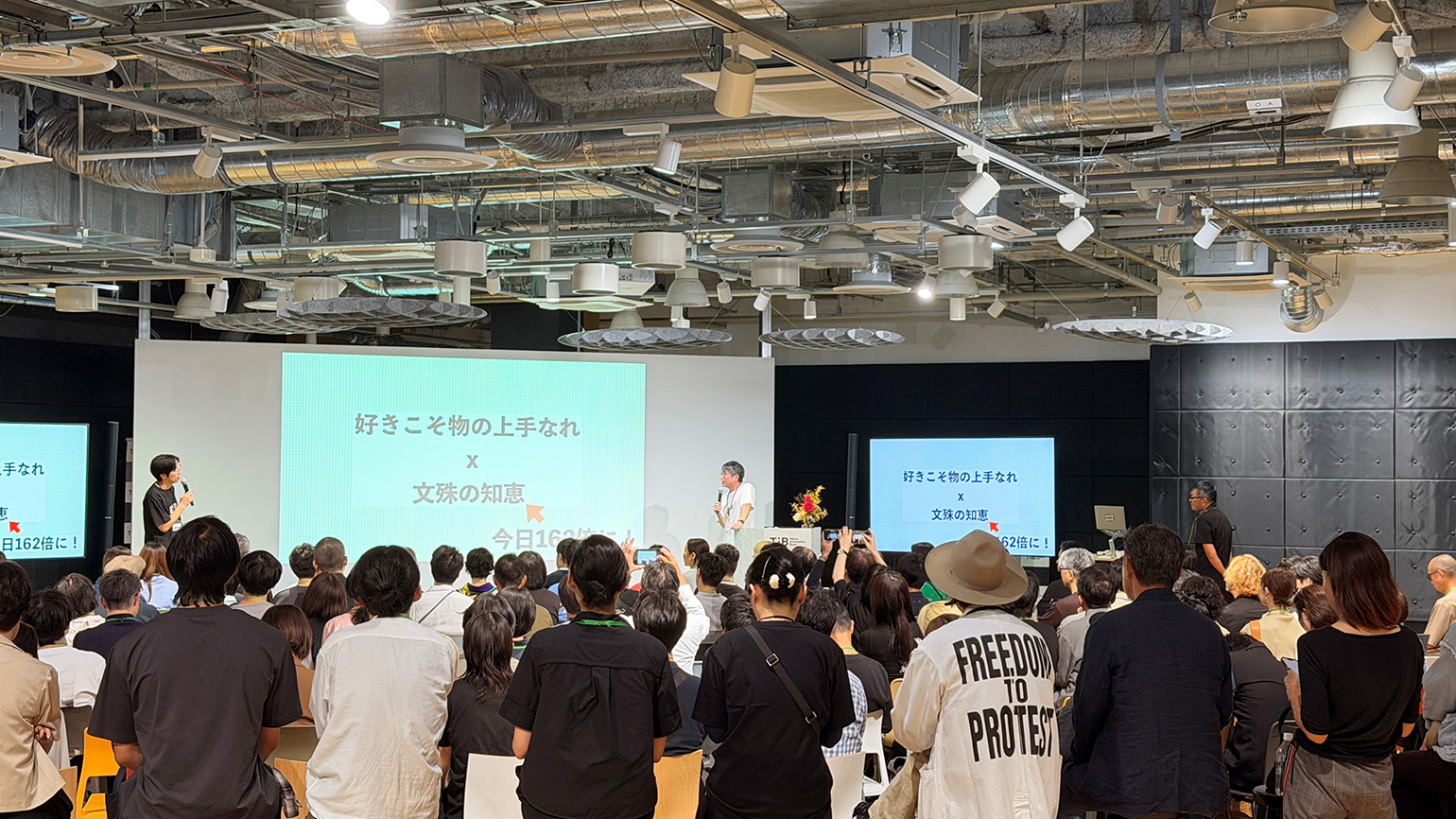
The organizers posed the question: “Does AI have a ‘B-side’?” Precisely because we live in an era where AI rapidly supplements standard information and outputs, the things we’ve continued to follow out of passion, the insights gained from real-life experiences, and the unique questions each person asks hold more value than ever before.
During the event, one participant commented on the value of the “B-side” as follows: “People who live in that world are already well-versed in it—even before you start researching after receiving a work assignment.” They’ve kept watching, kept experimenting, and kept connecting with others not because someone asked them to, but simply because they love it. That experiential knowledge provides a level of detail that’s hard to obtain through general research alone. Furthermore, this participant expressed a desire to incorporate the mindset of applying experiences cultivated through the “B-side” to concepts, creative work, and spatial design into their own community.
“I realized how important it is to have a space where you can openly share what you love—and where people can acknowledge and appreciate each other’s passions.” “I discovered that when you start a conversation by talking about your ‘B-side,’ the speed at which you connect with people is on a whole different level—and it’s surprising how naturally you end up wanting to support them!” We continued to receive a steady stream of positive feedback even after the event. I sense that the connections made at the B-Side Summit are poised to spark new and exciting collaborations.
5 Steps to Applying Your “B-Side” to Your Main Career
Even when it comes to applying your “B-side” to your main job, you don’t need to suddenly turn your hobbies into a business or bring your side hustle directly into your company work. In fact, there are several stages to leveraging your “B-side.”
The easiest place to start is by sharing the insights you’ve gained from your “B-side” within your company. For example, suppose you have an employee who loves Japanese tea and has even earned a certification as a hobby. When the company is set to host overseas business partners, and the department in charge wants to “create a moment where guests can experience something quintessentially Japanese and where conversation flows naturally,” they could consult that employee. That employee might then share information on tea leaves suited to the season, the best way to brew them, stories about their origins that can spark conversation, or even introduce a trusted tea shop.Even if the employee doesn’t participate as an official project member, a brief consultation can transform a routine reception into a memorable experience for the guest. Providing this kind of small piece of information is a valuable step toward applying your “B-side” to your main job.
The next step is building connections. As you continue your “B-side” activities, you’ll develop ties with experts in the field and people actively working on the ground. When your company is looking for an expert internally, you can say, “In that case, you should ask this person,” and make the introduction. This allows you to reach the person who’s truly suited to the topic much faster than searching online and contacting them directly. For the person being introduced, the fact that the connection comes through someone’s trust makes it easier to start a conversation.
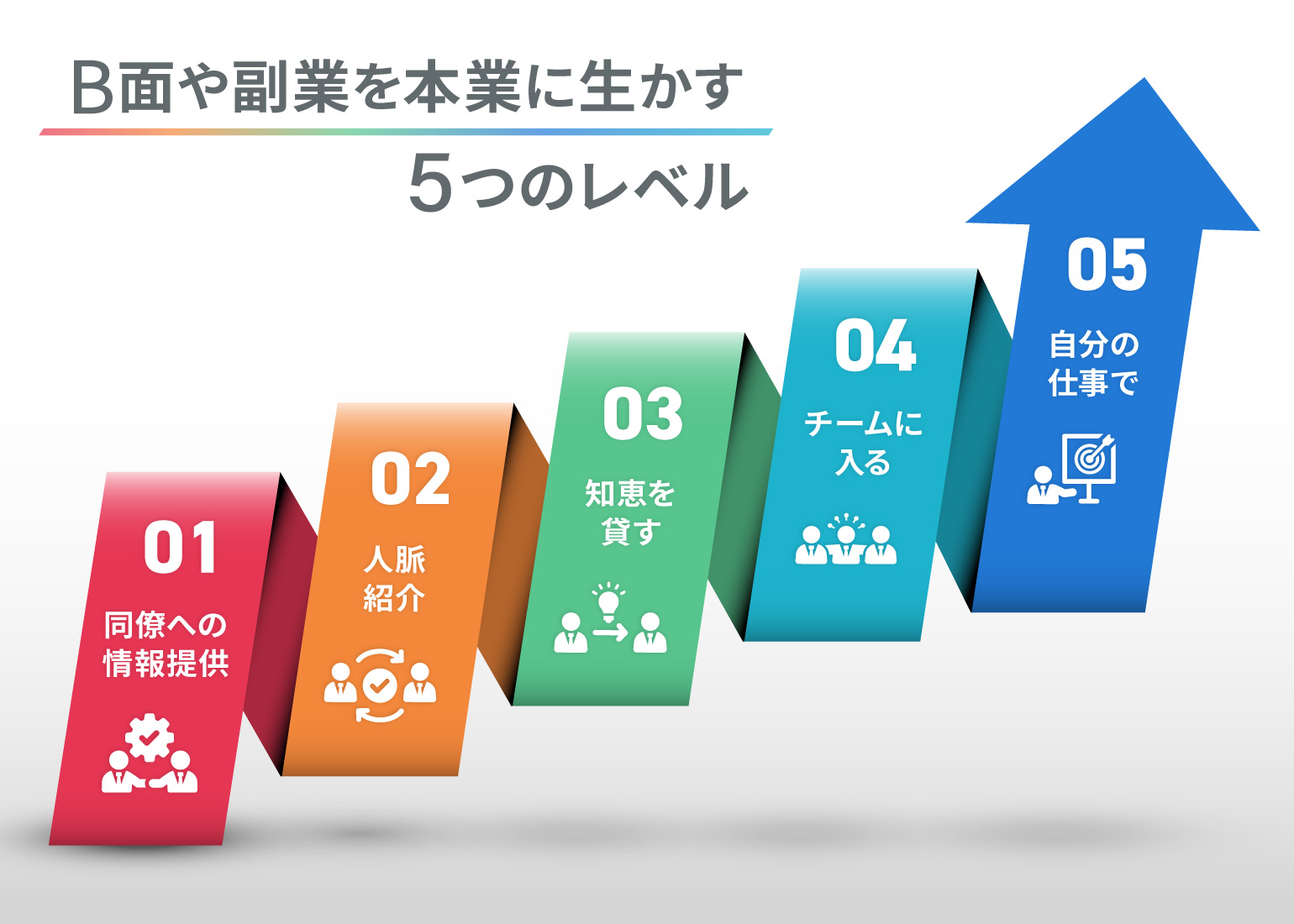
Taking it a step further involves applying the very wisdom you’ve accumulated through your “B-side” activities to your work. By participating in meetings, brainstorming sessions, and planning discussions, you can offer insights and perspectives that come from having observed that field over the long term—things that general research alone wouldn’t uncover. When you’ve continued doing something out of passion, you’ve accumulated a wealth of firsthand information—often more than you even realize. Combining this with challenges in your main job yields ideas that wouldn’t have emerged from the regular team alone.
From there, the next step is actually joining a team. You might take charge of a specific part of a project yourself or form a team with colleagues from your “B-side” network.
Ultimately, this can develop into creating new work or business ventures rooted in “B-side” activities as part of their own professional work.
The key is not to aim for the grandest vision right from the start. First, share information. Next, connect people. Then, offer advice. And finally, if necessary, participate in actual projects. By starting small and proceeding step by step in this way, any company can leverage its employees’ “B-side.”
Harnessing the “B-side” doesn’t mean having everyone turn their hobbies into their job. It means reconnecting the information, experience, and networks that individuals have cultivated outside of work to the organization when needed. First, identify what kinds of “B-sides” exist within the company and create an environment where people can say, “Let’s ask that person about this topic.” I believe that this alone will be enough to significantly unleash the latent potential within the organization.
Turning Employees’ “Untapped Potential” into Organizational Strength
Many companies harbor a wealth of knowledge, experience, and professional networks that remain hidden in their current operations. These can be considered human capital that the company has not yet fully recognized.
There’s no need to start with a large-scale HR system. The first step is to understand what each individual enjoys and what they are passionate about. Then, create an environment where people can say, “For that topic, I’ll go to that person.”
If we can reconnect employees’ “B-sides” with necessary themes and challenges, new options will emerge in various contexts—such as new business ventures, product development, organizational building, and proposals to clients. The B-Side Summit served not only as an opportunity to reflect on Dentsu Inc. B Team’s 12-year journey but also marked a new beginning, reconnecting people’s curiosity beyond the boundaries of companies and organizations.
The seeds that will drive the future are surely already within our company. To commemorate the 12th anniversary of the initiative’s launch, Dentsu-ho will now begin featuring the Dentsu B Team’s approach, as well as examples of how other companies have begun leveraging the “B-side” of their talent. Stay tuned!
Was this article helpful?
Share this article


Newsletter registration and delivery are temporarily suspended
For inquiries about this article
Back Numbers
Author

Akane Yamada
Dentsu Inc.
Marketing Division 4
The future isn't something you "wait" for—it's something you "create"! Transforming Japan's career education through future-oriented thinkingDENTSU DESIRE DESIGN's Approach to Marketing Reconstruction Based on "Theory of Desire"Building the future begins with visualizing the will of the future.Book Publication Commemoration! How to Envision a Post-SDGs FutureDentsu Inc. B Team's Alternative Approach