“Ignite Love for the Region” is a series that explores the ambitious initiatives and underlying motivations of the “people” who love their communities, bring out their unique charms, and revitalize them.
In Part 2, we spoke with Masahiko Nishikawa of the City Promotion Division, Policy Promotion Office, General Policy Department, Tomakomai City, Hokkaido; Mitsuki Masuda of Dentsu Hokkaido Inc.’s Future Creative Center Hokkaido (FCCH); and Seiichi Morohara and Takaaki Koshiba of Dentsu Inc.’s Future Creative Center (FCC) about the initiative that gave birth to Tomakomai City’s “Magnet Concept.”
What the city’s scattered PR efforts needed was a “magnet concept.”
—First of all, could you tell us what challenges Tomakomai City faced and what the purpose was behind launching this initiative?
Nishikawa: Yes. I work in the City Promotion Division of Tomakomai City, where I’m responsible for the city’s PR initiatives, including disseminating information through our public newsletter and social media. While Hokkaido is often strongly associated with idyllic natural landscapes, Tomakomai City has its own strengths—such as a thriving sports scene and efforts to attract businesses as a hub for renewable energy—and as a city, we’ve implemented various PR initiatives to date.
However, because staff members are transferred every four years, our initiatives have been sporadic, resulting in a lack of consistency and cohesion. To address this, we decided to make “city branding” a full-scale priority and solicited proposals from service providers.
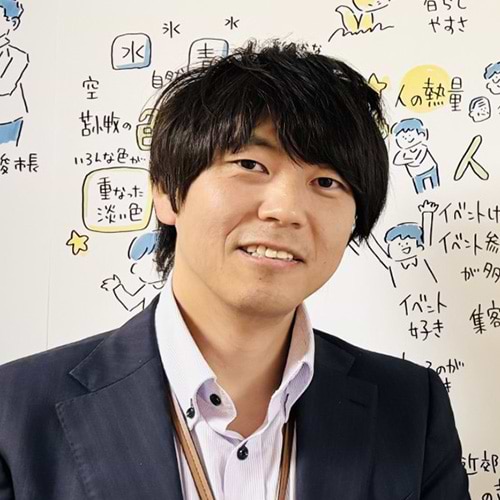
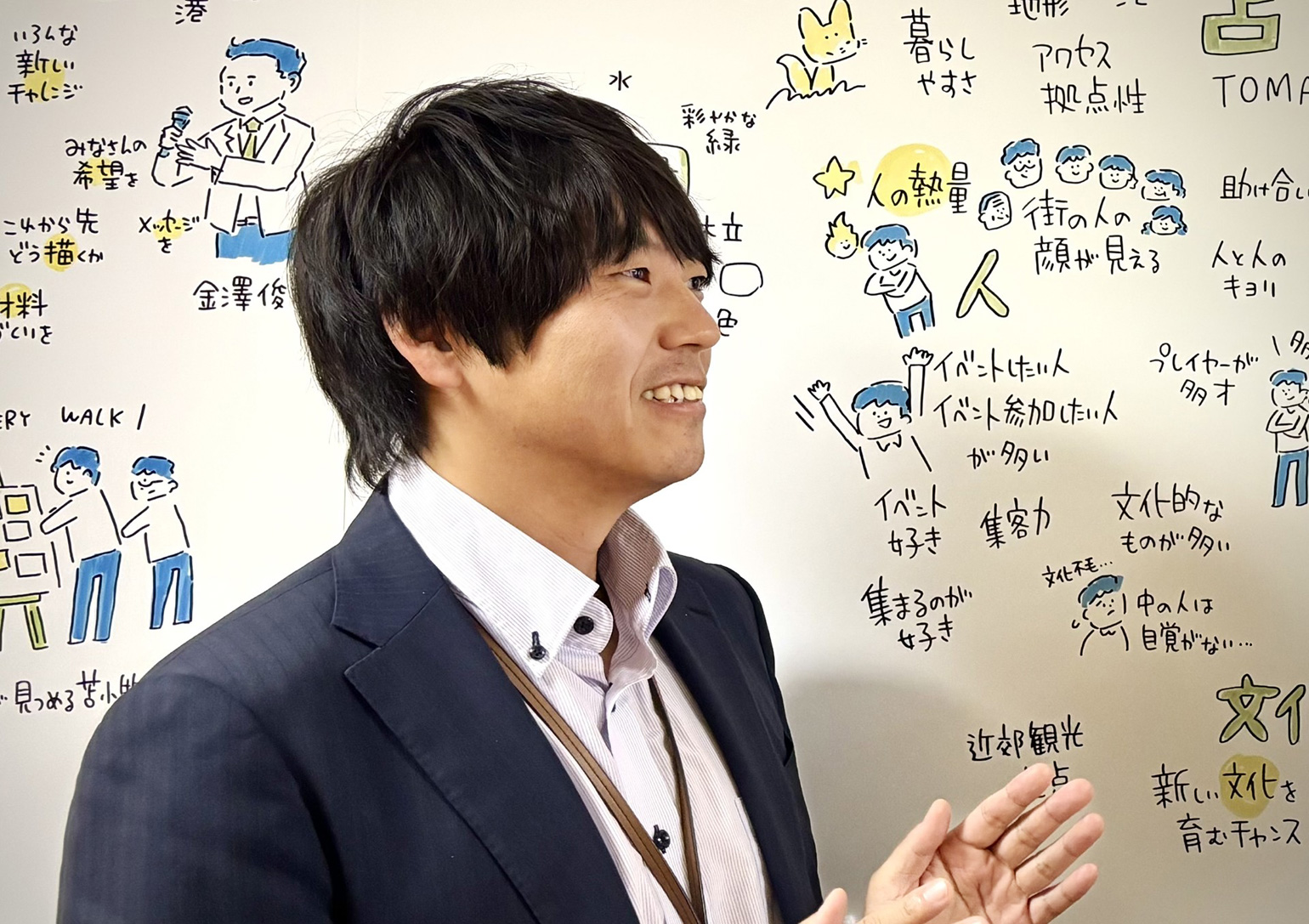
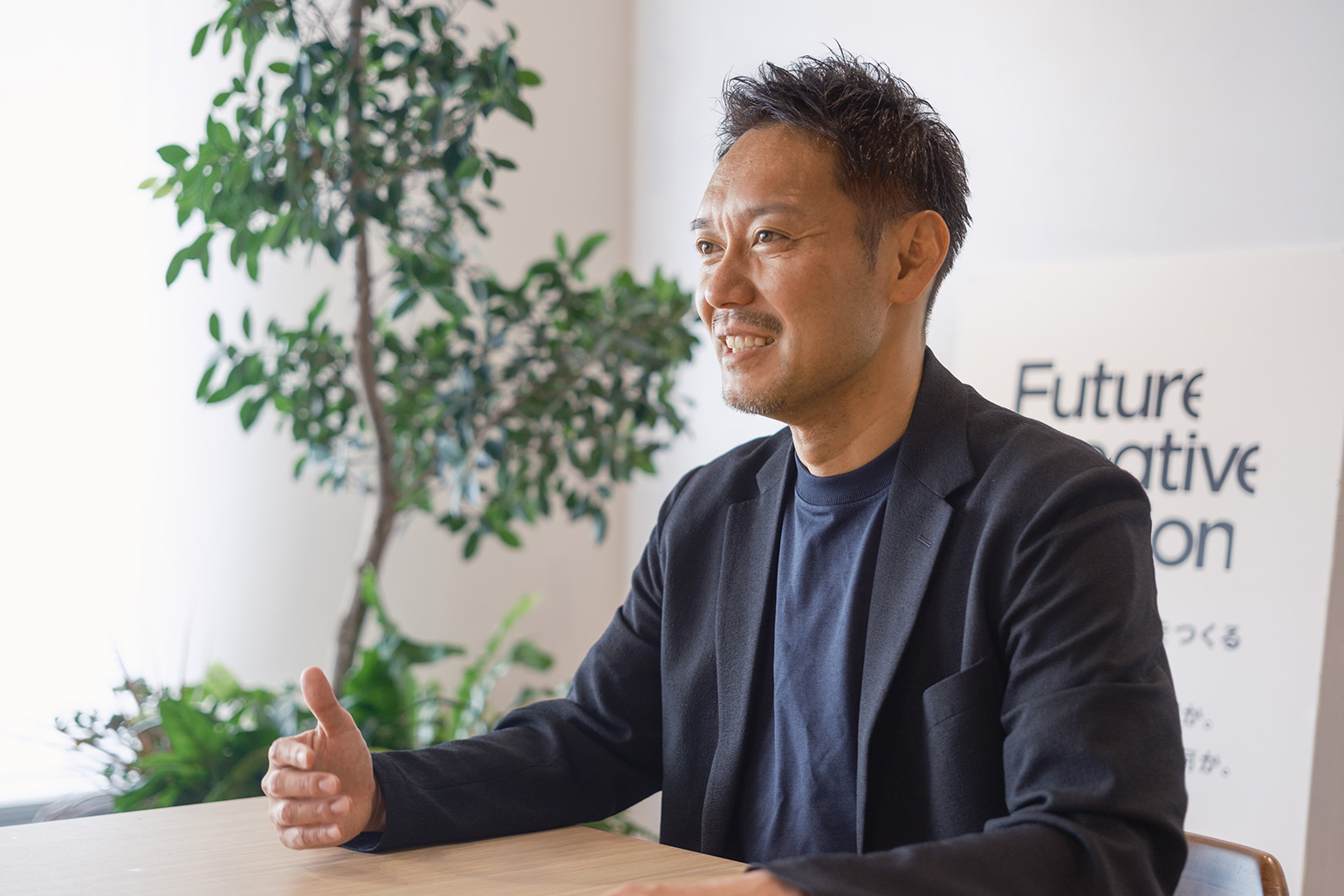
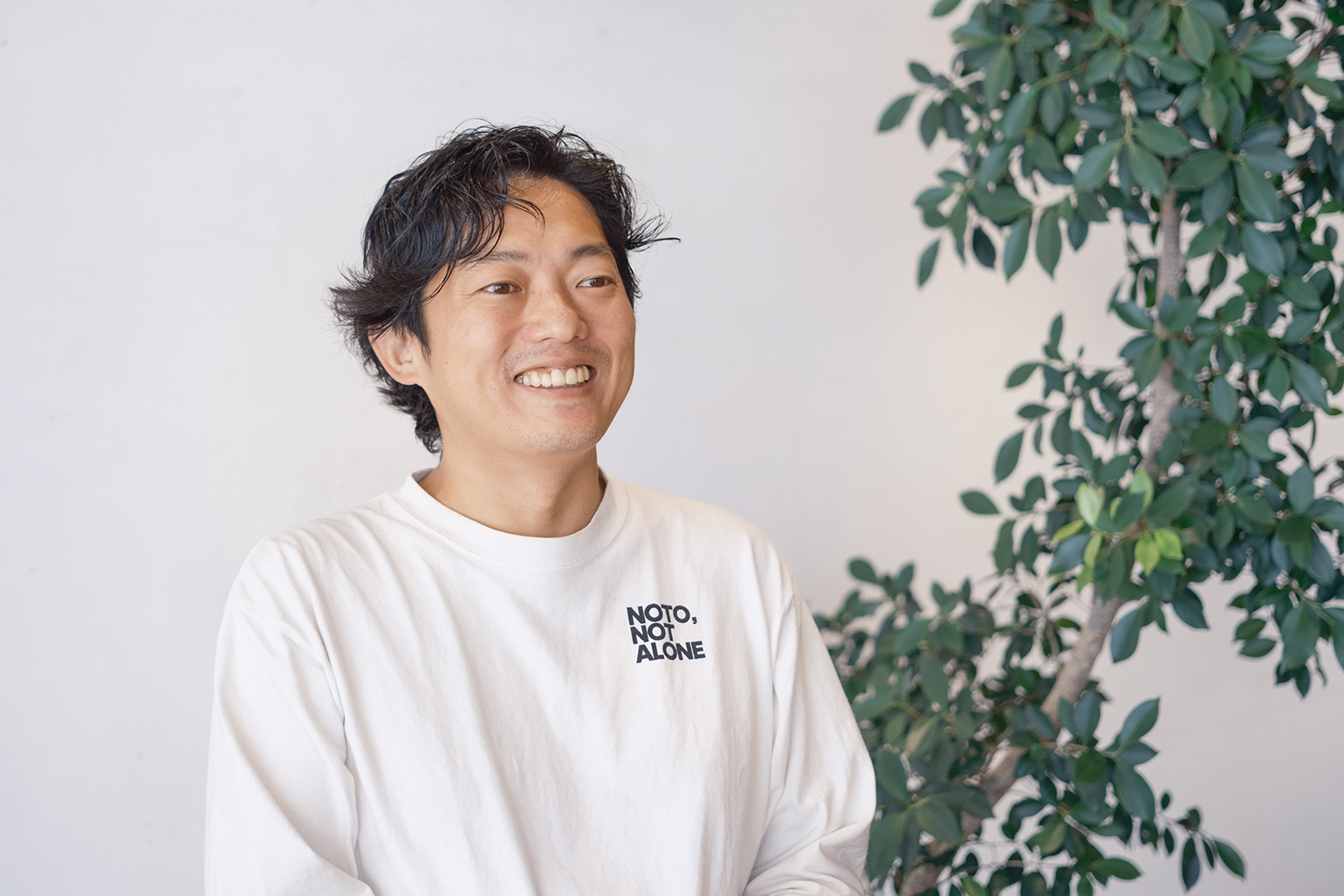
Mr. Masahiko Nishikawa, City Promotion Section, Policy Promotion Office, General Policy Department, Tomakomai City
Masuda: Dentsu Hokkaido Inc. participated in that open call for proposals. While it is common to propose strategies for solving problems along with visual elements such as logos and taglines, we collaborated with Mr. Masuhara and Mr. Koshiba from the Dentsu Future Creative Center to propose a “process for co-creating the future.”
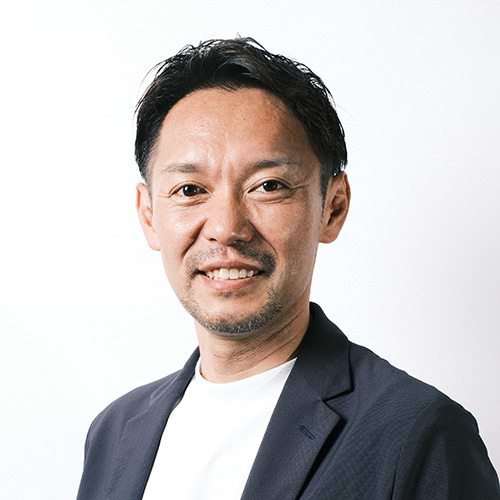
Mr. Mitsunori Masuda, Dentsu Hokkaido Inc. Future Creative Center (FCCH)
—What exactly is this “process for co-creating the future”?
Masuhara: This is not a one-sided proposal, but rather a new creative approach we call “Future Creative Lead,” in which we engage in dialogue with companies, local governments, and other stakeholders to draw out their intentions. In an era of rapid change, it is difficult to “predict” the future, and there is no single “correct answer.” That is precisely why we place great importance on “discovering” value together through dialogue and transforming that into a passionate “movement.”
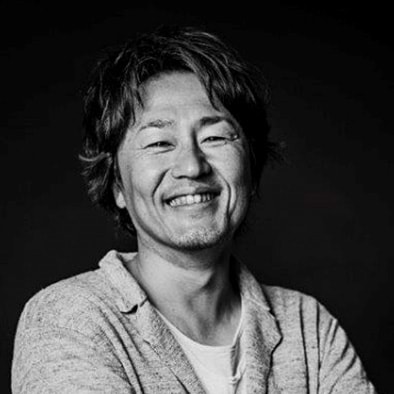
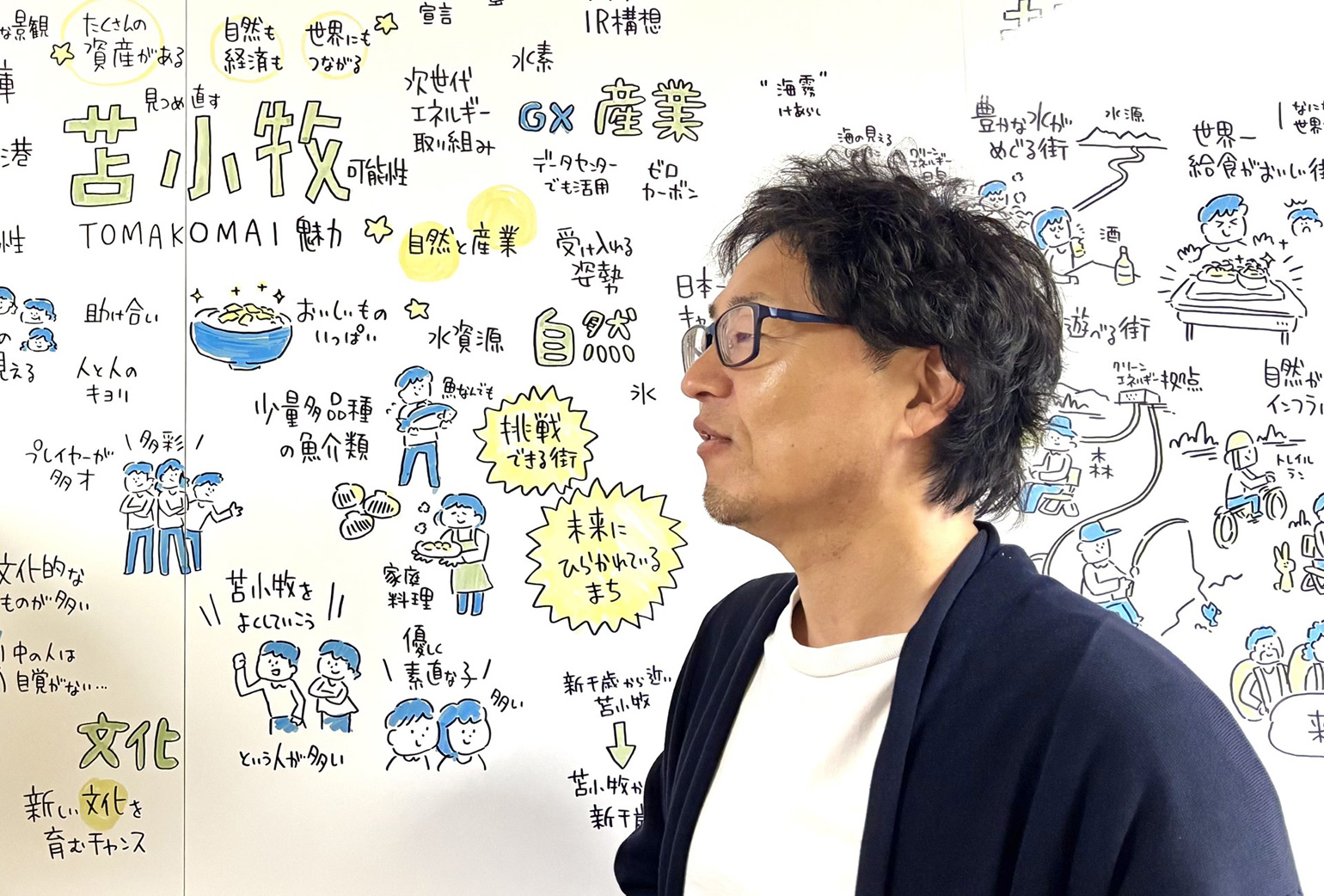
Seiichi Masuhara, Dentsu Inc. Future Creative Center (FCC)
Nishikawa: Through that co-creation process, you proposed that we develop a “magnet concept” for Tomakomai City to tie together its disparate PR initiatives, and I strongly resonated with that idea. Rather than the city government thinking about this in isolation, the proposal was to work together as one—engaging in dialogue with citizens, businesses, and organizations—to rebuild the value of Tomakomai City. The fact that we were able to reach a shared understanding of our goals was the primary reason I decided to entrust this project to Dentsu Hokkaido Inc.
Koshiba: I work with various local governments on a daily basis, and I firmly believe that “civic pride” is the power that will change the future. I have that conviction, and there are many examples of this throughout the country.
Tomakomai City had an image of being progressive—for example, it was designated as a GX (Green Transformation) Strategic Region—but I felt that the residents hadn’t really internalized it as something that directly concerned them. So, I thought, what if we could create a rallying cry or slogan that would allow everyone to feel a sense of ownership and hope? That was precisely the “Magnet Concept” we were aiming for.
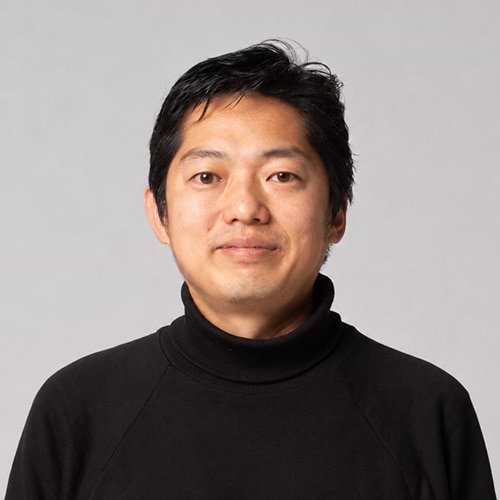
Takaaki Koshiba, Dentsu Inc. Future Creative Center (FCC)
Nishikawa: Listening to you, I could really picture the future we’d build together. This isn’t a one-way promotional campaign—it’s an initiative that involves everyone in the community. I felt that Dentsu Hokkaido Inc. and Dentsu Inc. were thinking ahead —not just to a one-off event, but to a future where the city can “run on its own.”
The mayor, the FM radio host, and everyone involved in community development and business—let’s all talk about the future together!
──In the “process of co-creating the future,” what kinds of people specifically participated, and what kinds of discussions took place?
Nishikawa: Starting with the mayor, we had participants from a truly diverse range of fields—including FM radio personalities; community development organizations such as UDC (Urban Design Center Tomakomai) and Tomakomai Town Management; representatives from local construction companies and electric utilities; as well as the tourism association, the Chamber of Commerce and Industry, and even organizers of popular local events.
Koshiba: We simply requested that “key players in shaping the future” come together, but thanks to Mr. Nishikawa’s support, we were able to bring together highly motivated and proactive individuals from a wide range of industries who are deeply committed to community development.
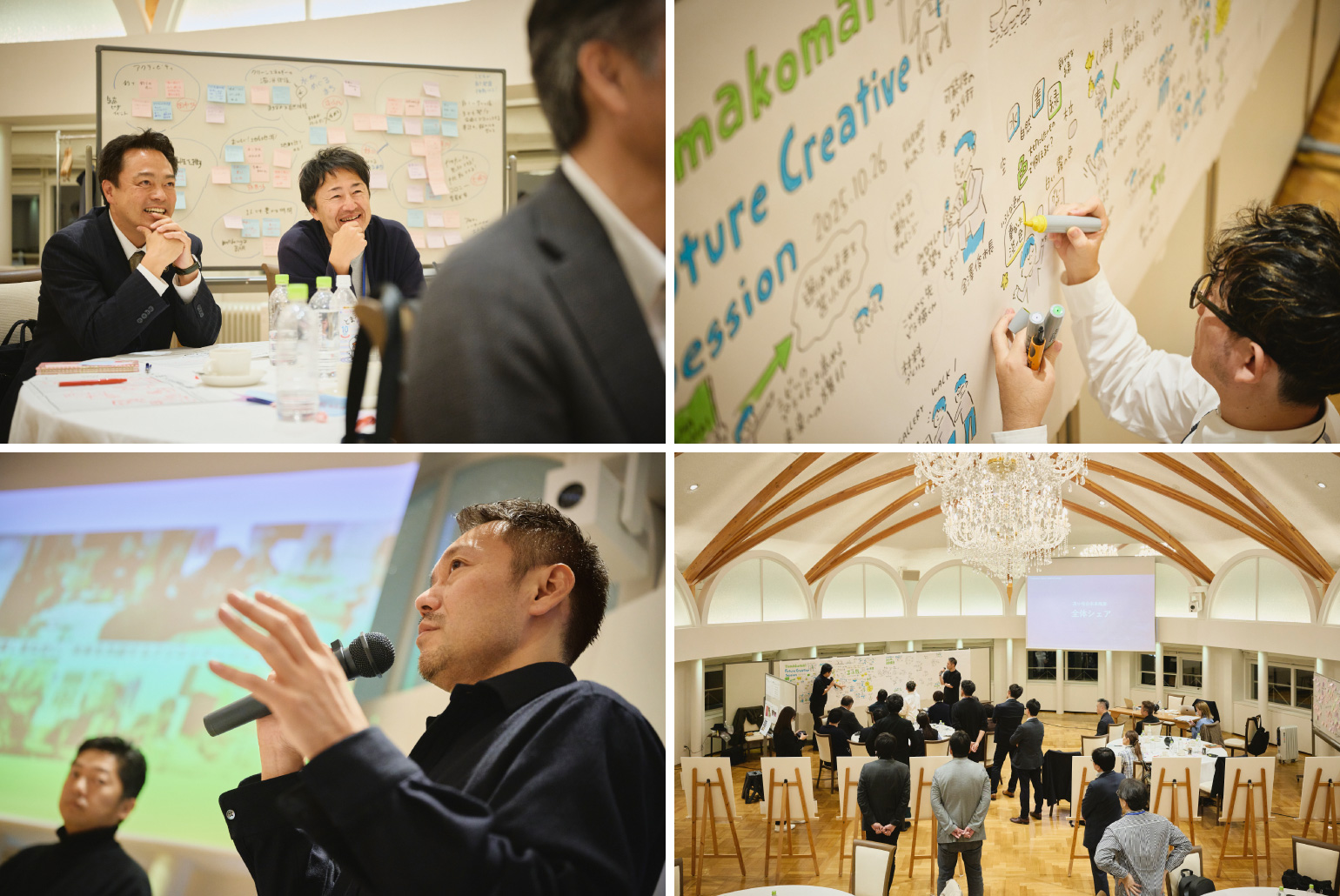
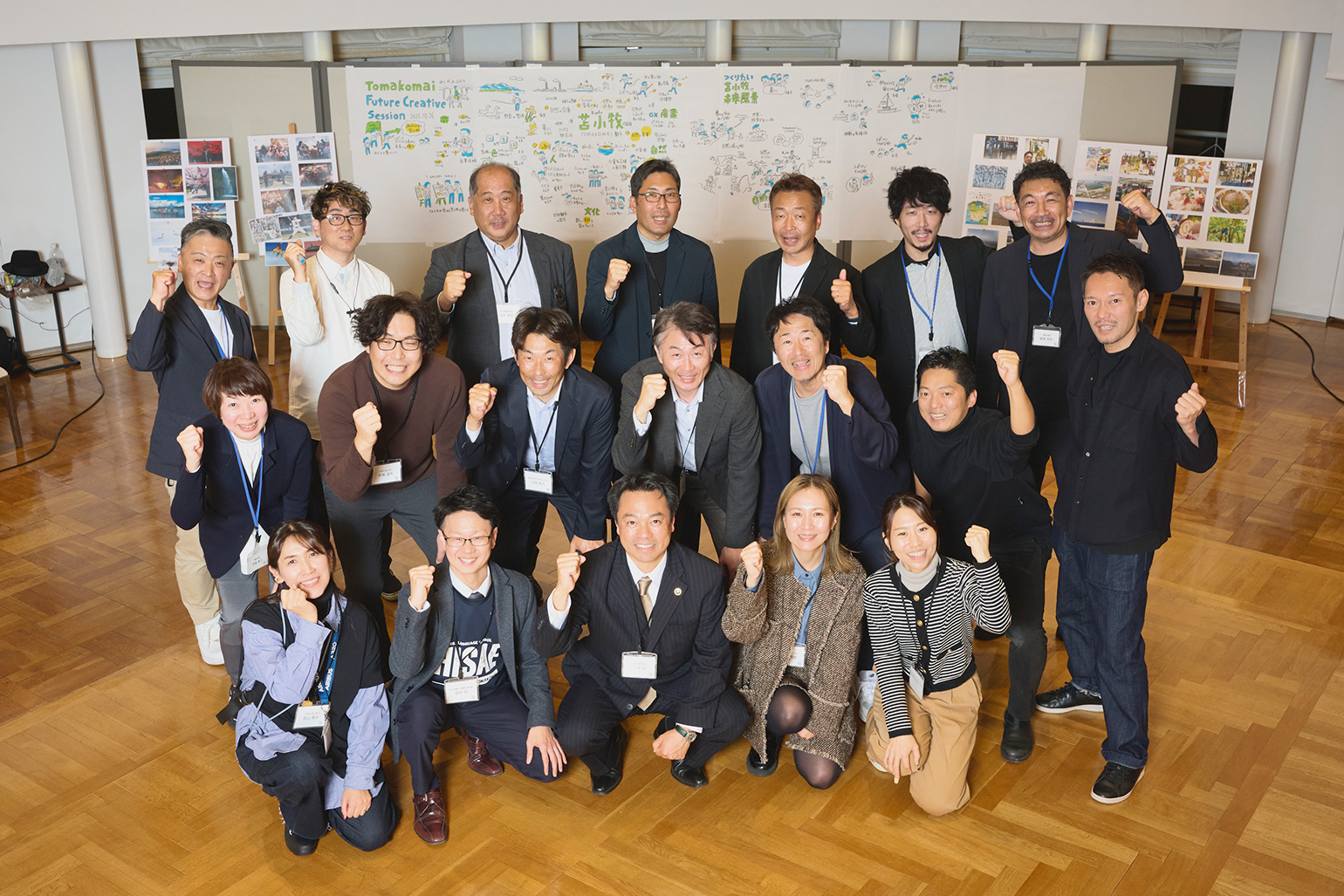
Together with everyone, we held the “Future Creative Session” at Northern Horse Park—a historic venue surrounded by beautiful nature—while watching horses walk by right next to us (laughs).
Masuda: I also learned this from Mr. Masuhara and Mr. Koshiba, but the approach to this session is completely different from traditional advertising production or workshops.Usually, with any project, we start with a “challenge” and follow a thought process of figuring out how to solve it, right? But in this session, based on the “Future Creative Lead” philosophy, we all imagine together the “future we want” for Tomakomai City. Then, to make that future a reality , we unearth and rediscover the values and strengths Tomakomai City currently possesses , and collaboratively create actions to bring them to life.
I really felt that this approach and process are incredibly meaningful.
Nishikawa: The idea of not starting with “challenges” was very refreshing to me as well. I’ve interacted with many business operators over the years, but this was my first session that didn’t start with “challenges” or require us to reach a “conclusion,” and I don’t think the city government could have pulled this off on its own.
Masuhara: That’s actually something we place great importance on as well. Meetings and discussions always start with “problems,” so everyone gets “problem fatigue, ” and when you start with “problems,” people just don’t get passionate about it. That’s why we’re committed to starting with the “value” and “potential” of the future.
By thinking in terms of moving from zero to positive—rather than from negative to zero—we can generate positive energy . The future can only be driven by that “will” and “energy.” That’s what we believe in , and I’m so glad you, Mr. Nishikawa, were able to sense that as well.
──What insights did you gain from the session?
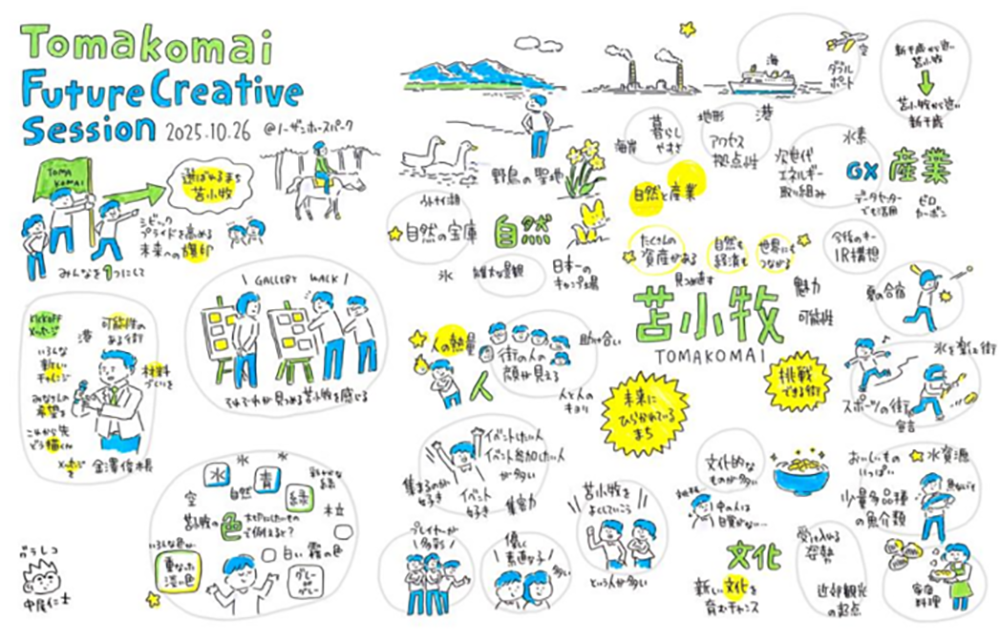
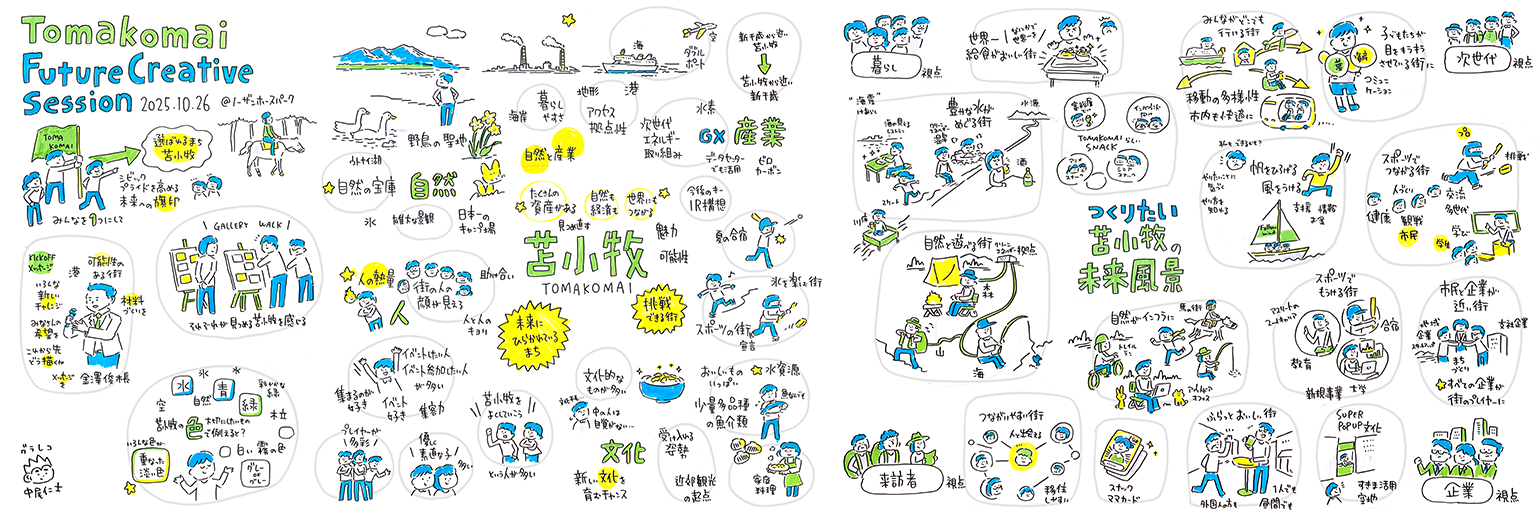
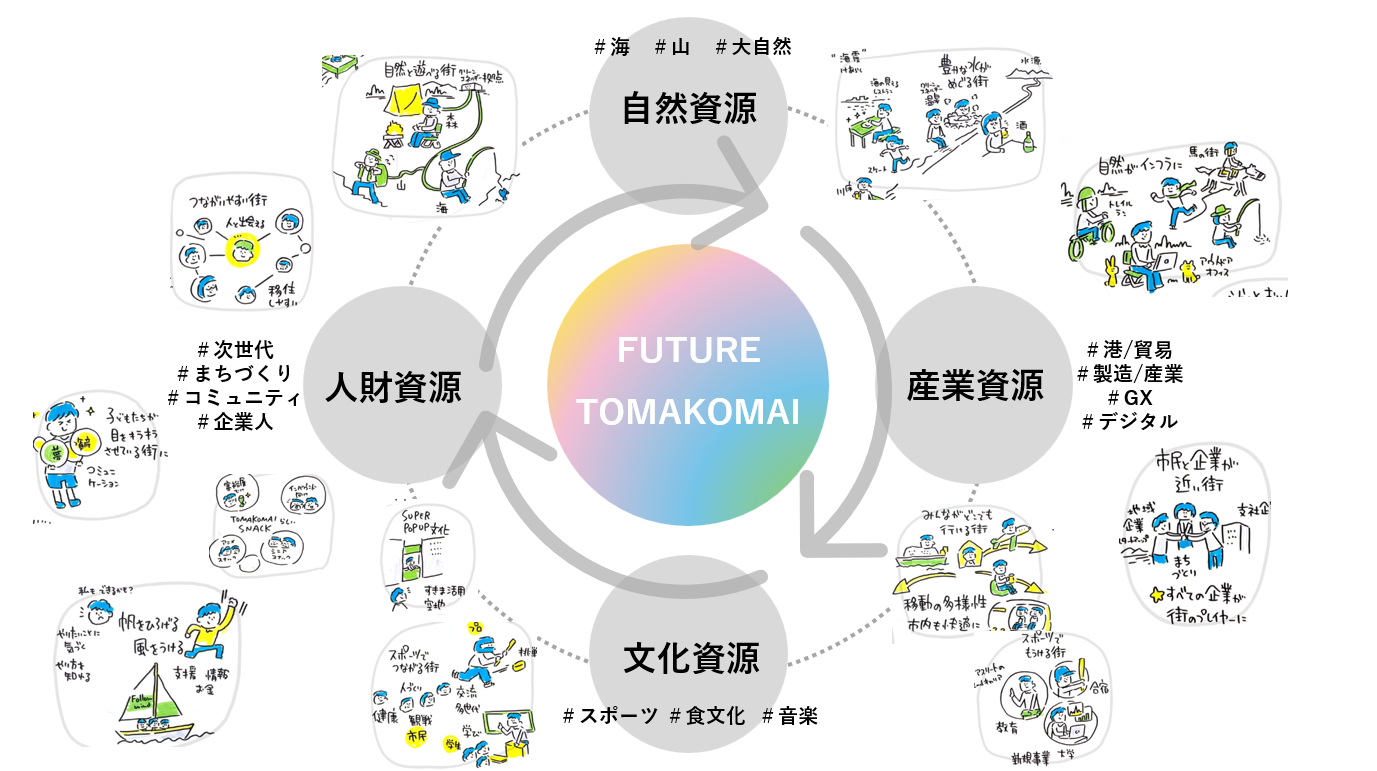
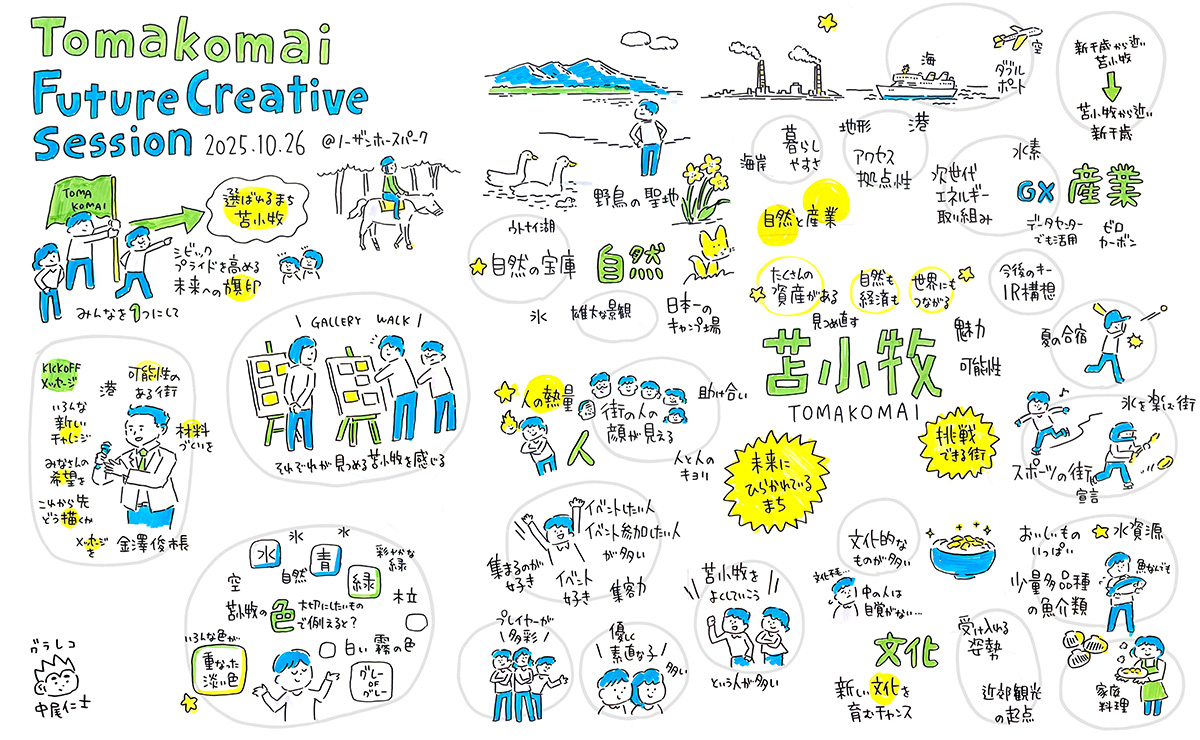
Nishikawa: I was born and raised in Tomakomai, and my honest realization was, “I hadn’t really grasped what makes Tomakomai so appealing…” Dentsu Inc. summarized the session’s content on the spot through graphic recording, organizing our assets into four areas: people, nature, industry, and culture. It made me realize anew just how many wonderful aspects there actually are…
Even when you think you know something, living in Tomakomai your whole life can make you lose sight of certain things. Being made aware of that was truly an overwhelming experience.
Graphic Recording: Hitoshi Nakao
Masuda: What really stood out to me was the “People” category. It was a revelation to discover just how many passionate people there are in Tomakomai…! No matter how I look at it, I feel that “People” are at the very heart of shaping this town’s future.
Masuhara: You’re absolutely right about the appeal of the “people.” The graphic recording even features “people” right in the center, and it was striking to see how many people are actively working to shape the town’s future.
Often, in discussions about regional revitalization, there’s talk of increasing the “related population” (people who have ongoing ties to the region), but I felt that what will truly become Tomakomai’s value is the “co-creation population” (people who build the region together).
Masuda: We held repeated discussions and refined our ideas from the perspective of: How can we draw out the passion of these people? Can we create a “Magnet Concept” that gives everyone a push forward?
──What is the “Magnet Concept” for Tomakomai City that you ultimately developed?
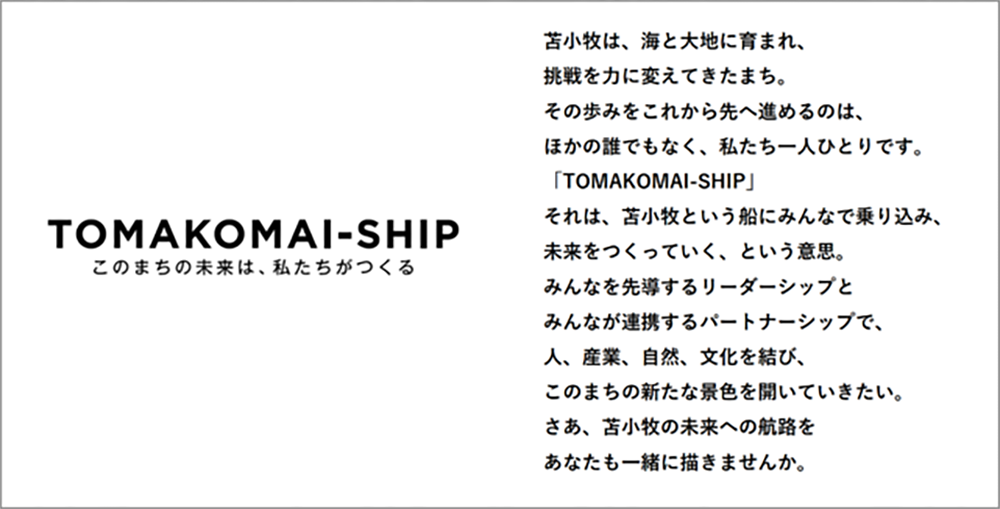
Nishikawa: It’s a concept called “TOMAKOMAI-SHIP.” I think it’s great because it’s so full of the essence of Tomakomai. “SHIP” refers to a “ship,” which is a symbol of Tomakomai as a port town, and it also represents “relationships”—words like “Friendship” and “Relationship.”
Focusing on these “relationships” and moving forward by drawing out the citizens’ thoughts—I’m really excited that Tomakomai’s future projects (with specific activities starting in 2027) will definitely turn out to be fascinating.
Koshiba: I’m truly grateful that the people of Tomakomai City have remained open and approachable throughout this entire process. Even though everyone has their own circumstances and perspectives, they accepted everyone’s opinions without bias or preconceptions. I feel that it was precisely because of this attitude on the part of Tomakomai City—the project’s driving force— that our ideas and enthusiasm were amplified.
The “determination” and “passion” born from love for the community—that is precisely the starting point for the future.
──What kinds of initiatives would you like to take on from here on out—for the “community” and for the “future”?
Nishikawa: First of all, when I compare myself now to who I was last year, I feel my mindset has truly changed. I want to see many, many more city employees like this. I’ve come to realize once again that to promote and revitalize our community, it’s truly essential that I, first and foremost, take pride in my own town.
Also, looking at the assets of Tomakomai compiled by Dentsu Inc., I strongly felt that these are treasures accumulated from the “past.” I believe that only by truly realizing and being grateful for the fact that we’ve inherited these legacies from our predecessors—and that our present exists because of them—can we create messages that truly resonate with people’s hearts.
Koshiba: It’s truly wonderful to be able to recognize the connection between the past and the future, and a town where you can feel that is truly remarkable…!
I know this may sound obvious, but Japan is, after all, a collection of regions. This country boasts diverse climates, landscapes, and histories, and is home to countless regions brimming with their own unique characteristics and spirit. Of course, there are various challenges, but there isn’t a single region without potential. There are as many starting points for the future—as many variations of seeds for the future—as there are regions. Working alongside the people of Tomakomai City this time really brought that home to me.
Masuhara: That’s precisely what makes it so interesting—the fact that it’s not one-size-fits-all. There’s great potential in exploring what’s “unique to that region,” shaped by its own context and culture, and we hope to walk alongside you all through that process and support your efforts.
In recent years, we’ve seen a real increase in consultations from companies about the future. Everyone shares a strong desire to improve Japan and society. That’s why I believe it’s essential to consider both the future of companies and the future of local communities together, and I’d like us to work on this through co-creation. If this ultimately brings vitality to Japan as a whole and leads to an exciting future, nothing would make me happier.
Masuda: I was born and raised in Hokkaido. How can we create an exciting future in this land I love so much? I am convinced that the skills I’ve cultivated through advertising—articulating ideas, visualizing them, crafting narratives, and bringing them to life—can be put to use in building that future. As an organization committed to this mission, Dentsu Hokkaido Inc. has also launched the FCCH (Future Creative Center Hokkaido).
Furthermore, the challenges facing Hokkaido—such as population decline, a shortage of successors, overconcentration in urban centers, infrastructure maintenance, and the impact of climate change on industry—are challenges shared by Japan as a whole. I want to connect success stories from Hokkaido to the future of Japan. Together with the local community, I will continue to take on the challenge of nurturing and spreading positive “passion.”
A scene from the “Future Creative Session” (Middle row, from right: Seiichi Masuhara and Takaaki Koshiba of Dentsu Inc. Future Creative Center; Mitsunori Masuda of Dentsu Hokkaido Inc. Future Creative Center Hokkaido; back row, second from the right: team member Ryo Takahashi of Dentsu CXCC)
General Policy Department, Policy Promotion Office, City Promotion Section
Masuda Mitsuki
Dentsu Hokkaido Inc.
Creative Director
I began my career in advertising at a Sapporo production company, then worked at Dentsu Tech (now DENTSU PROMOTION PLUS INC.) Sapporo Branch before reaching my current position. Guided by the motto "Keep thinking," I persistently seek optimal solutions for clients' challenges through strategy development that captures core issues, story building, core idea discovery, and creative expression. Currently, I am challenging myself beyond the realm of advertising creative into the field of future-building.
After working at Dentsu Future Creation Group, he joined his current organization. Focusing on “people-centric” transformation, he supports corporate organizational and talent revitalization as well as regional development. His motto is to use creativity that amplifies people’s passion and to manage sustainable projects aimed at solving social issues. As his life’s work, he also practices “Photo-Revolution,” an approach to problem-solving that harnesses the essential power of photography.
Seiichi Masuhara / Managing Director, Dentsu Inc. Future Creative Lead Office; Executive Producer, Future Creative Center. He oversees comprehensive production for corporate future vision initiatives. He is responsible for a wide range of planning, development, and project management aimed at conveying brand philosophies.

 Ignite a passion for your community [2/2]