In today’s world, where 70 percent of married households have both parents working, Reiwa-era moms—who struggle to balance work and family life and navigate parenting amid diverse values—what are they thinking, and how do they interact with their children?
Dentsu Inc. Mama Lab (hereinafter “Mama Lab”), a Dentsu Inc. work tank founded by a group of mothers raising children, has been systematically observing the circumstances and insights surrounding mothers and their families since its inception in 2009. Guided by the motto, “When moms smile, Japan smiles. When moms smile, the world smiles,” the group has sincerely engaged with the true feelings of mothers and children and proposed solutions to their challenges.
For this session, we welcomed TV personality Ami Kikuchi—a mother of two children, ages 6 and 1—as a guest. Together, we held a roundtable discussion and tried out “Mirai-ku Palette,” a card-based ideation tool developed by Mama Lab ( click here for the release). We discussed insights into Reiwa-era moms and common parenting experiences.
In this article, we’ll cover both the first half—a roundtable discussion featuring Mama Lab members Erika Matsubara, Hirono Nakajima, and Rie Saito—and the second half, where seven other members joined Ms. Kikuchi to experience the “Miraiku Palette.”
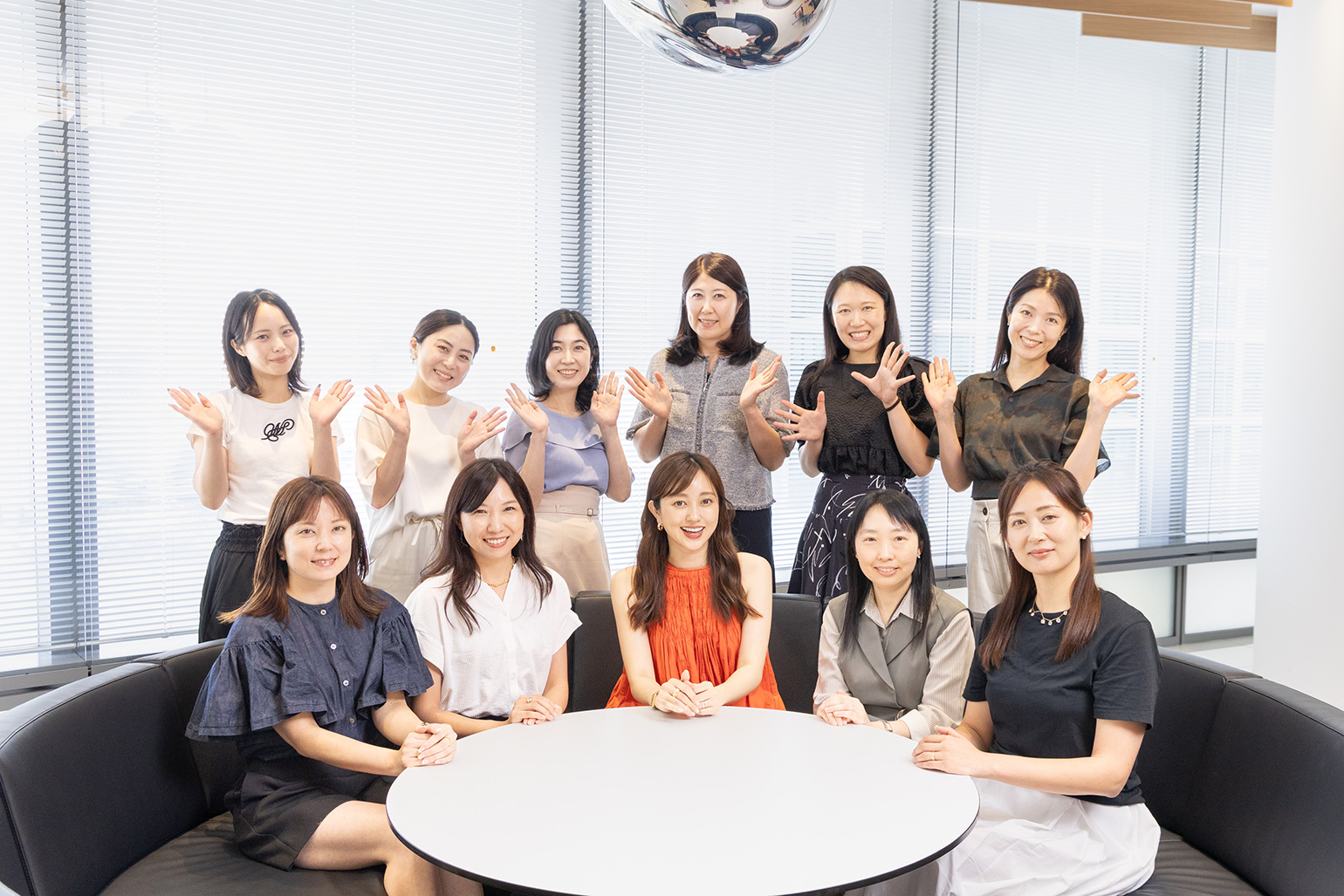
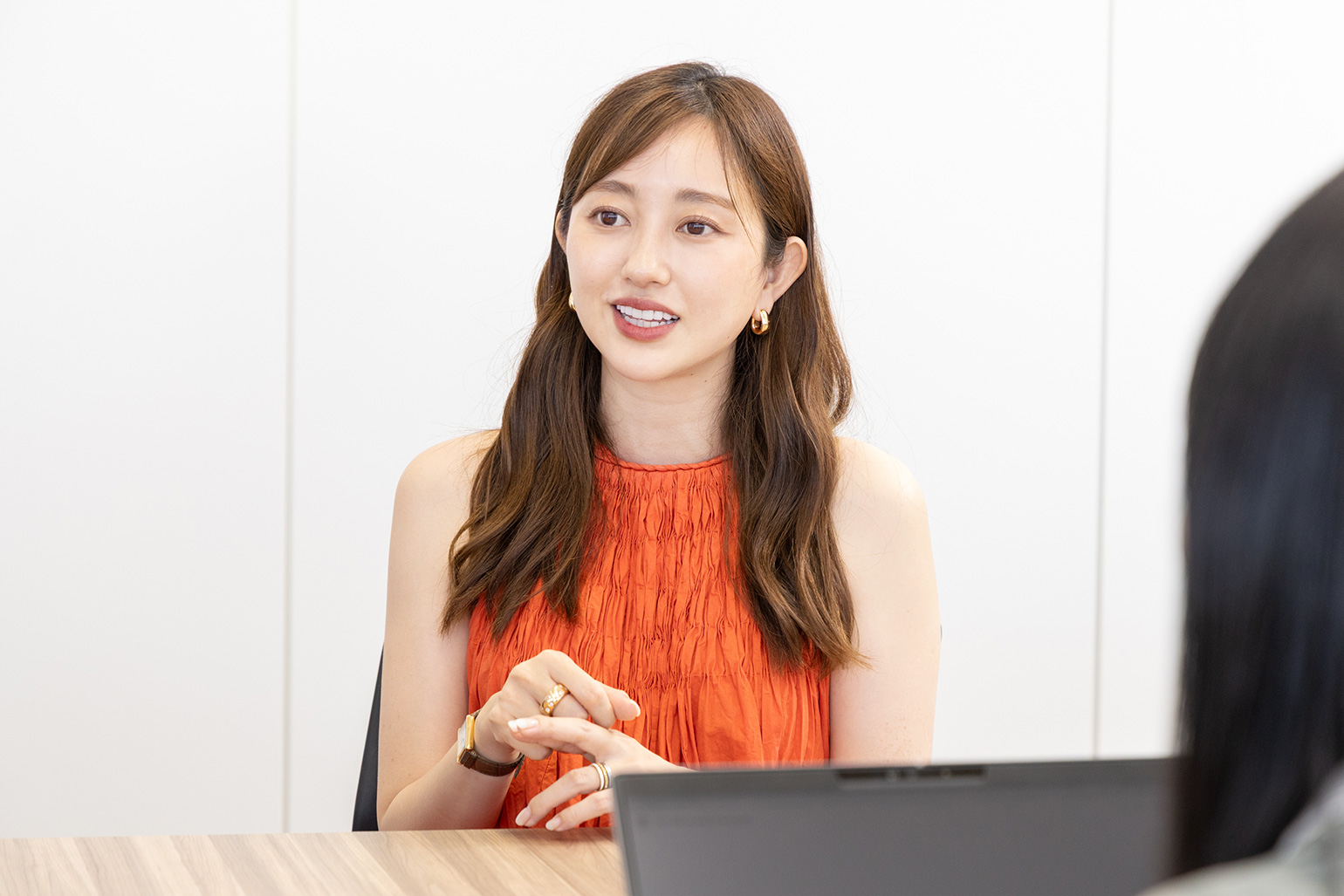
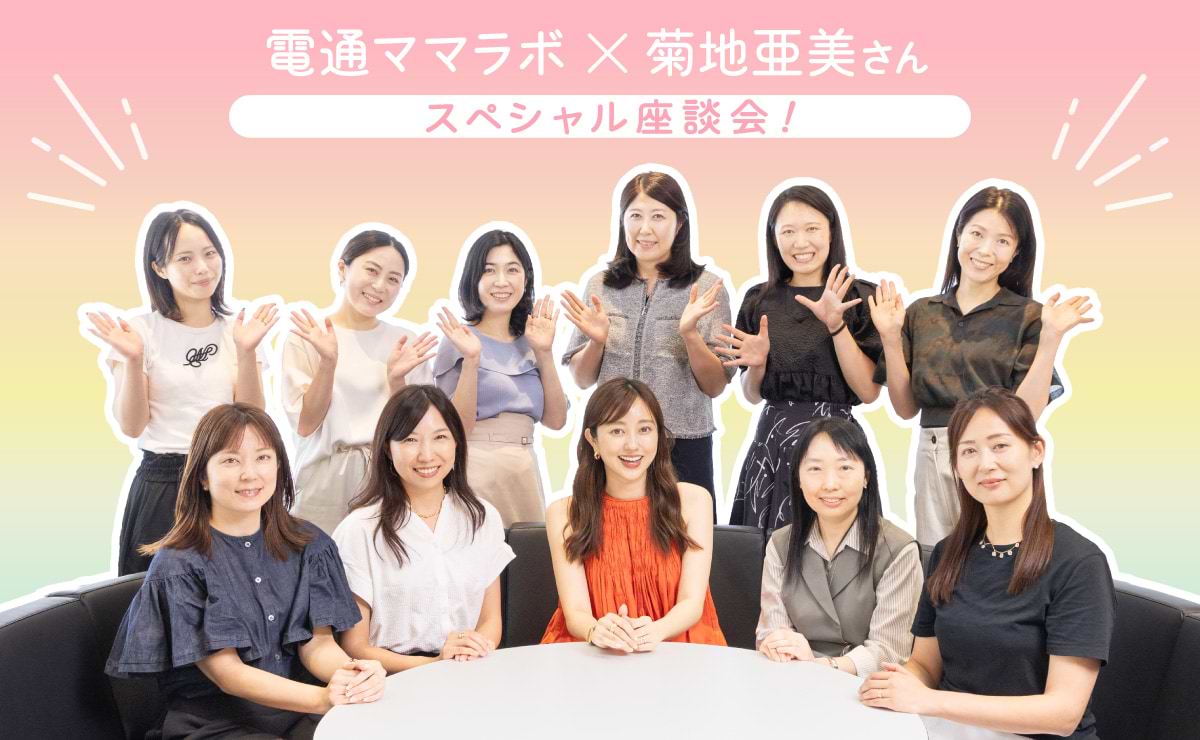
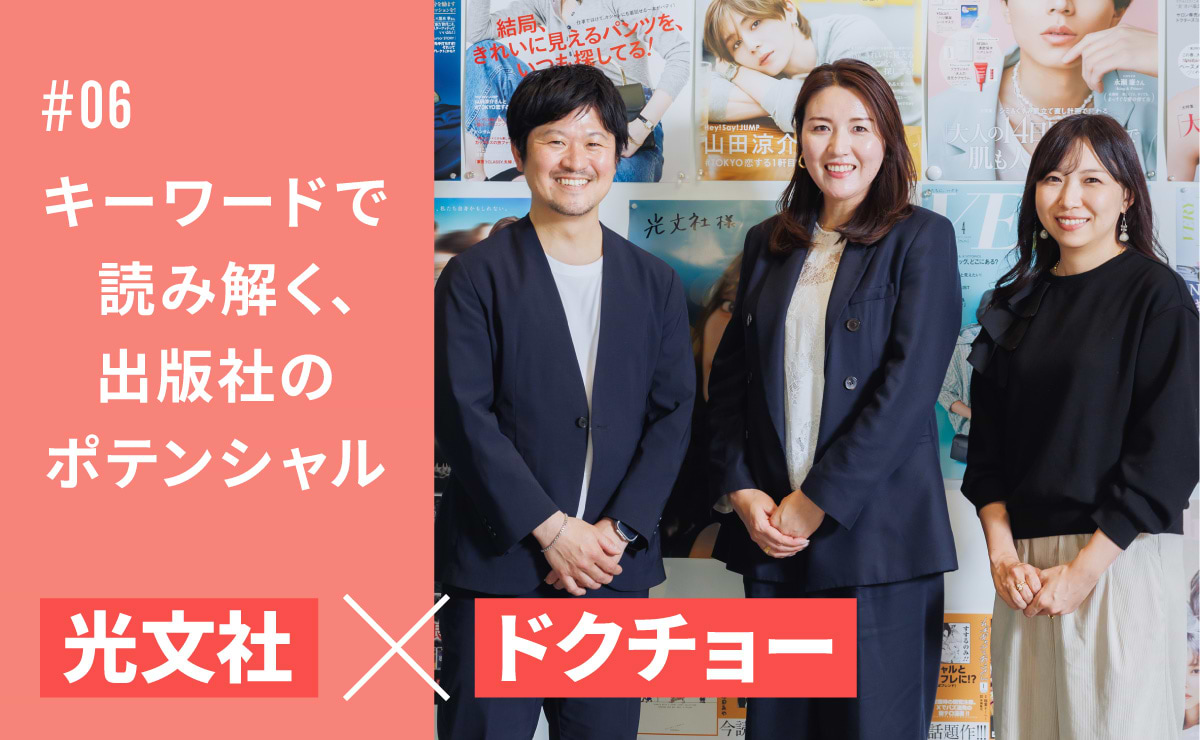
Ami Kikuchi (front row, center) and Mama Lab members
It’s Okay Not to Be Perfect: Modern Moms Freeing Themselves from “How Things Should Be”
Matsubara: In the first half, based on the trends surrounding today’s moms revealed by the Dentsu Inc. Mama Lab survey, I’d like to have a frank discussion with Ms. Kikuchi about the insights of Reiwa-era moms. First, let’s talk about the situation modern moms find themselves in.
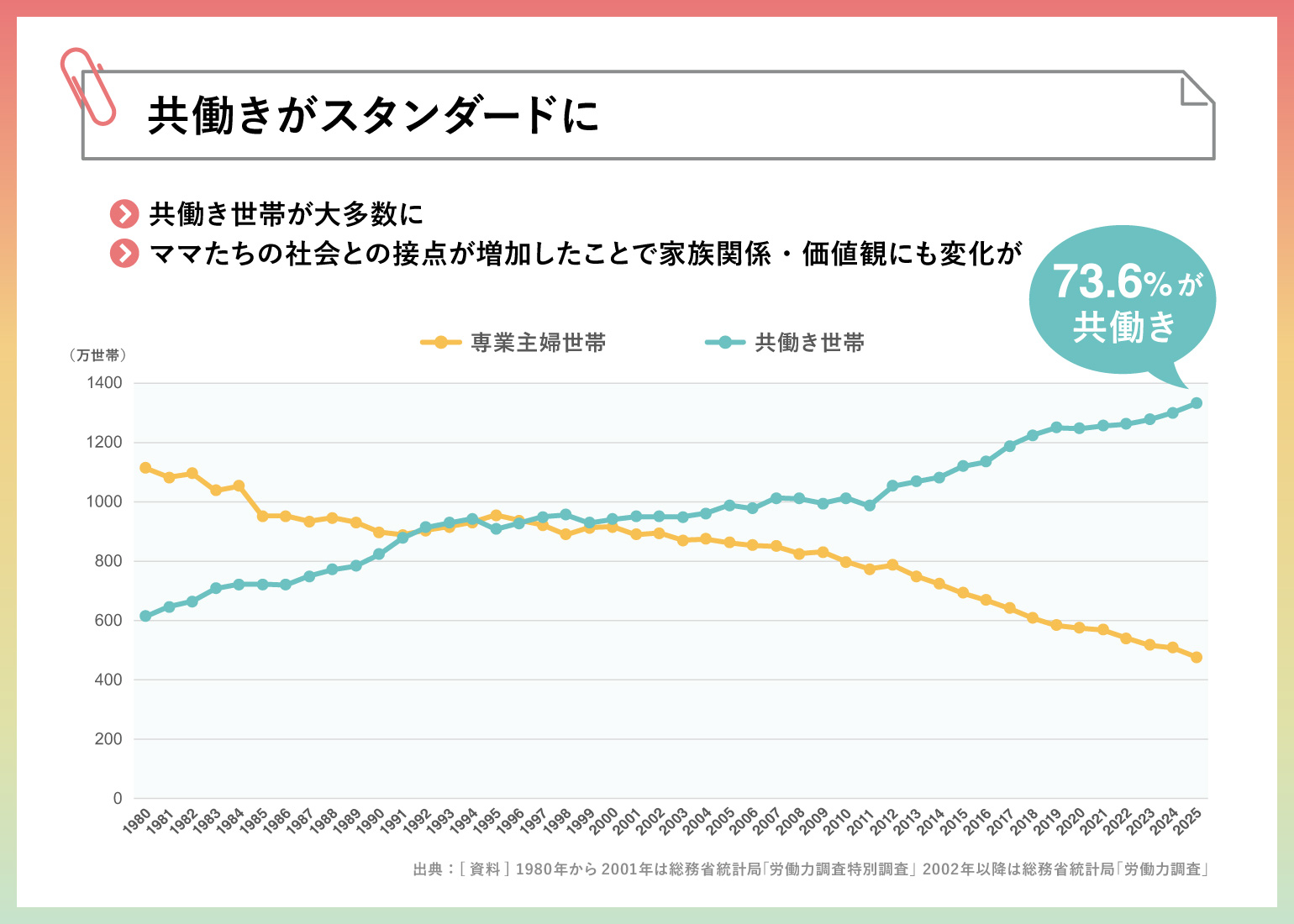
Around 1990, when Ms. Kikuchi was born, households with stay-at-home mothers were still in the majority. However, dual-income households gradually increased, and by around 2000, the proportions had reversed. Today, they account for over 70 percent. Since many of these mothers had stay-at-home mothers of their own, they lack accessible role models to look to and are feeling their way through balancing work and family life.
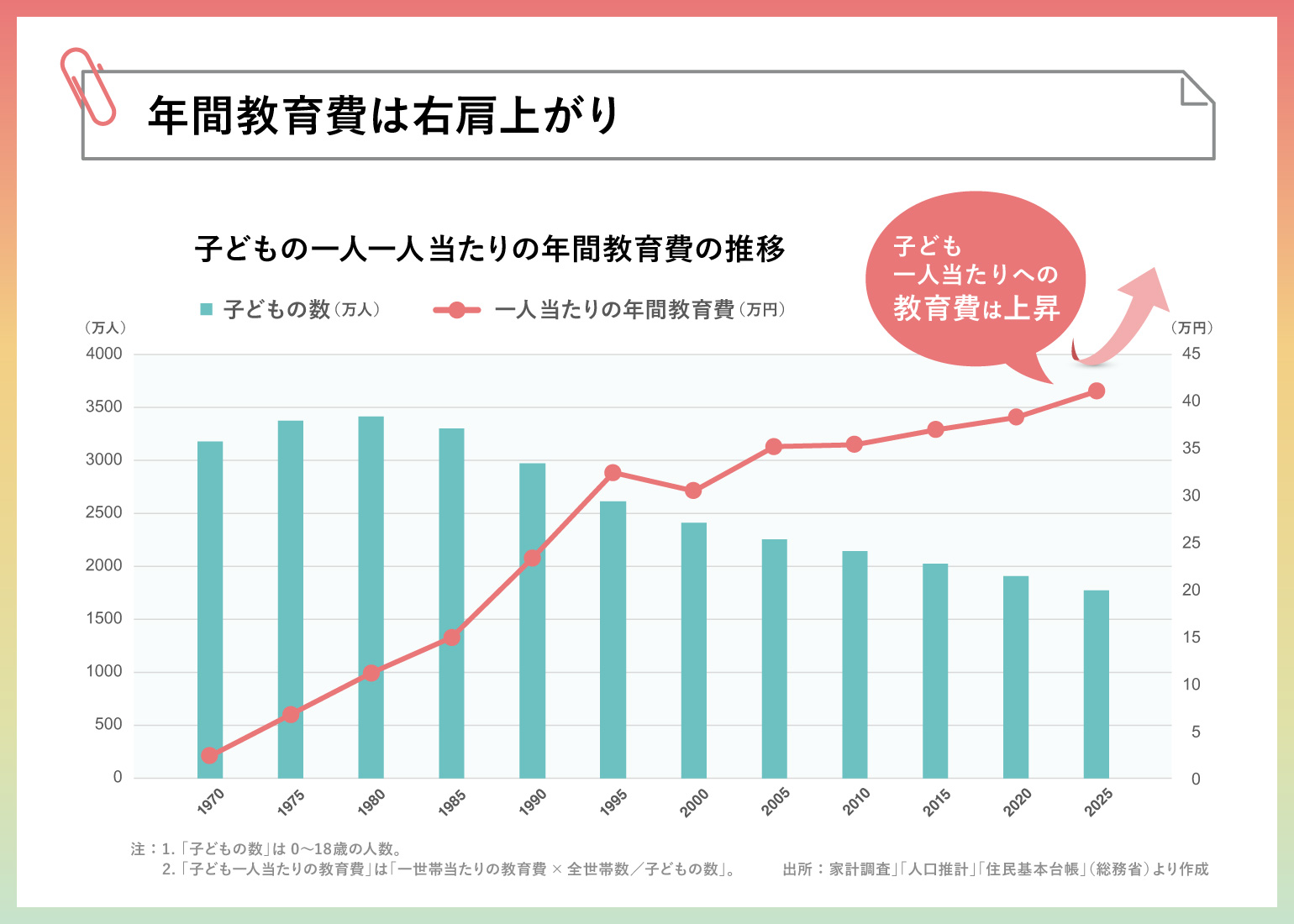
On the other hand, while the number of children is declining, education expenses per child are on a steady upward trend. As evidenced by the term “six pockets”— referring to the combined financial support from both sets of grandparents —the children’s market is actually expanding.
Saito: Against this backdrop, mothers’ values have also undergone significant changes. Until recently, there was strong pressure and a prevailing notion of “how a mother should be,” and there was even a trend where mothers were criticized simply for attending a social gathering.
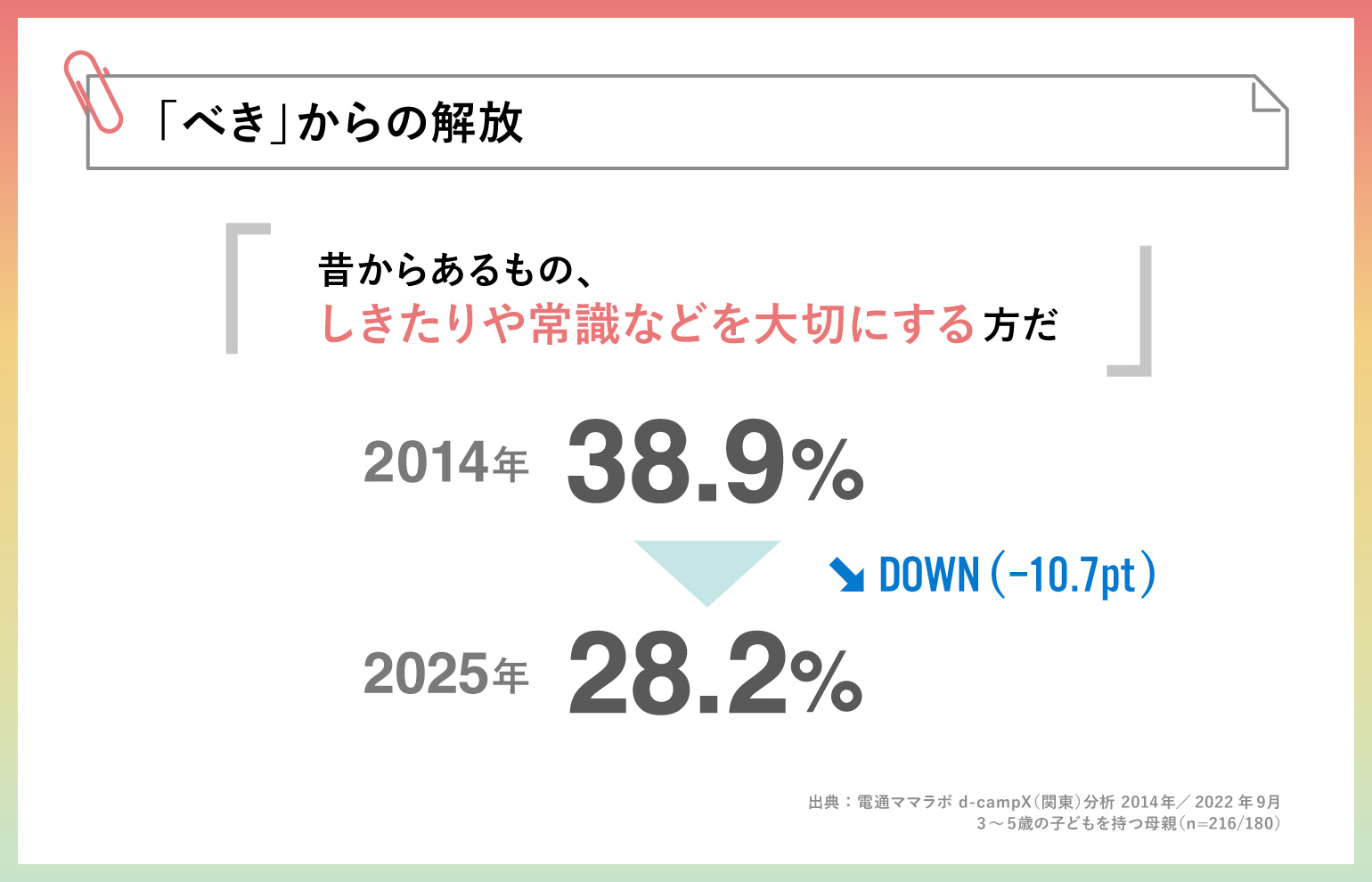
Recently, however , they are gradually being liberated from such one-size-fits-all “should” expectations. The percentage of people who consider themselves “someone who values long-standing traditions, customs, and common sense” has dropped by 10.7 percentage points over the 11-year period from 2014 to 2025.
Matsubara: When it comes to housework, the idea that mothers should actively use the latest home appliances and housekeeping services has become widespread. I see a recent trend where mothers are no longer striving for perfection but are instead making rational and positive choices based on their own criteria.
Kikuchi: That’s true. I, too, have sensed that prevailing “this is how it should be” mindset in the past, and I completely agree with all of these recent trends.
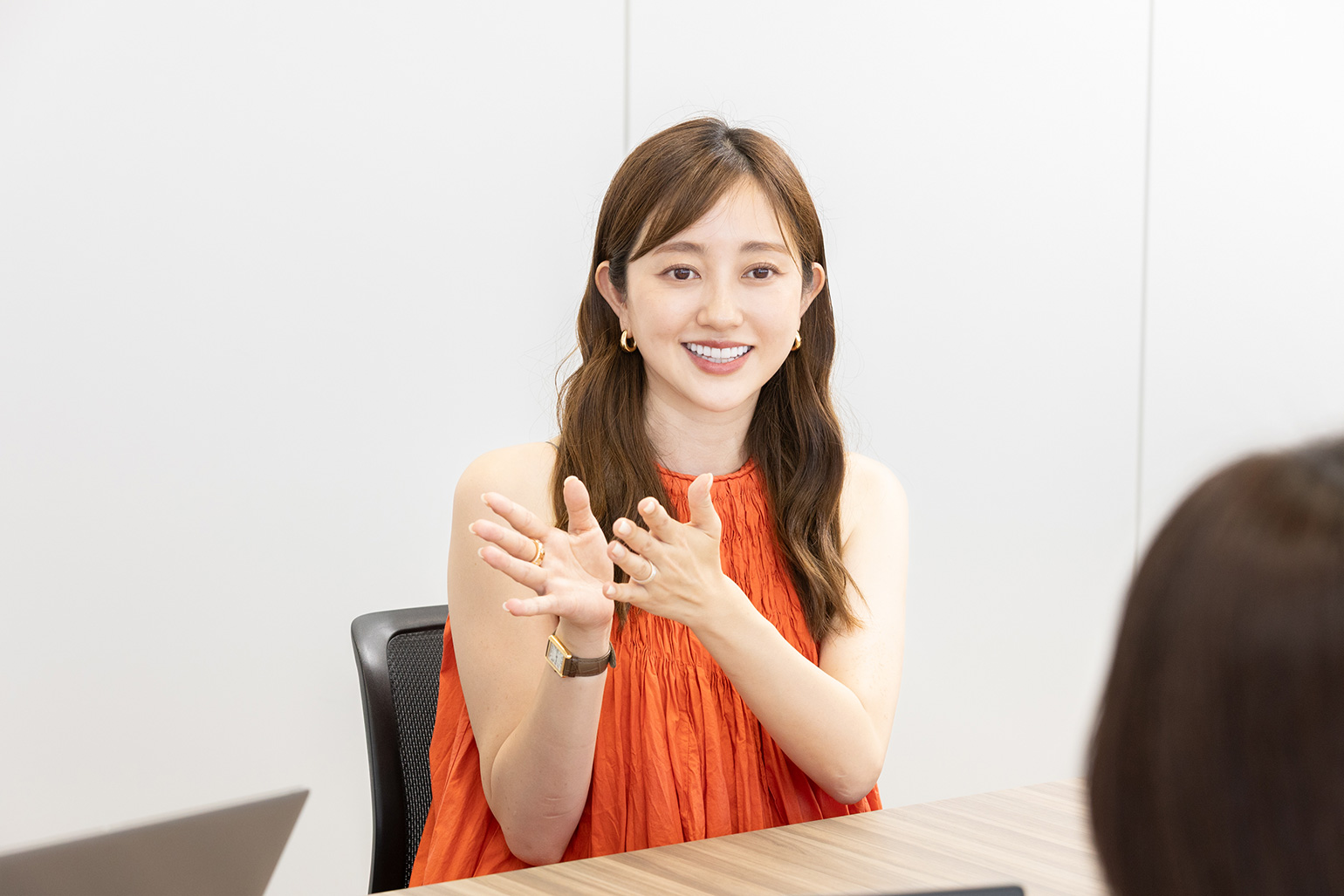
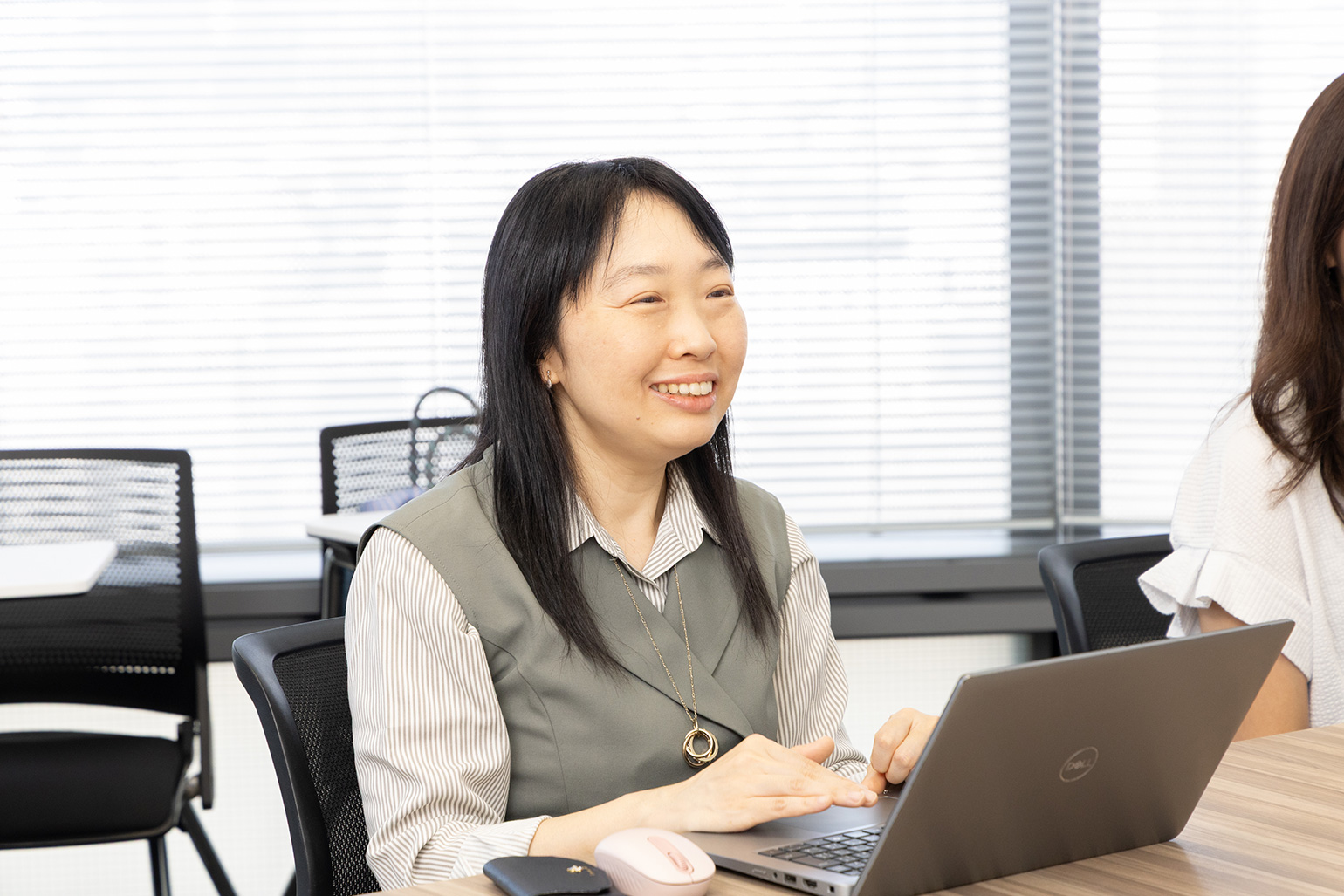
Ami Kikuchi, a mother of two
Parents’ “I wish I had done that” turns into expectations for their children
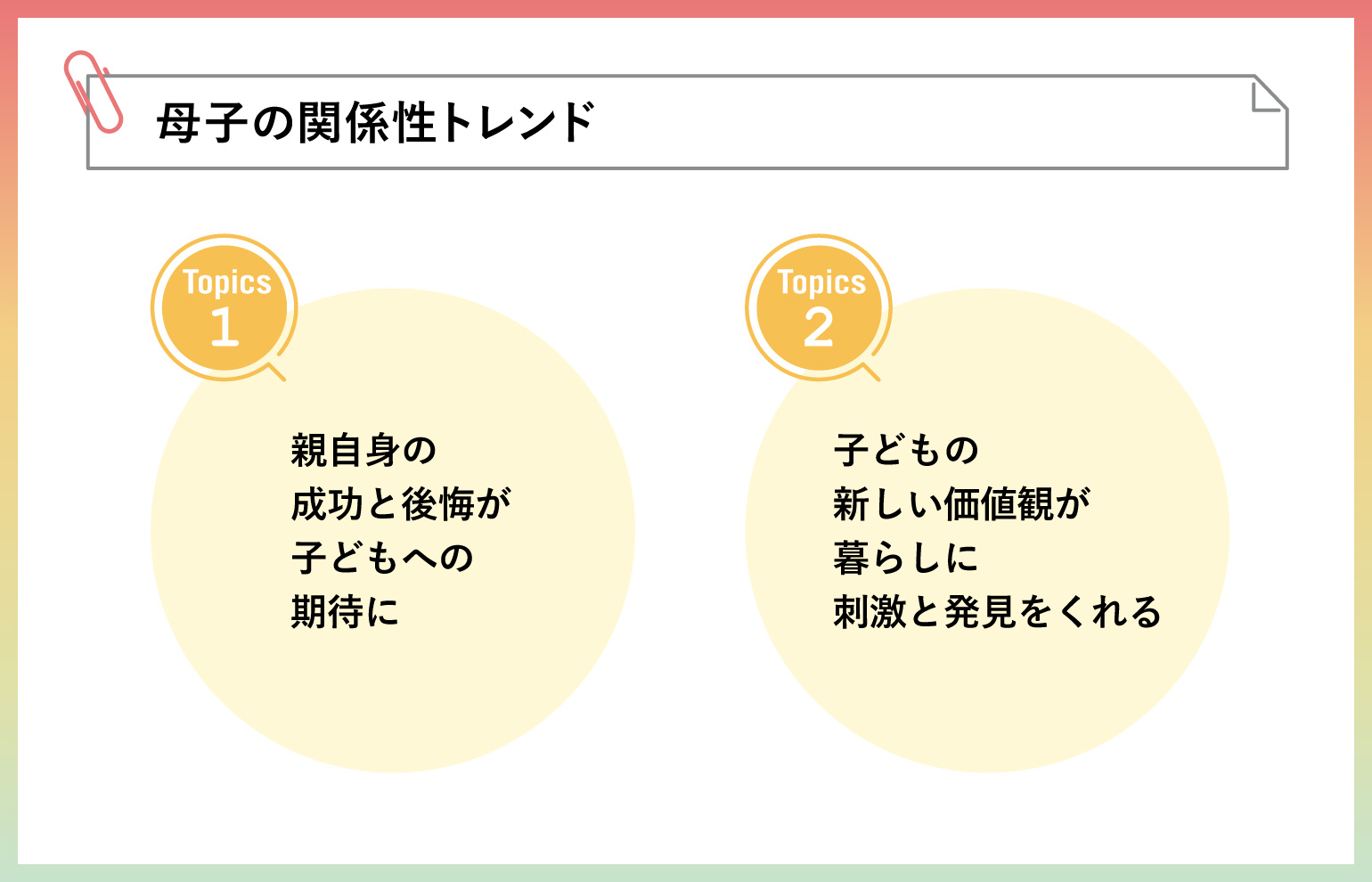
Matsubara: From here on, I’d like to delve deeper into recent changes in parent-child relationships by exploring the following two topics.
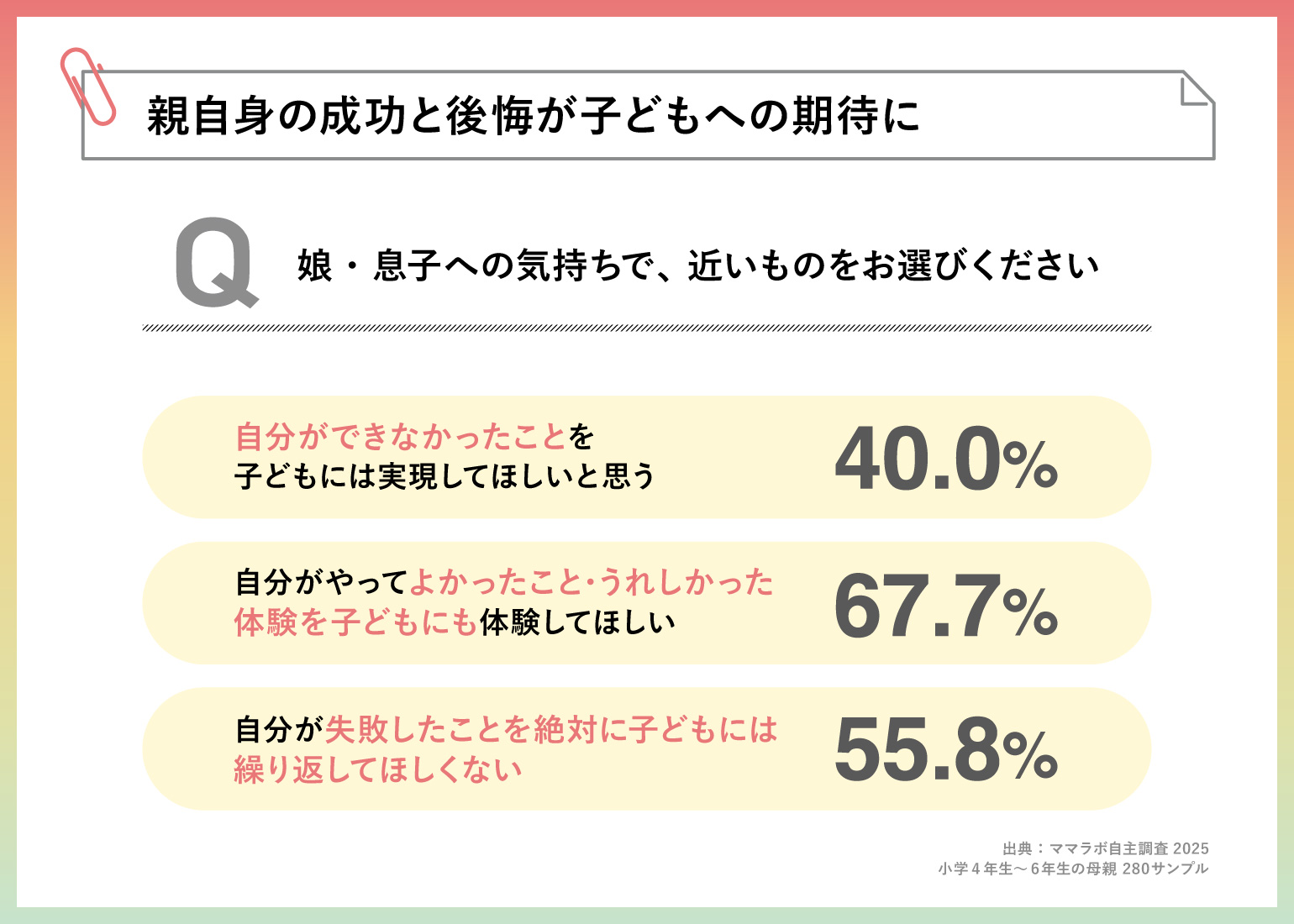
Regarding the first insight, “Parents’ Own Successes and Regrets Shape Their Expectations for Their Children,” we discovered this through a survey we conducted, which revealed a strong sentiment among parents that they “want their children to achieve what they themselves could not” and “do not want them to repeat their own failures.”
This trend is also reflected in broader societal trends. For example, mothers who are experiencing globalization and digital advancements firsthand often feel, based on their own experiences, that “I wish I had done that,” leading to an increasing number of cases where they start their children’s English and programming education at an early age. Furthermore, while discussions about money were often considered taboo in the past, they have now gained attention as part of financial education for children, as the importance of building wealth becomes more widely recognized.
Nakajima: There’s also another trend we’ve dubbed “revenge spending.” For instance, parents are now enjoying sticker albums with their children—the very ones they wanted but couldn’t have as kids—or playing Pokémon together, a game that captivated their own generation. We’re seeing a rise in spending that allows parents to relive their childhood memories alongside their children.
Ms. Kikuchi, is there anything you now think, “I wish I’d done this when I was a child”?
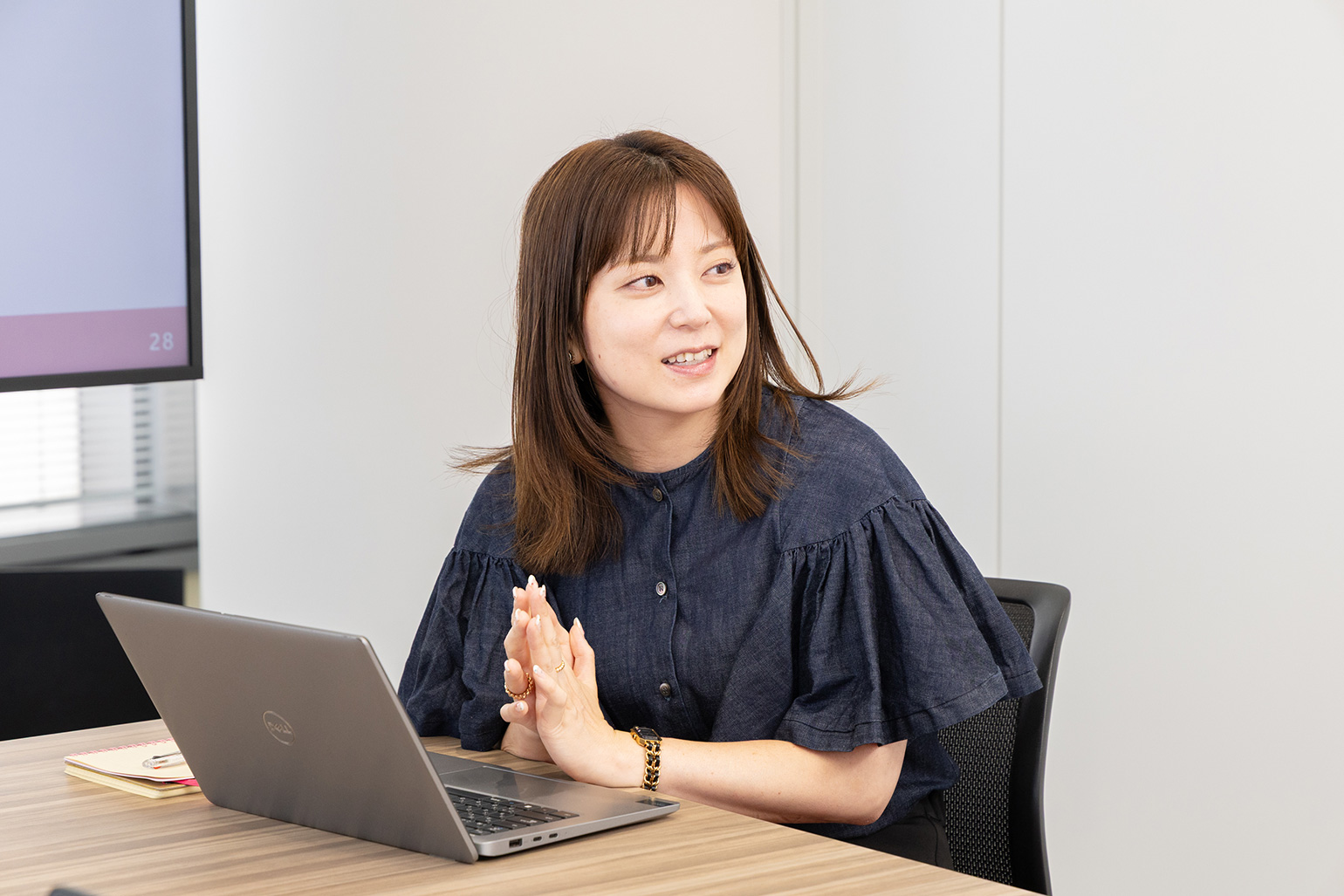
Hirono Nakajima, a member of Mama Lab
Kikuchi: English, for sure. Actually, I’m studying English myself right now, but as an adult, my middle school English grammar is still stuck in my head, so it’s hard to smoothly acquire “English that I can actually use in conversation.” But children—as long as you put them in an environment where they’re exposed to English—have a good ear for it and pick it up really fast. Realizing that, I started sending my child to preschool so they could get comfortable with English before treating it as a subject to study.Now, when we travel abroad, even if I don’t understand what someone is saying, my child will tell me, “They said this.”
I figured that since I was telling my child, “Go for it,” I had to study too, so I started learning as well—and it’s actually turned out to be a lot of fun. I never intended to force my child to do something I’d always wanted to do myself; I’d planned to let them do what they genuinely wanted to do on their own. But as they’ve grown, I find myself thinking, “It really is better to know English after all.”
Nakajima: I imagine it’s quite a challenge to relearn English—something you wish you’d done as a child—as a mom, even if it was inspired by your child. I’m sure being able to learn alongside Mom is a valuable experience for your child as well. Based on your own experiences, Ms. Kikuchi, is there anything you’d like your child to experience?
Kikuchi: I grew up surrounded by nature in Hokkaido, but back then I was so fascinated by Tokyo that I always wanted to move there as soon as possible. However, as an adult, I’ve come to truly appreciate the beauty of Hokkaido. When I tried milking a cow during an extracurricular activity in school, I remember thinking, “How many times do I have to do this?” (laughs), but looking back now, I feel that kind of interaction with nature was a valuable experience that nurtured a gentle heart and helped me develop a more diverse way of thinking.
Recently, my daughter told me, “I want to try milking a cow.” These days, that would probably mean taking a trip to a ranch in Chiba or somewhere like that, but I really want to let her have that experience. Back then, it was so ordinary to me that I didn’t realize it, but I think that by experiencing it as a child, she might come to appreciate the importance of food—something I myself only truly realized in my mid-30s—much sooner in life.
Children are a source of “insight” for their parents
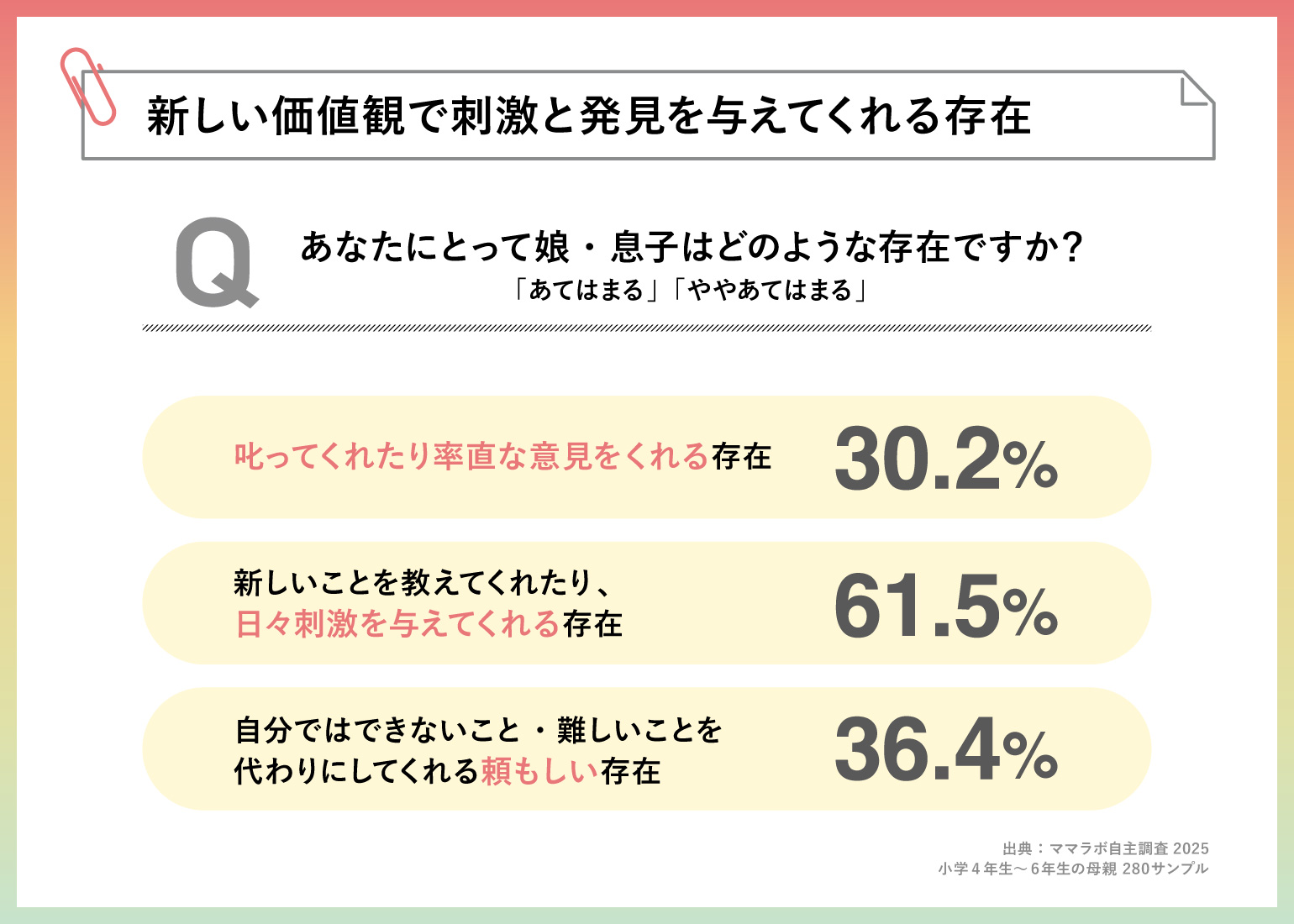
Matsubara: The second topic is, “Children’s new perspectives bring stimulation and new discoveries to our lives.” In a survey of parents with children in elementary school or older, when asked, “What kind of presence are your children in your life?” responses such as “They scold me and give me honest opinions” and “They teach me new things and provide daily stimulation” stood out. Rather than parents simply teaching their children one-sidedly, parents are learning a great deal from their children and having their horizons broadened by them. This is a defining characteristic of parent-child relationships these days.
For example, parents may become hooked on “fandom activities” inspired by their child’s favorite idol. Speaking from my own experience, as I joined my son in his hobby of collecting antique coins, my own worldview expanded as well.
When it comes to education, the sentiment that “parents should strive to be role models as much as possible” is giving way to a higher percentage of parents who feel, “Since we’re still learning ourselves, we want to grow alongside our children.” On new topics—such as sex education, diversity, and AI—that the parent generation never studied, children who have learned about them in school often know more than their parents. In this context, I feel that “partner-style education,” where parents learn alongside their children, has become a key concept.
Erika Matsubara, Director of Mama Lab
Saito: Ms. Kikuchi, since your child was born, have you felt that your worldview has broadened or that you’ve been exposed to new values through the experience of raising a child?
Kikuchi: There are so many examples. In particular, I’m always amazed by my daughter’s advanced language skills.
When she was around three years old and had just started kindergarten and made friends on her own, she once said to me, “○○-chan and △△-chan are friends Mom made for me, right? The friends I made at kindergarten are ‘my own friends,’ so on my days off, I want to play with my friends, too.”It’s true that up until then, she had mostly played with my friends’ children, but I was amazed that she could put it into words so clearly! It wasn’t about which friends were better—it was simply her ability to express herself that moved my husband and me so much that we both thought, “I might be a doting parent, but that’s really amazing.”
Another time was when my husband and I were having a minor argument about something in the kitchen.I didn’t really think it was a full-blown argument, but just as we were getting back to our regular conversation, our daughter ran over and said, “Oh, you mean like what just happened.” She’d asked us before, “Why don’t Mom and Dad ever say ‘I’m sorry,’ but you’re always telling me to say ‘I’m sorry’?” It seemed she’d finally figured out the answer. It really struck me how closely children listen and observe.
Saito: Your daughter really pays close attention! That’s exactly what the data showed—that “children offer candid opinions.” Even in those casual, everyday interactions, there are many moments when our values as parents are put to the test, aren’t there?
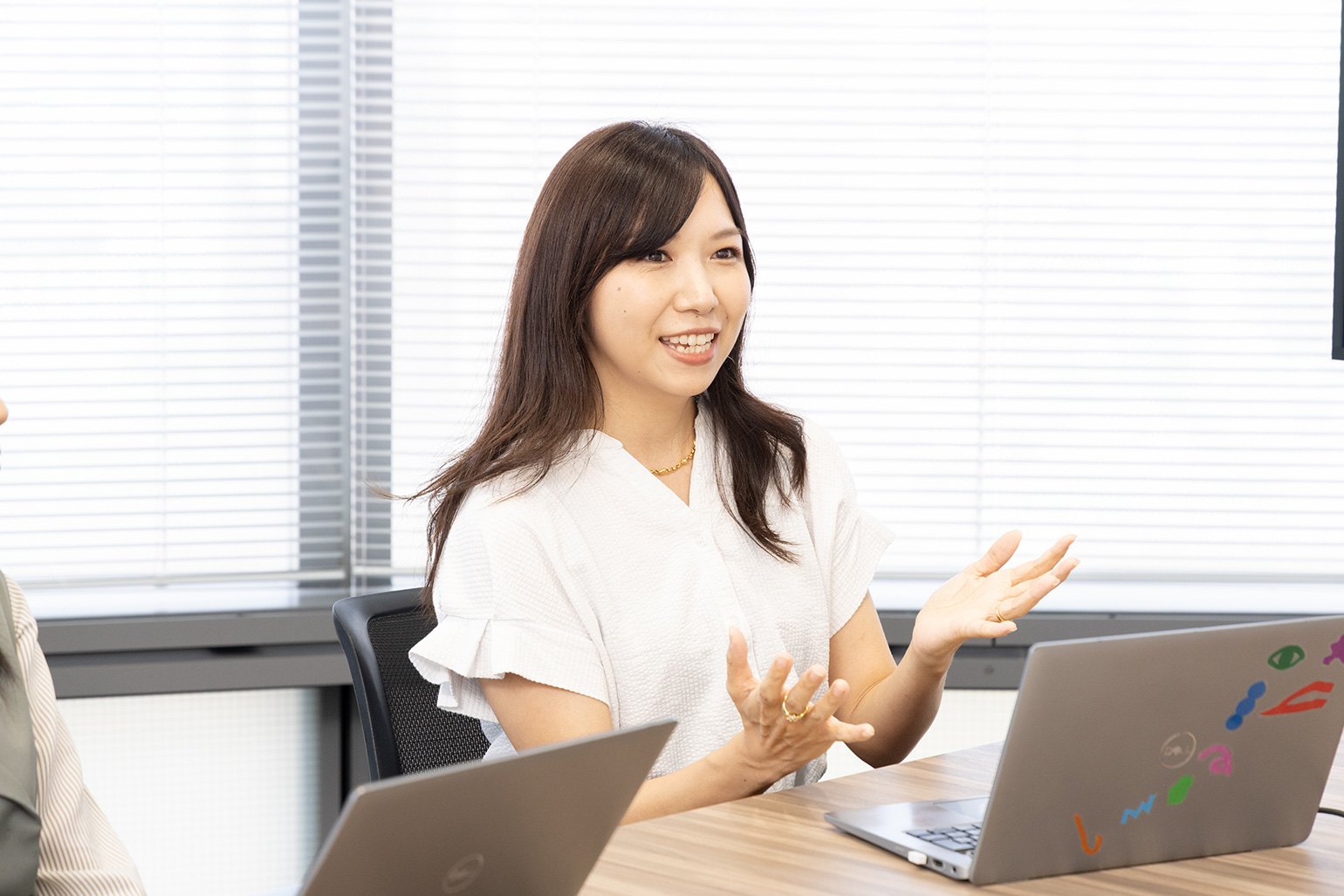
Rie Saito, Deputy Director of Mama Lab
Nakajima: Are there any activities you’ve started or places you’ve visited for the first time because of your children?
Kikuchi: My eldest daughter loves arts and crafts. I’m not very good with my hands and used to be terrible at making things, but she tells me, “Don’t throw these away! I’ll use them for crafts,” so I’ve started saving milk cartons and toilet paper rolls. She makes computers out of cardboard and buttons out of origami paper—I’m constantly amazed by her creativity, so I’ve started joining her in her hobbies.Since this is a field I’m not familiar with, I’m still figuring out how best to nurture her talent, but whenever I go to a 100-yen shop, I buy her craft supplies.
Matsubara: Even in areas you’re not naturally good at, it’s wonderful to take on new challenges with your child and broaden your horizons together. I feel that this attitude of “Let’s have fun together” is exactly what makes for a wonderful parent-child relationship in today’s world. Thank you so much for sharing this story that gives us a realistic glimpse into modern parenting!
A constant chorus of “I get it!”: Experiencing “Mirai-ku Palette,” created by about 30 Mama Lab members
Next, seven Mama Lab members joined us, and the eight of us—including Ms. Kikuchi—experienced the “Miraiku Palette” together while discussing “parenting worries” and “common parenting experiences.”
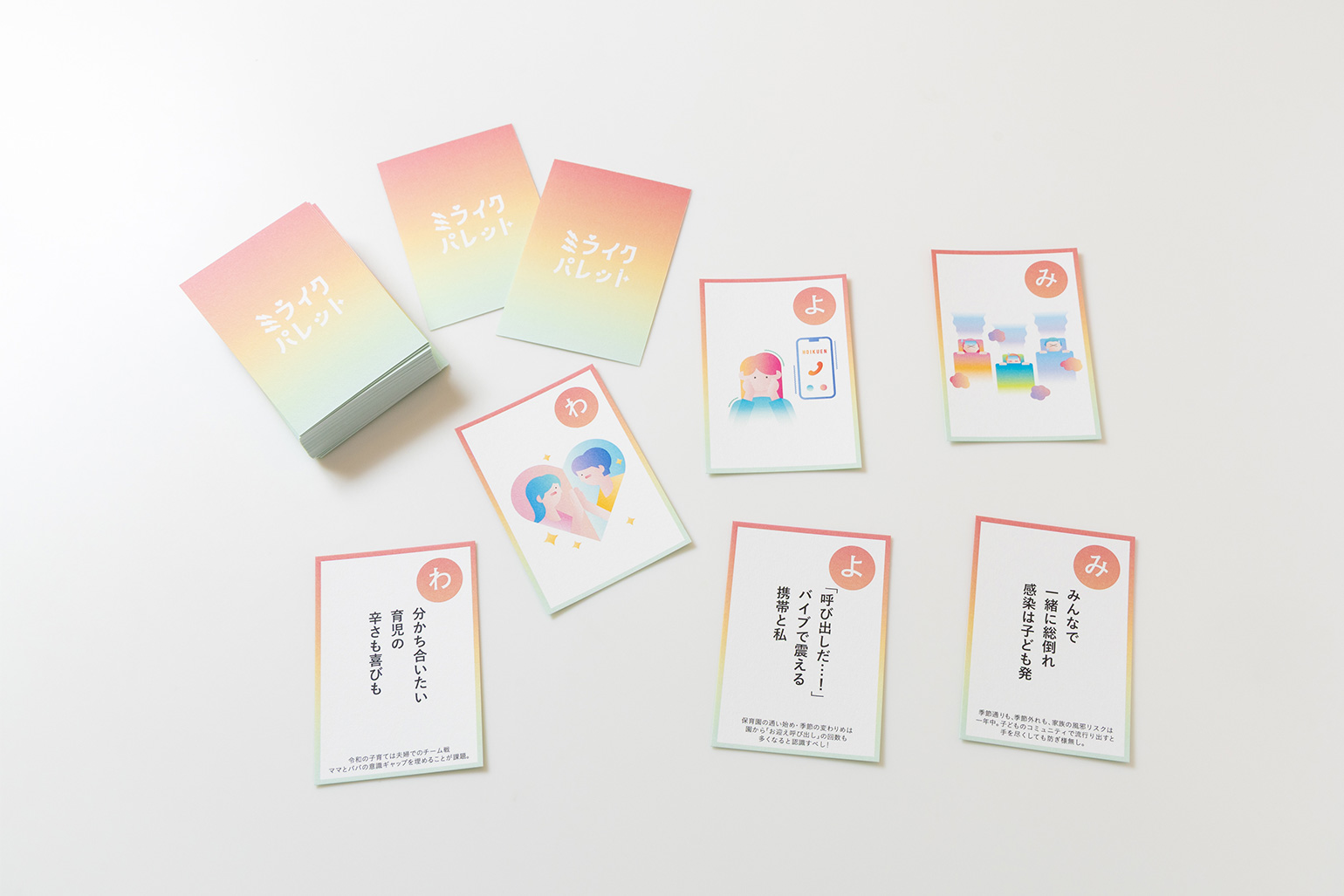
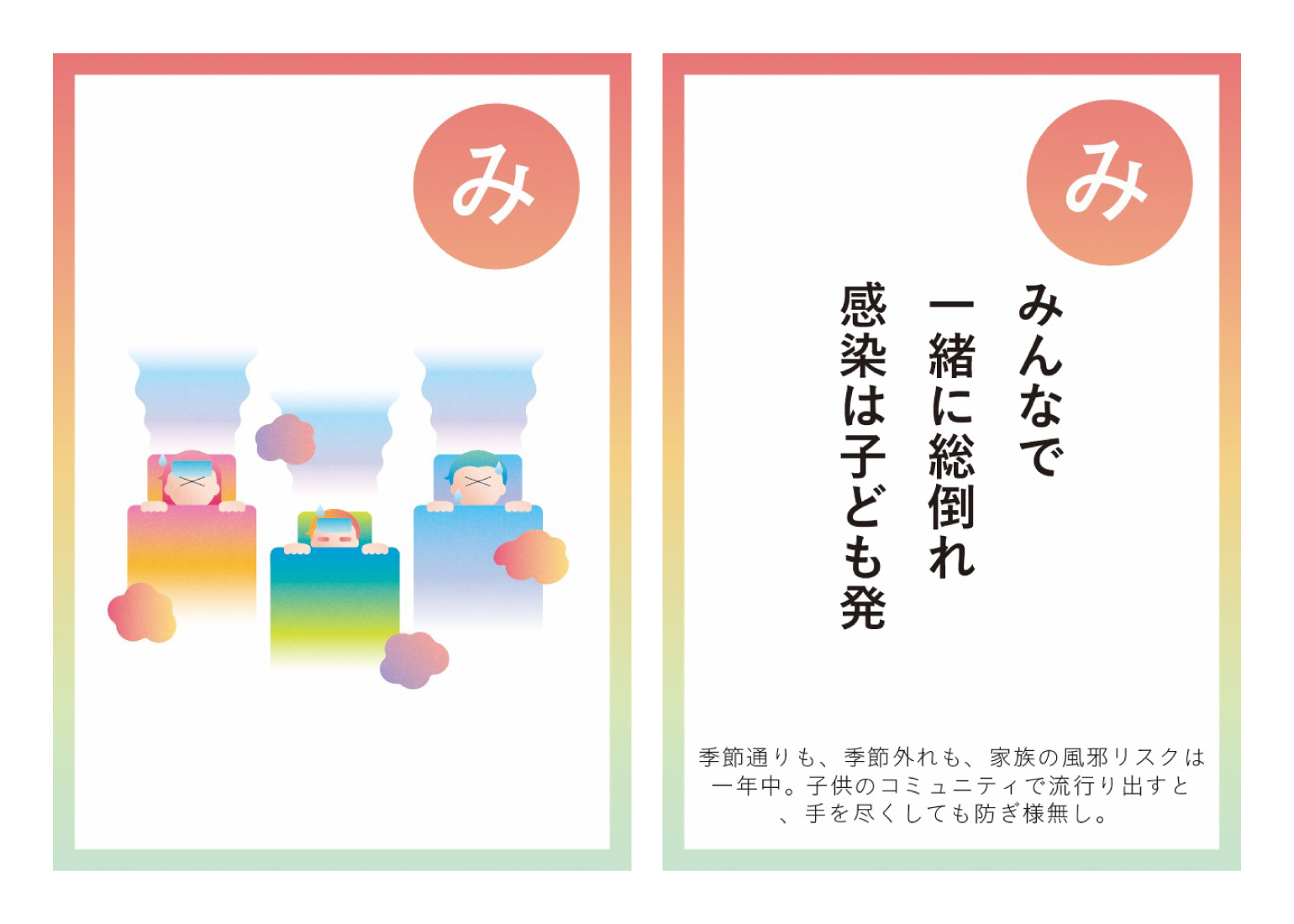
The Miraiku Palette is a tool created by approximately 30 Mama Lab members who, drawing on their “real-life experiences” and unique “vision for the future,” have expressed the worries and challenges faced by families raising children in the form of a 50-character Japanese card game. When you pick up a card, you receive an explanatory sheet detailing the quantitative and qualitative data and insights behind it, allowing you to not only relate to the “everyday” experiences but also understand the information surrounding each situation.
Mirai-ku Palette
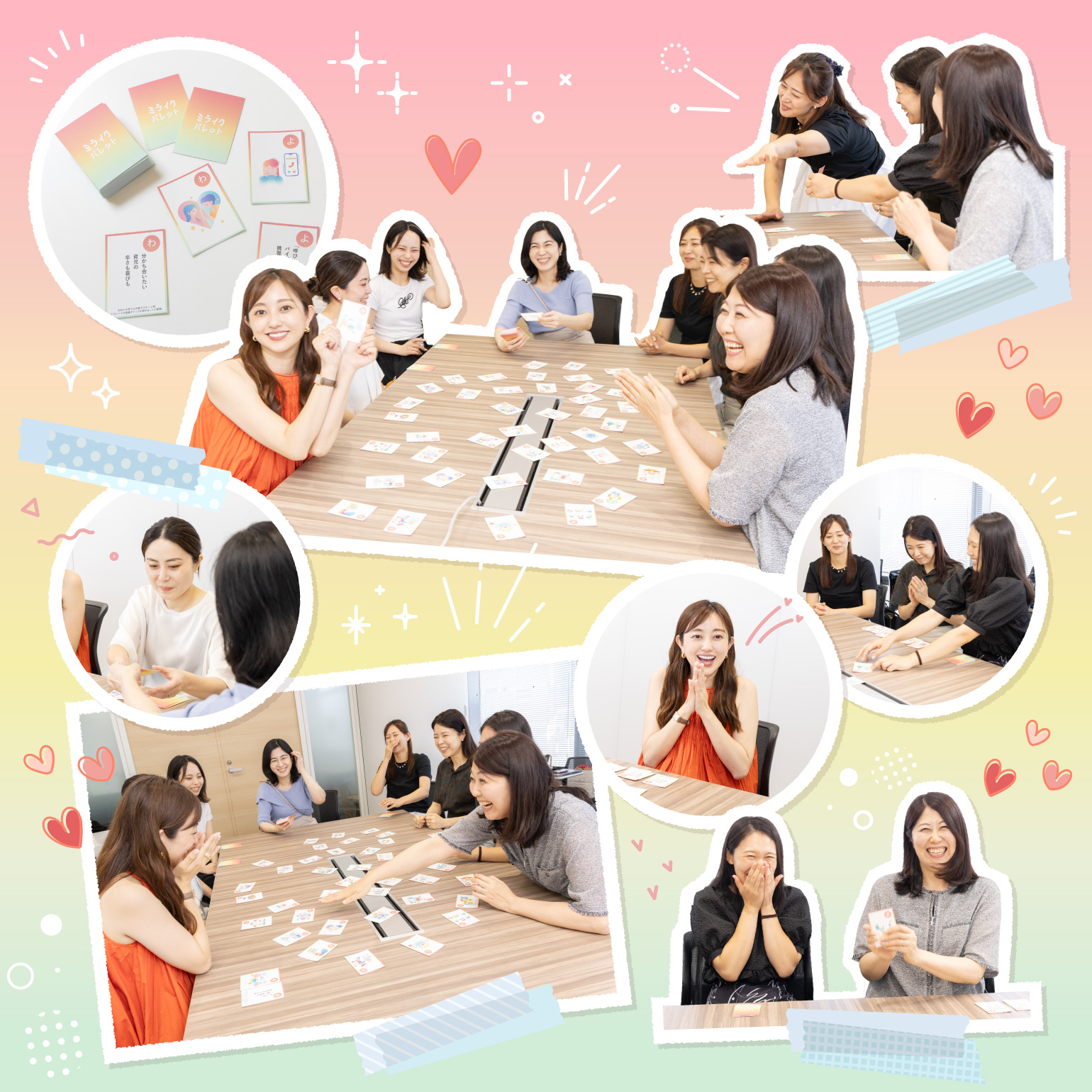
The game got off to a fast start. The eight participants chatted in a friendly, relaxed atmosphere, but reached quickly for the cards every time one was read aloud. When one member leaned forward to grab a card that everyone else had been struggling to find, spontaneous applause broke out.
In between rounds, the reader would occasionally provide commentary. The audience responded with comments like, “That’s funny! I can totally relate to all of that,” “I get it!” and “That’s a real dilemma,” and there were moments when everyone nodded in agreement. There was also a moment when a member held up a card they had designed and said, “I really wanted to include this one!” Ms. Kikuchi looked convinced by these authentic insights—ones that can only be seen because the participants grapple with the challenges of parenting every day, even as they struggle.
The “Miraiku Palette” experience was lively and full of camaraderie. Ms. Kikuchi took first place, earning 9 cards.
A Heart-Stopping Call from Kindergarten! A Roundtable Discussion Full of Relatable Parenting Moments
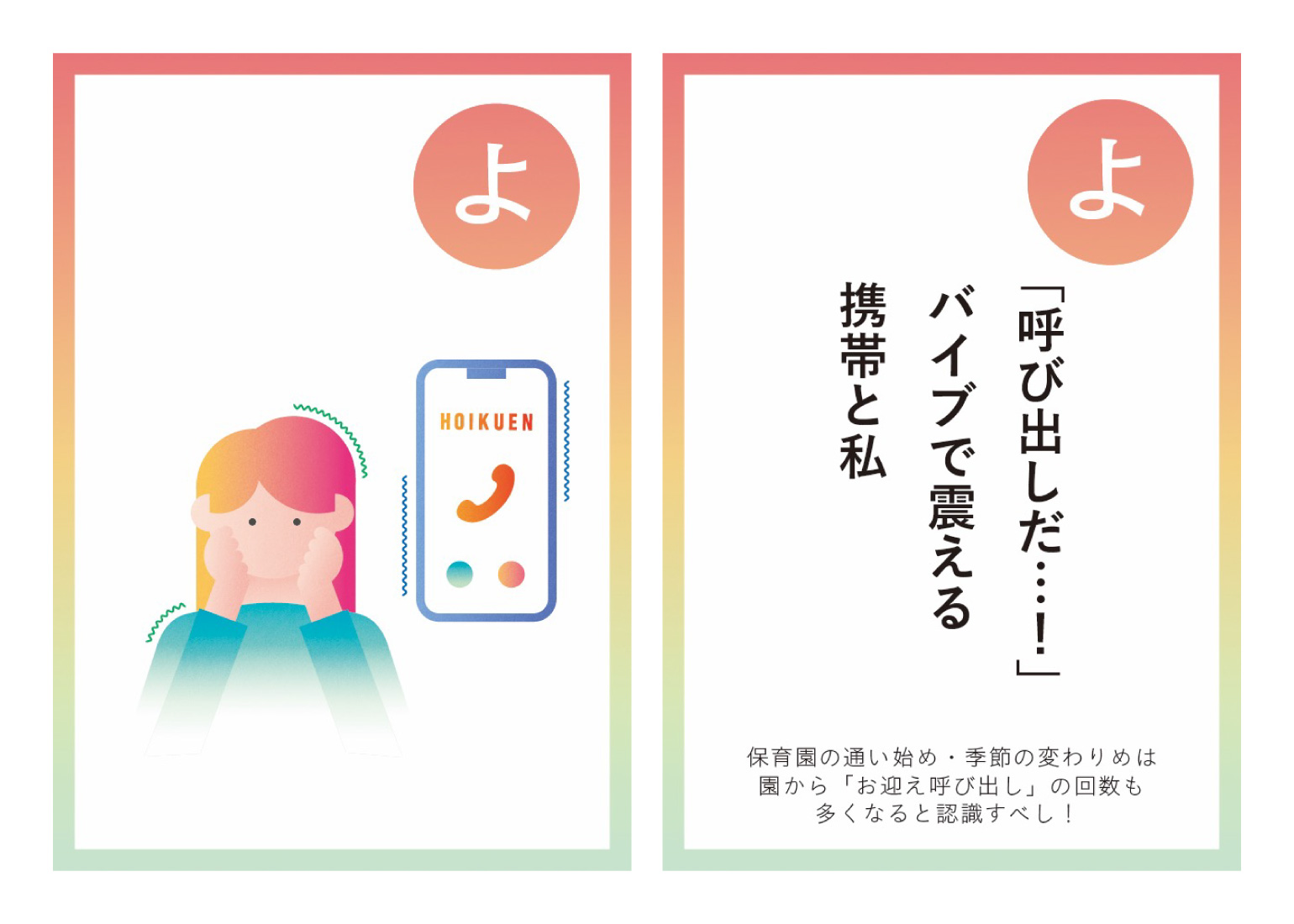
After the game ended, the participants exchanged opinions on topics from the cards that had caught their attention. The two cards Ms. Kikuchi selected were “It’s a call from the kindergarten…! My phone vibrating and me” and “We’re all down together—the infection starts with the kids.”
Explaining her choice of the first card, she confessed that when she receives a call from the kindergarten while at work, her heart races so much that she finds herself asking, “Is everything okay!?” in a serious tone before even hearing what’s going on. She shared the complex feelings unique to moms raising young children—such as “There’s nothing I can do even after hearing the situation” and “I feel hesitant to tell my coworkers”—prompting Mama Lab members to reflect, “Calls from kindergarten or daycare really do make your heart skip a beat, don’t they?”
Ms. Kikuchi also lightened the mood by sharing a charming anecdote: she had set her phone to ring to a certain hit song so she’d notice calls from the kindergarten right away, but once, when that same song came on in her car, her “call mode” kicked in, causing her to gasp in surprise.
The Mama Lab members each selected cards with messages such as, “Is this morning sickness? I’ve never felt this sick before,” “I can’t wait for the day when paid leave and dad’s paternity leave are the norm,” and “Time-efficient parenting gives me peace of mind—a smiling couple means a smiling child.”
They shared their personal experiences: one member described how she had to take two to three months off work due to severe morning sickness and received IV drips daily, yet found it difficult to explain what morning sickness was like to people who hadn’t experienced it; another noted that while some men at Dentsu Inc. take about a year of paternity leave, it remains difficult for self-employed husbands to take time off unless society changes.
In response to the card reading “We Share the Same Roots, but Times Have Changed—Please Update Your Values,” a member whose first child is 20 and second child is 4 shared valuable insights. She noted that the environment has changed dramatically since raising her first child compared to now, and expressed her genuine feelings about how perceptions of “what’s acceptable and what isn’t” have shifted, how convenient tools have emerged, and how society’s perspective has changed.
Changing parenting realities: Real moms’ voices lead to “the next step”
After the talk, Mama Lab members addressed the statement “The peak age for frequent calls is 2 years old,” found on the explanatory sheet for “It’s a Call…! My Phone Vibrating and Me.” The production team explained their intent: “By providing this supplementary information, we hoped to help people who aren’t yet mothers—or those unfamiliar with children’s circumstances—avoid worrying too much.”
Finally, Ms. Kikuchi posed a question to the Mama Lab members regarding her own concern: “When my youngest child was born, I made a conscious effort to spend time with my eldest daughter—but should I continue doing this even as she gets older?”
A member with a son in kindergarten and a daughter in sixth grade replied, “Since they’re both currently preparing for entrance exams for middle school and elementary school, respectively, I spend almost one-on-one time with each of them.” She shared a heartfelt account: because her older child is now somewhat older, focusing entirely on the younger one would have left the older child feeling insecure. So, she took charge of the older child and had her husband look after the younger one, which helped stabilize the situation.
Another member, who has daughters in fourth and first grade, shared how she manages her busy schedule: when her daughters tell her, “We want time with Mom,” she makes a point of spending five minutes alone with each of them before bedtime.
Ms. Kikuchi smiled and said, “Hearing these real-life stories was incredibly helpful. Even as the older child grows up, one-on-one time with each child really is important, isn’t it? I’m going to incorporate this into my own life.” With that, the roundtable discussion—which explored the concerns and insights of Reiwa-era moms while offering a firsthand look at modern parenting—came to a close.
Mama Lab will continue to conduct surveys and in-depth analysis on the insights of modern moms and the circumstances surrounding those raising children.
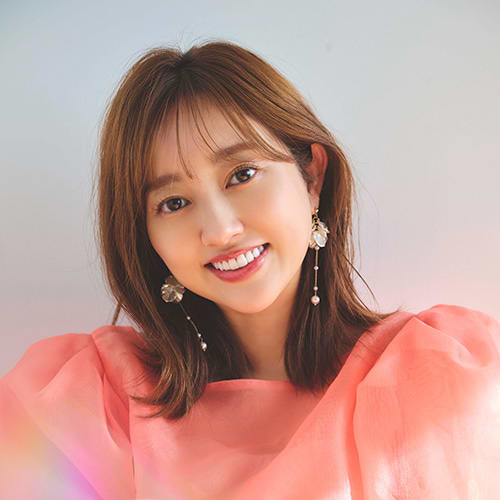
Born on September 5, 1990, in Hokkaido.
She married a non-celebrity man in 2018 and is currently the mother of two children, ages 6 and 1. In 2023, she won the “Parenting Award (Mom Category)” at the 16th annual ceremony, and in 2025, she received the “Tomonite Special Award” at the “Tomonite Parenting Grand Prix 2025.”She is also active as a “mom influencer,” organizing offline events for parents and children such as “MAMARIAL fes.” starting in 2024. In August 2026, she began a dual-residence lifestyle between Japan and Malaysia.
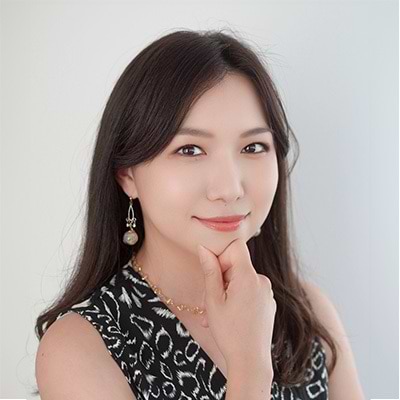
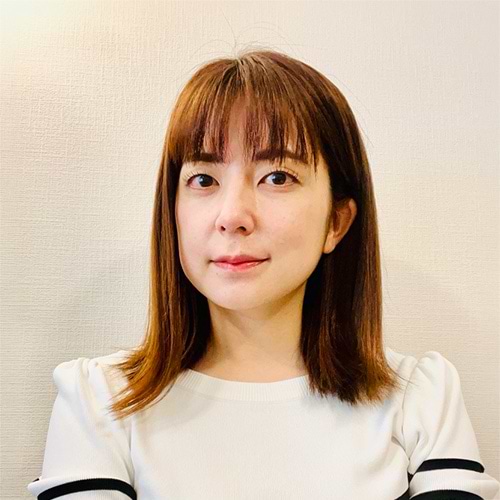
Matsubara Erika
Dentsu Inc.
Marketing Division 8
Marketing Planner / Director, Dentsu Inc. Mama Lab
Drawing on her experience living in France, Indonesia, the U.S., and Switzerland for over 10 years, she worked in Dentsu Inc.’s marketing division, where she was involved in developing global brand marketing strategies and overseas market entry strategies for a wide range of industries, as well as supporting foreign companies in entering the domestic market.Since 2022, she has served as Director of Dentsu Mama Lab at Dentsu Inc. Guided by the concept, “When moms smile, Japan smiles. When moms smile, the world smiles,” she has led numerous initiatives, including exploring real-world insights into families—the core of consumer behavior—and brand communication.
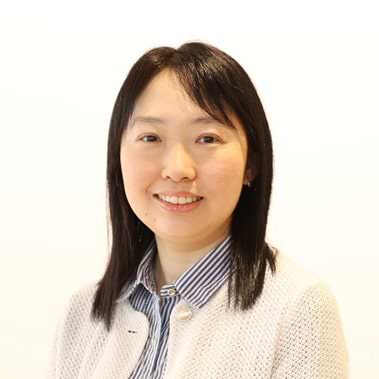
Marketing Planner / Dentsu Inc. Mama Lab Researcher
In the Strategic Planning Section, I’ve managed clients in the cosmetics, toiletries, food, supplements, entertainment, and kitchen appliances sectors. My work spans a wide range of activities—from marketing strategy development to communication execution, product development, and PR planning—primarily grounded in consumer insights. In my personal life, I’m a mother of three, raising a middle schooler and two elementary schoolers.
After working in marketing at a printing company and a major portal site, I joined Dentsu Inc. and worked extensively in the Data Analytics Division, supporting marketing decision-making by leveraging various types of data. I specialize in deriving strategies from market analysis and designing PDCA cycles following the implementation of initiatives. I later gained experience in the sales division and currently work in the marketing division, where I handle numerous clients in industries such as telecommunications, finance, and e-commerce. Additionally, I have served as Deputy Director of Dentsu Mama Lab since 2022. Under the concept, “When moms smile, Japan smiles.When moms smile, the world smiles.” Under this concept, she is responsible for exploring real-world insights into families—the core of consumer behavior—as well as brand communication.
With the motto, “When moms smile, Japan smiles. When moms smile, the world smiles,” we are a think tank that sincerely engages with the true feelings of moms and children to propose solutions to challenges. Since our founding, we’ve anticipated the direction moms, dads, children, and families are heading, and by applying real-world insights and fresh perspectives, we tackle our clients’ business and societal challenges to help build a brighter future.