One day, “umbrella ghosts” appeared inside a Nagoya Railway train.
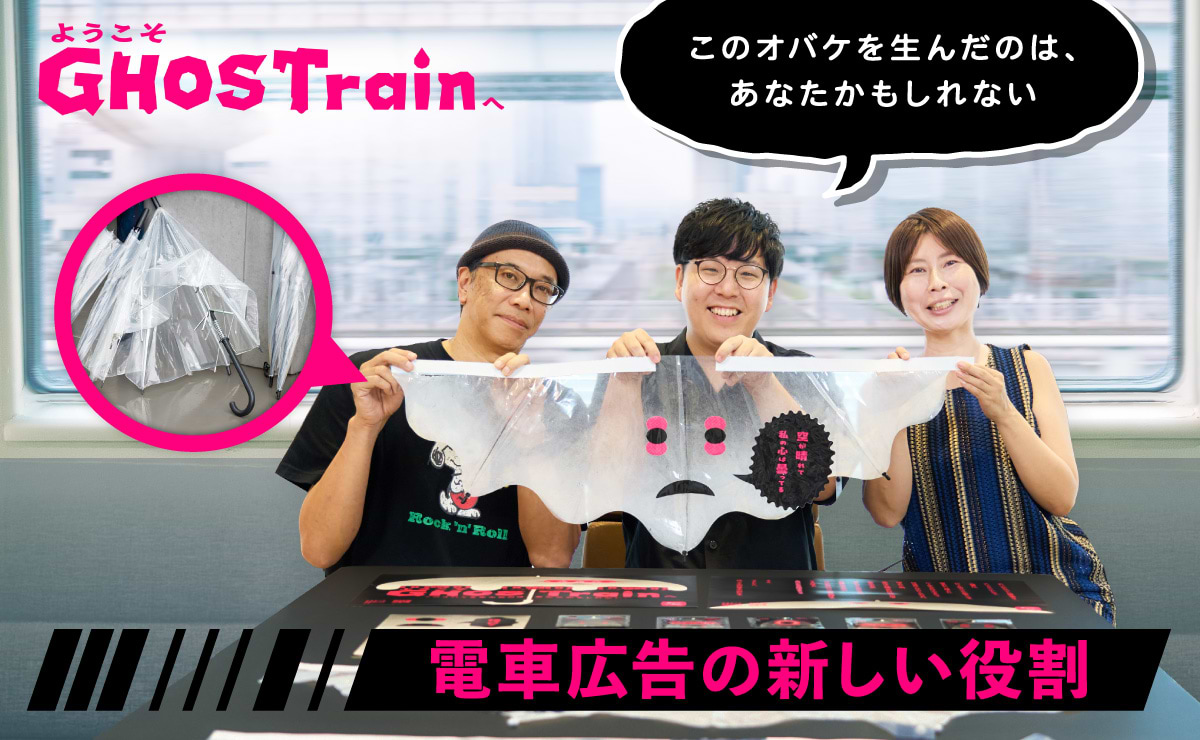
These “ghosts,” made from repurposed plastic umbrellas, were suspended inside the train cars as if floating, drawing the attention of many passengers. This project, which became a major sensation on social media, was named “GHOSTrain.” In reality, they were actual plastic umbrellas left behind at stations and inside trains.
While this initiative might seem at first glance like a unique way to generate buzz, it was driven by social issues such as lost items and plastic consumption—as well as the desire to “uncover new possibilities for train advertising.” We spoke with three individuals involved in the “Uemuku to Uwamuku Project,” a joint initiative promoted by Nagoya Railroad (hereinafter “Meitetsu”) and Dentsu Meitetsu Communications Inc. (DMC).
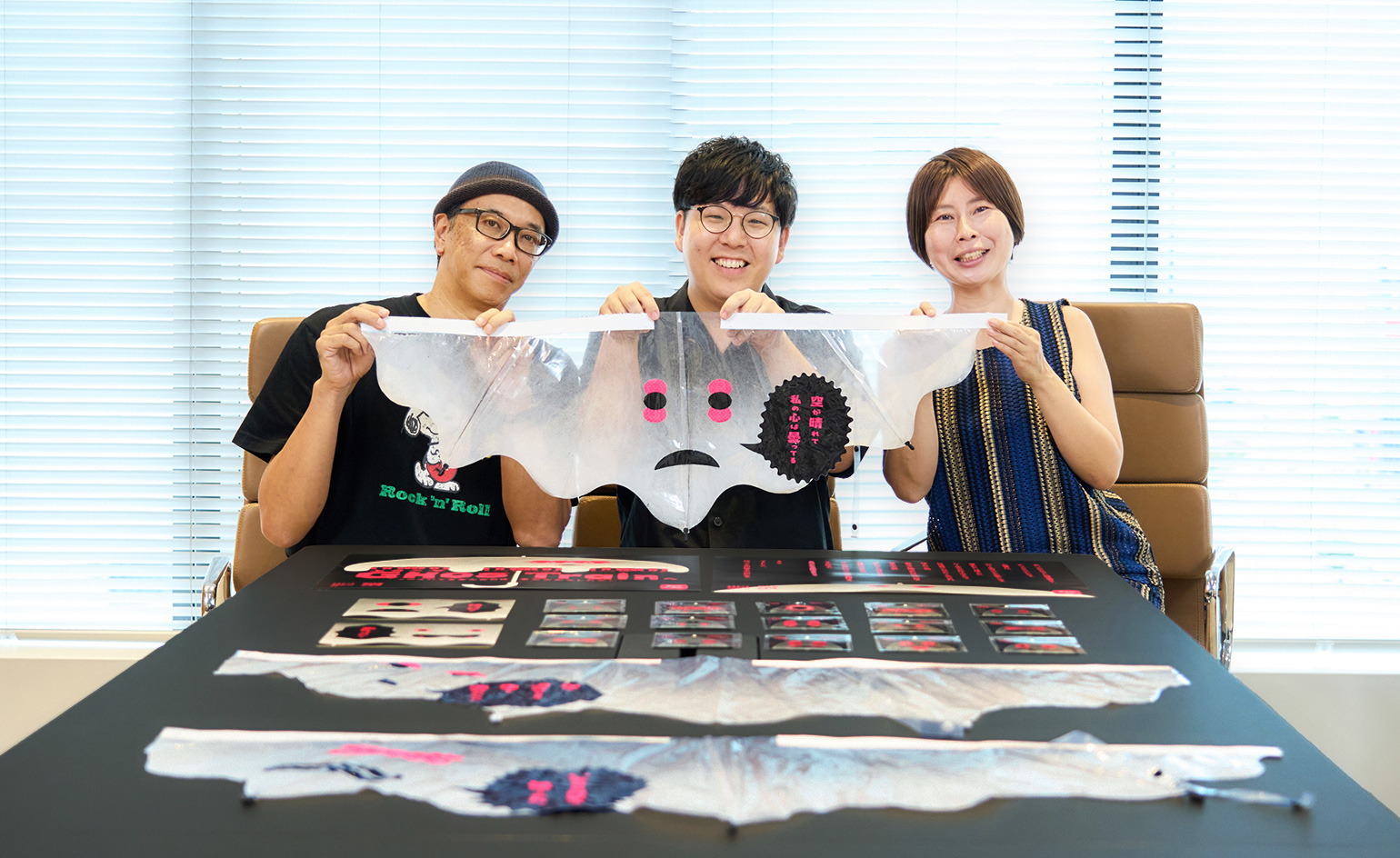
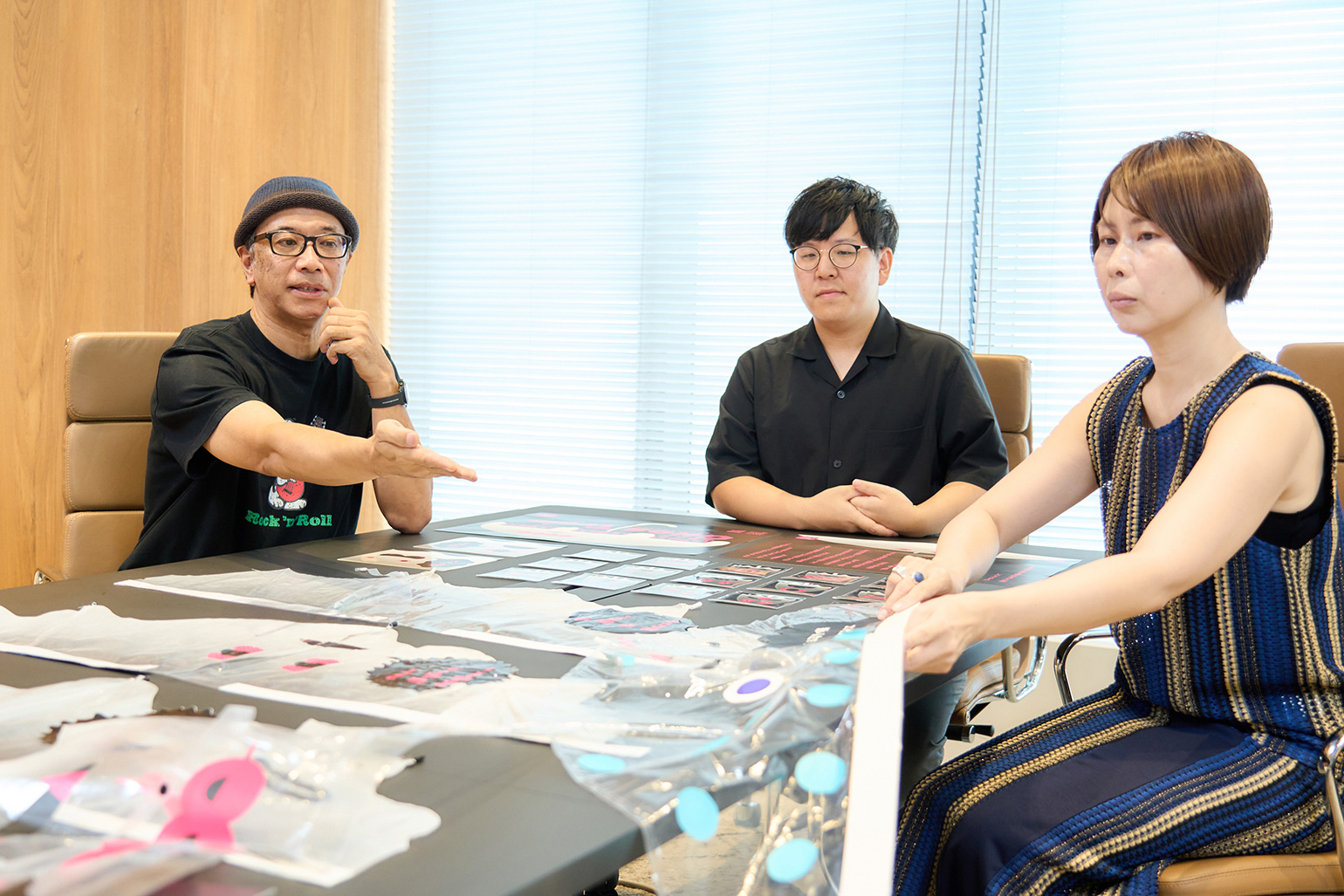
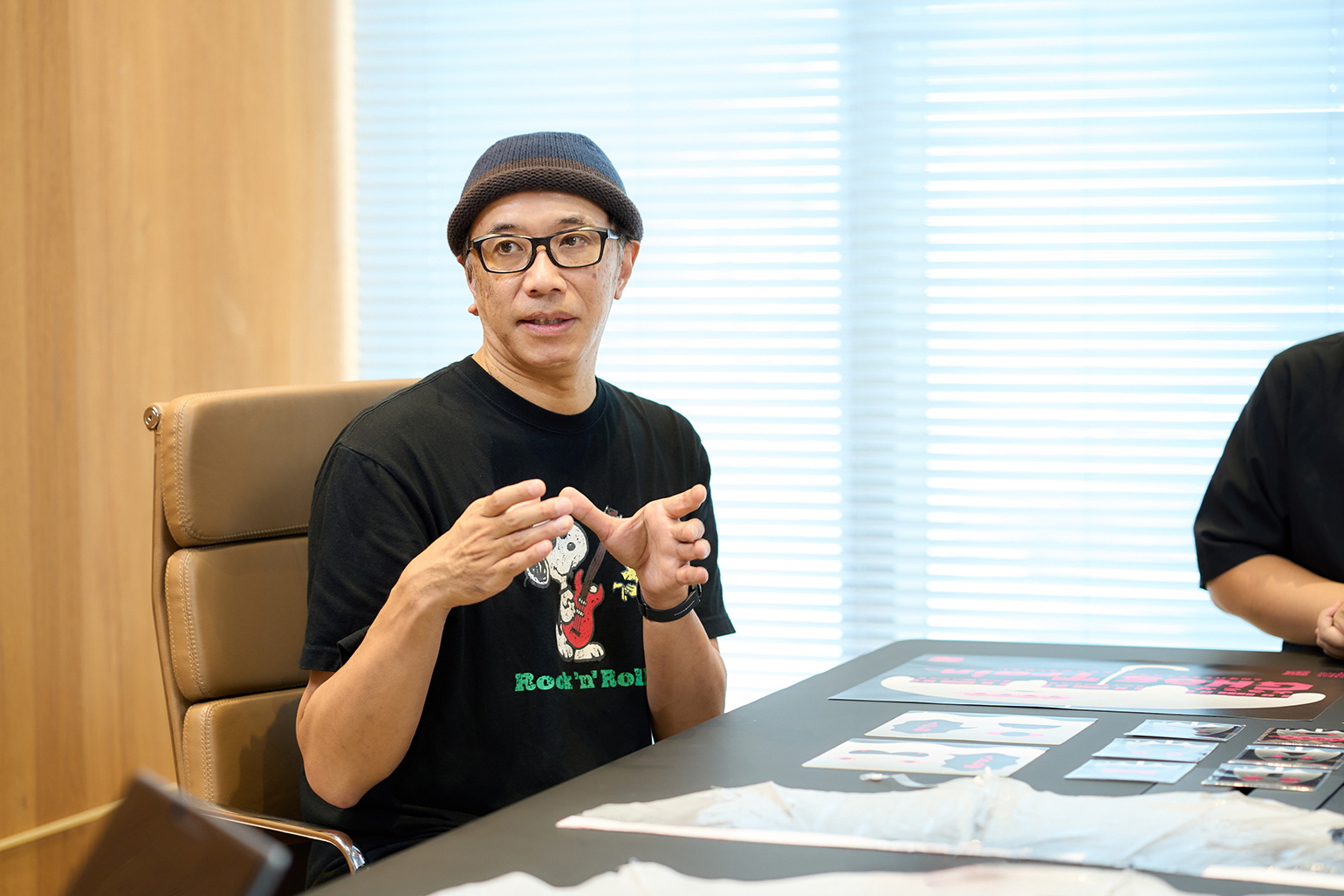
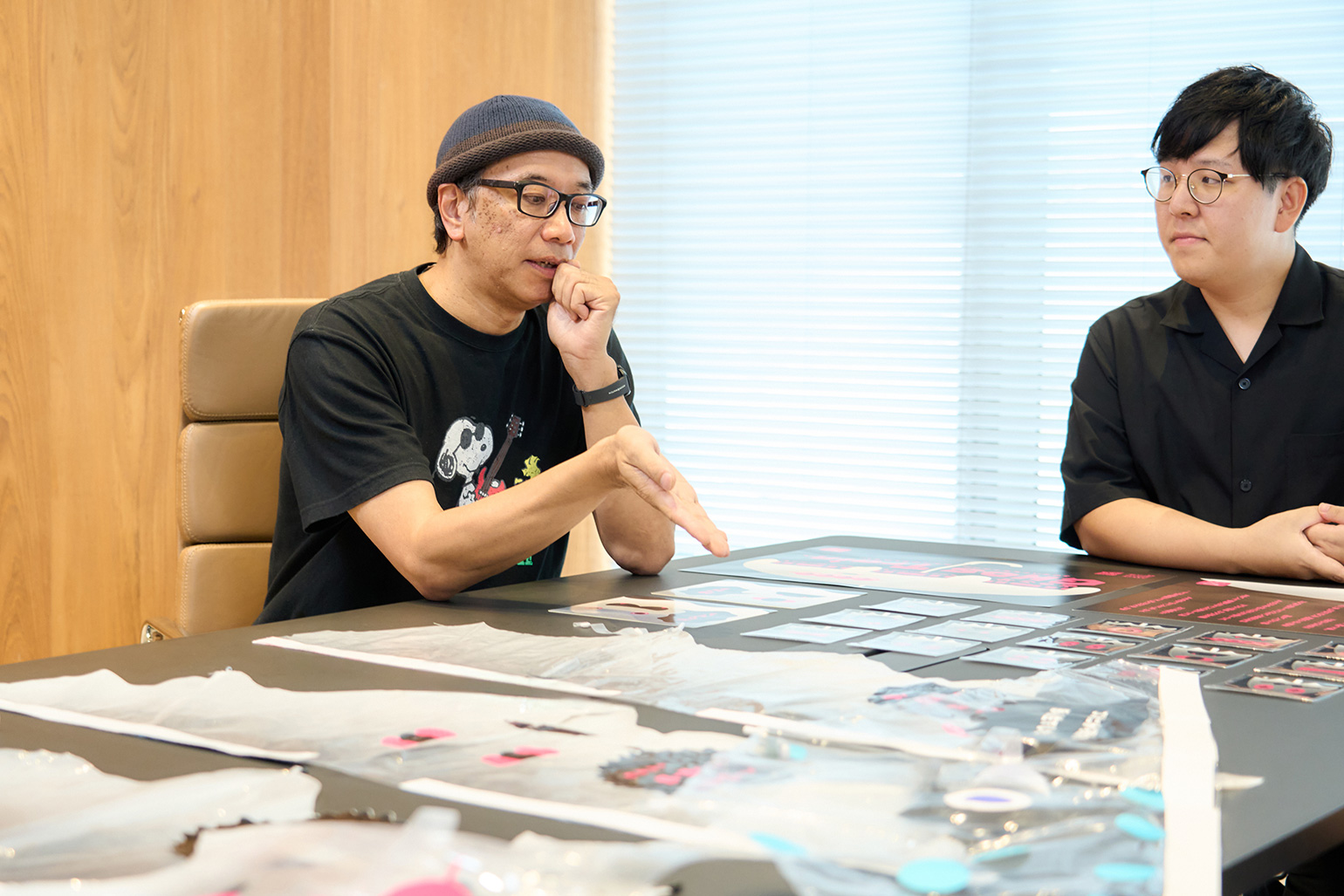
(From left) Tatsuro Hasegawa, General Manager, Solution Creative Department, Business Creation Bureau, DMC; Shogo Takahashi, Sales Department, Railway Business Headquarters, Meitetsu; Yoko Tatsumi, Solution Creative Department, Business Creation Bureau, DMC
The “Uemuku to Uwamuku” Project A joint project between Meitetsu and DMC that aims to create opportunities for passengers to “look up” through a combination of creativity and hanging advertisements, thereby “lifting spirits” and “revitalizing the community.” The project began after Meitetsu approached DMC with the question, “Can we create new value for hanging advertisements through an interesting initiative?” in response to the decline in demand for train advertisements during the COVID-19 pandemic.For the first phase, carried out in the fall of 2024, they launched “MORE FLOWER,” a project that repurposed flowers scheduled for disposal into hanging advertisements.
300 a Day! The “Plastic Umbrellas” Left Behind That Plague Rail Companies
──The first campaign focused on flowers, and the second on plastic umbrellas. How did “Ghost Train” come to be?
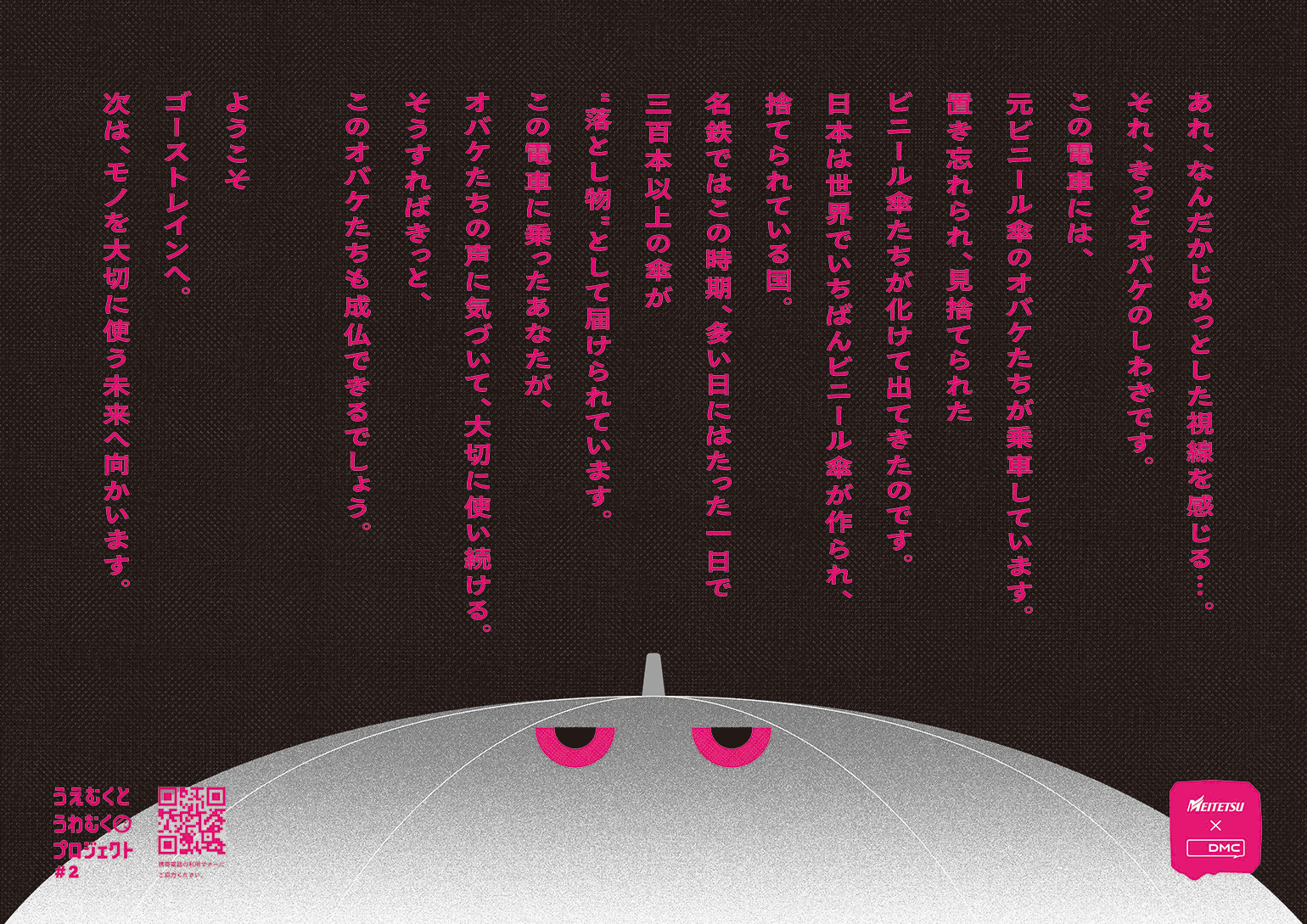
Tatsumi: For the first installment, we focused on “flower waste”—an issue in Aichi Prefecture, which ranks first nationwide in flower shipments—and received a tremendous response. For the second installment, we again addressed a regional issue by focusing on the problem of plastic consumption. Japan is said to consume more plastic than many other countries, and among plastic items, plastic umbrellas are particularly symbolic.
For Meitetsu as well, the large number of abandoned plastic umbrellas was a major issue. So, we thought that by starting with the familiar theme of forgotten umbrellas, we could encourage people to also turn their attention to the problems of plastic consumption and mass consumption.
──What were your impressions of the campaign, Mr. Takahashi?
Takahashi: When I first saw the design, I thought, “It’s really catchy and cute.” On top of that, plastic umbrellas and items left behind on trains are themes that are very closely linked.
By reminding passengers on the train, “Please don’t forget your umbrella,” we can encourage them to take action right then and there to prevent leaving items behind. I thought it was an excellent campaign.
──In reality, to what extent is leaving umbrellas behind a problem?
Takahashi: According to the Lost Property Act, we are required to store lost items for a certain period of time. Our company manages them centrally at the lost and found office located near Ota River Station.
We collect and store items found at each station and on trains. When a customer contacts us to report a lost item, our support center must also handle the inquiry. These hidden costs are a major challenge.
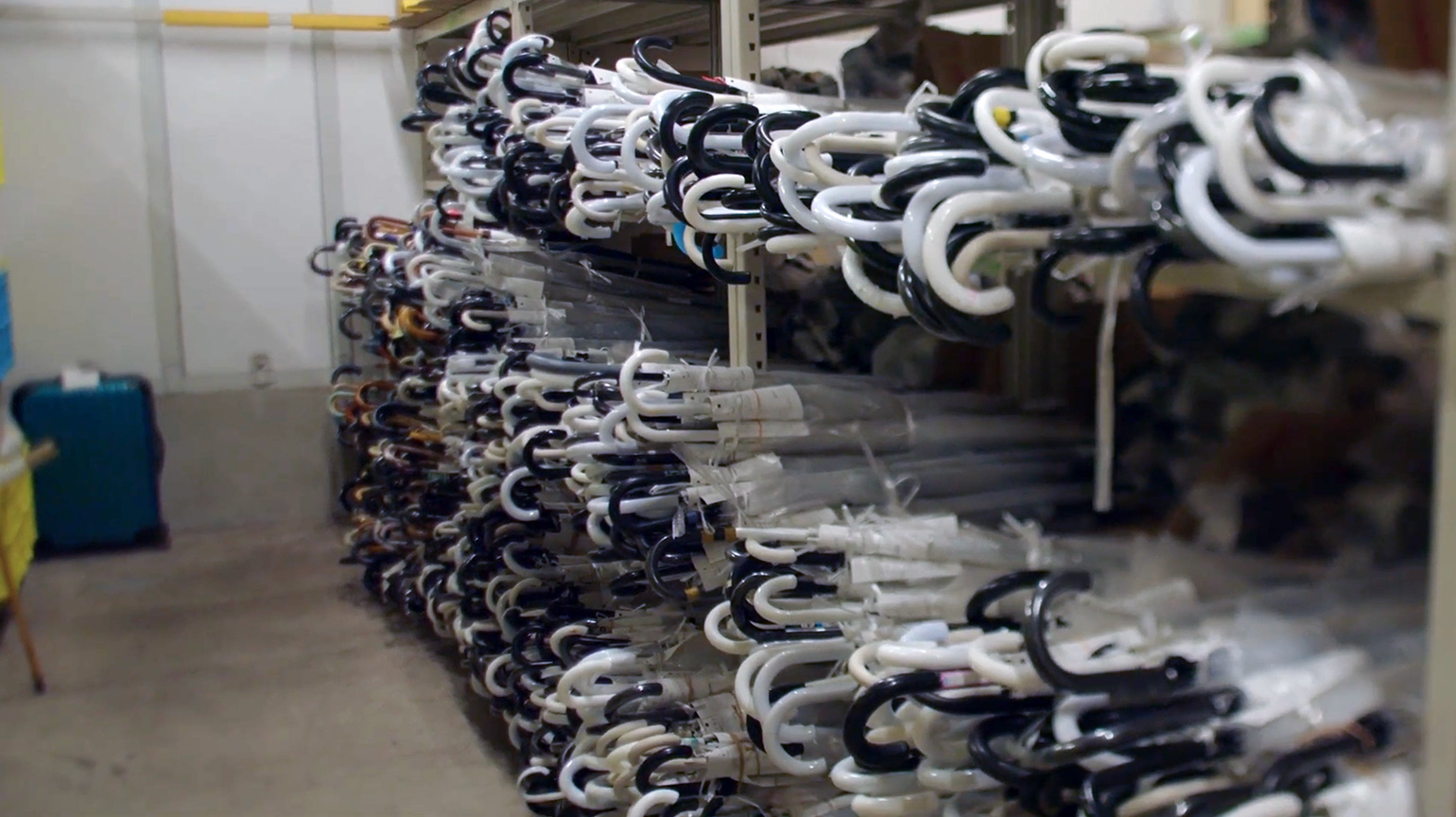
Meitetsu’s Lost and Found Office. On busy days, there are about 300 forgotten umbrellas.
Umbrellas are held for one month, while other lost items are kept for three months. The number of lost items increases significantly during the rainy season and during summer’s sudden downpours. Even if passengers bring an umbrella when boarding, if it’s sunny when they get off, they often leave it behind.
But we didn’t want to stop at just making it “fun.” We created a campaign that appeals to passengers’ awareness.
──What points did you focus on most when planning this initiative?
Hasegawa: We didn’t want it to be just “fun”; we genuinely wanted to reduce the number of lost items.
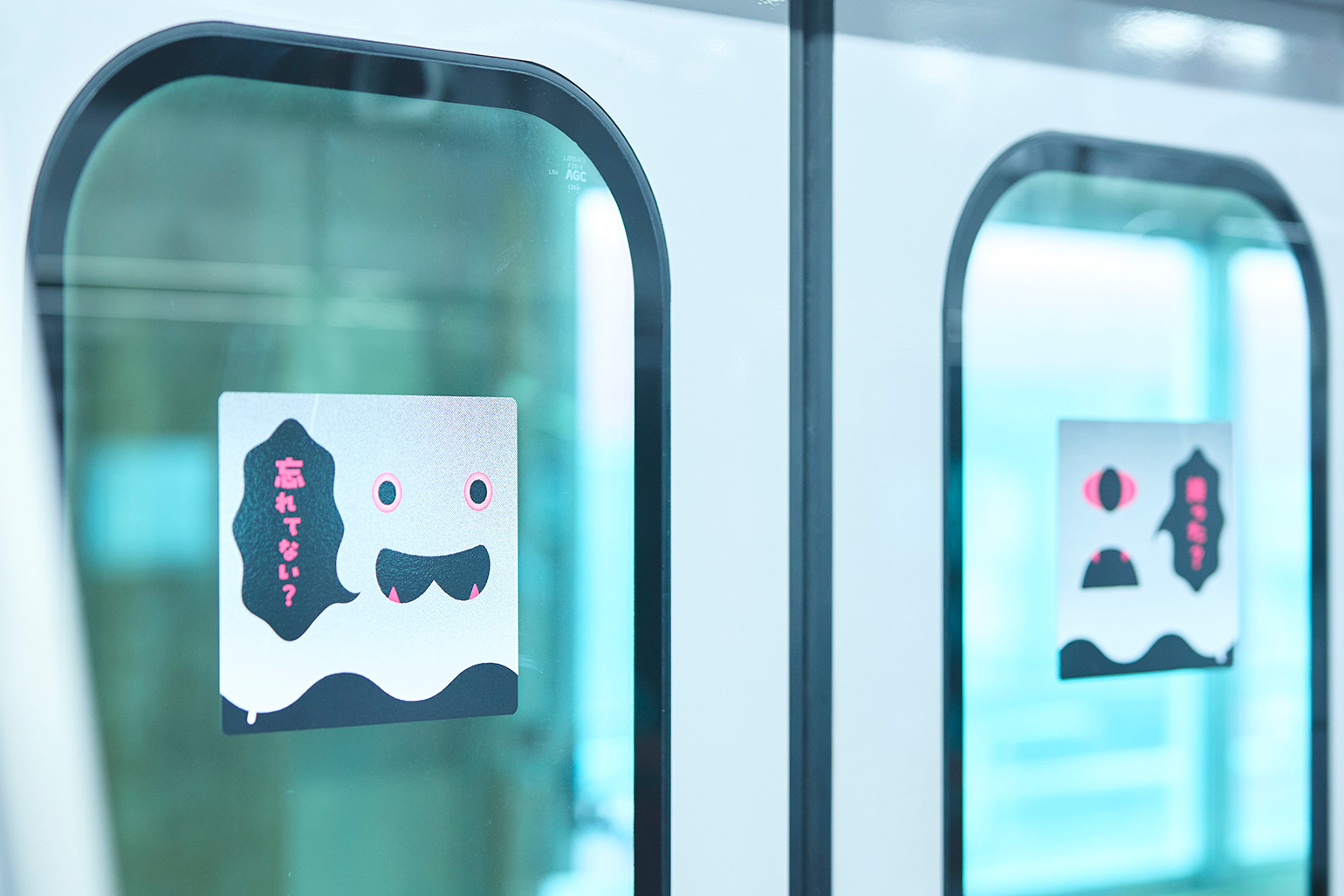
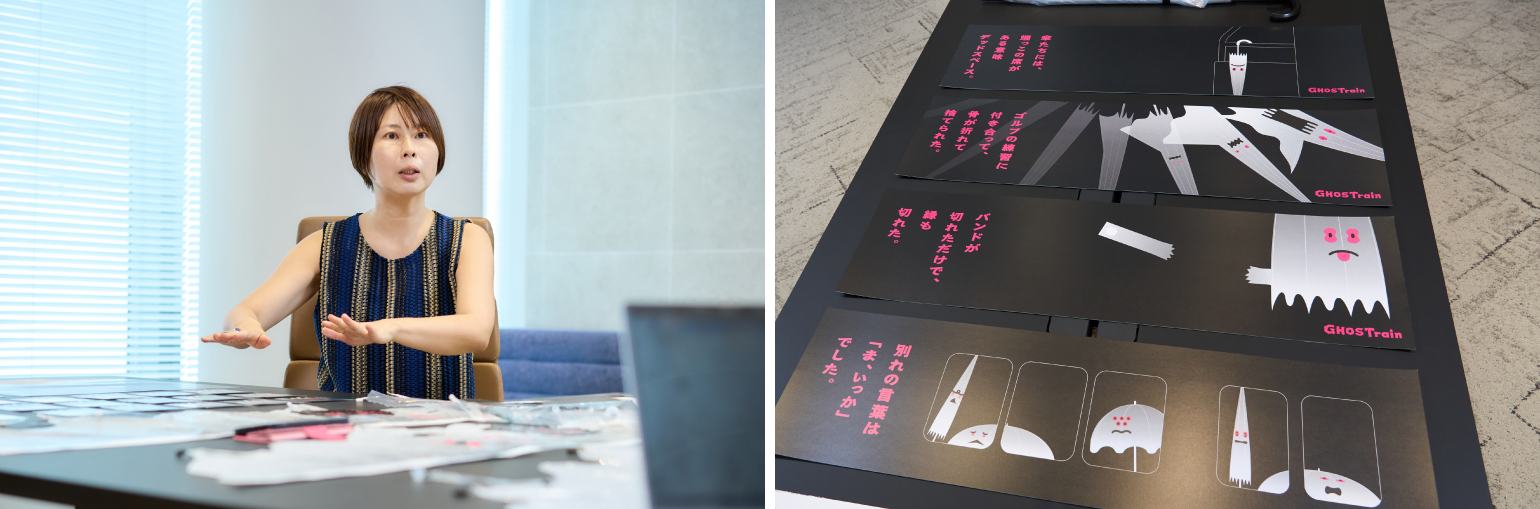
We didn’t just focus on the messages and creative expressions; we also made use of spaces near the train doors and on station walls. Our aim was to implement a multifaceted approach, hoping that this would ultimately help prevent lost items.
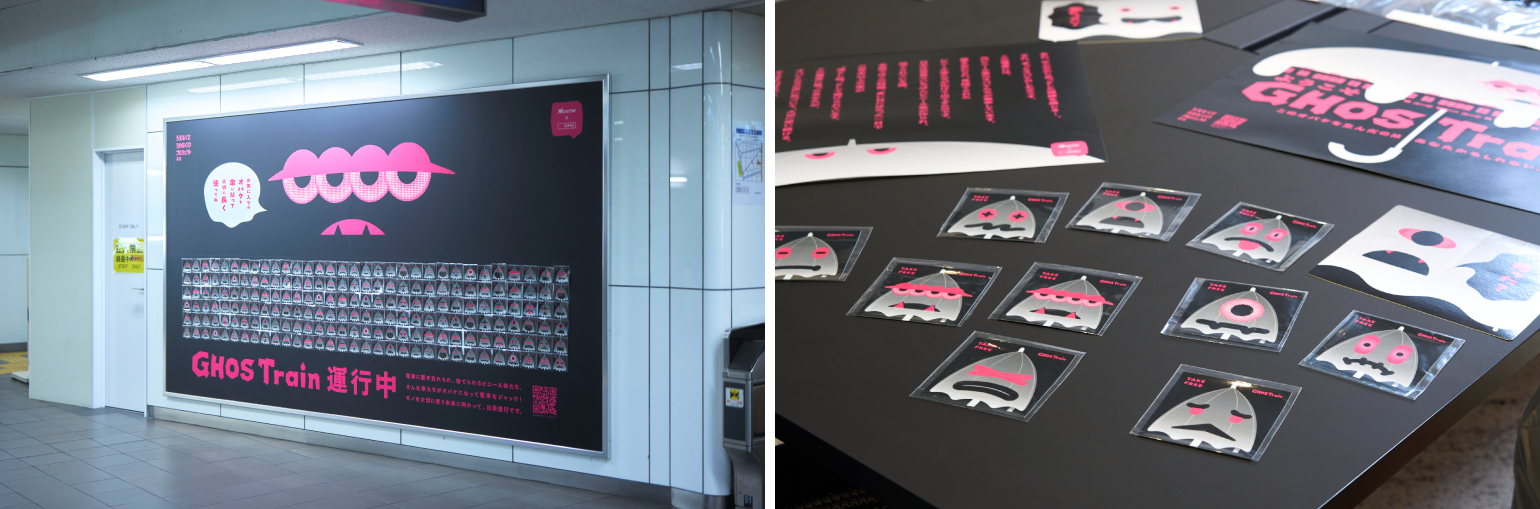
Near the doors, we chose spots that passengers would definitely notice when getting off and incorporated a final reminder.For the peel-off ads on the walls at Meitetsu Nagoya Station, we provided stickers. By sticking them on their own plastic umbrellas, passengers developed a sense of attachment to them, and the stickers also served as a visual marker.
Tatsumi: While social issues can make for powerful messages, we were careful not to come across as pushy, given that these ads were placed inside trains where many people spend a certain amount of time commuting to work or school. Although we used ghosts as a motif, we prioritized making them look like “slightly charming ghosts” to avoid causing discomfort or fear.
Also, since I wanted to create a project with a proper story, I was adamant about using real abandoned umbrellas. I believed that using actual items would lend the project greater credibility.
──This is a rather unique initiative. Were there any challenges you faced in bringing it to fruition?
Hasegawa: Since this is public transportation, safety is the top priority. We can’t use hard materials or heavy objects, and we have to consider the possibility of them hitting passengers. Items that release liquids or odors are also off-limits. We took our time reviewing the basics—such as weight and materials—while also considering safety and operational aspects.
Takahashi: For Meitetsu as well, safety is the most important consideration. We really appreciated that they examined these details so thoroughly right from the planning stage.
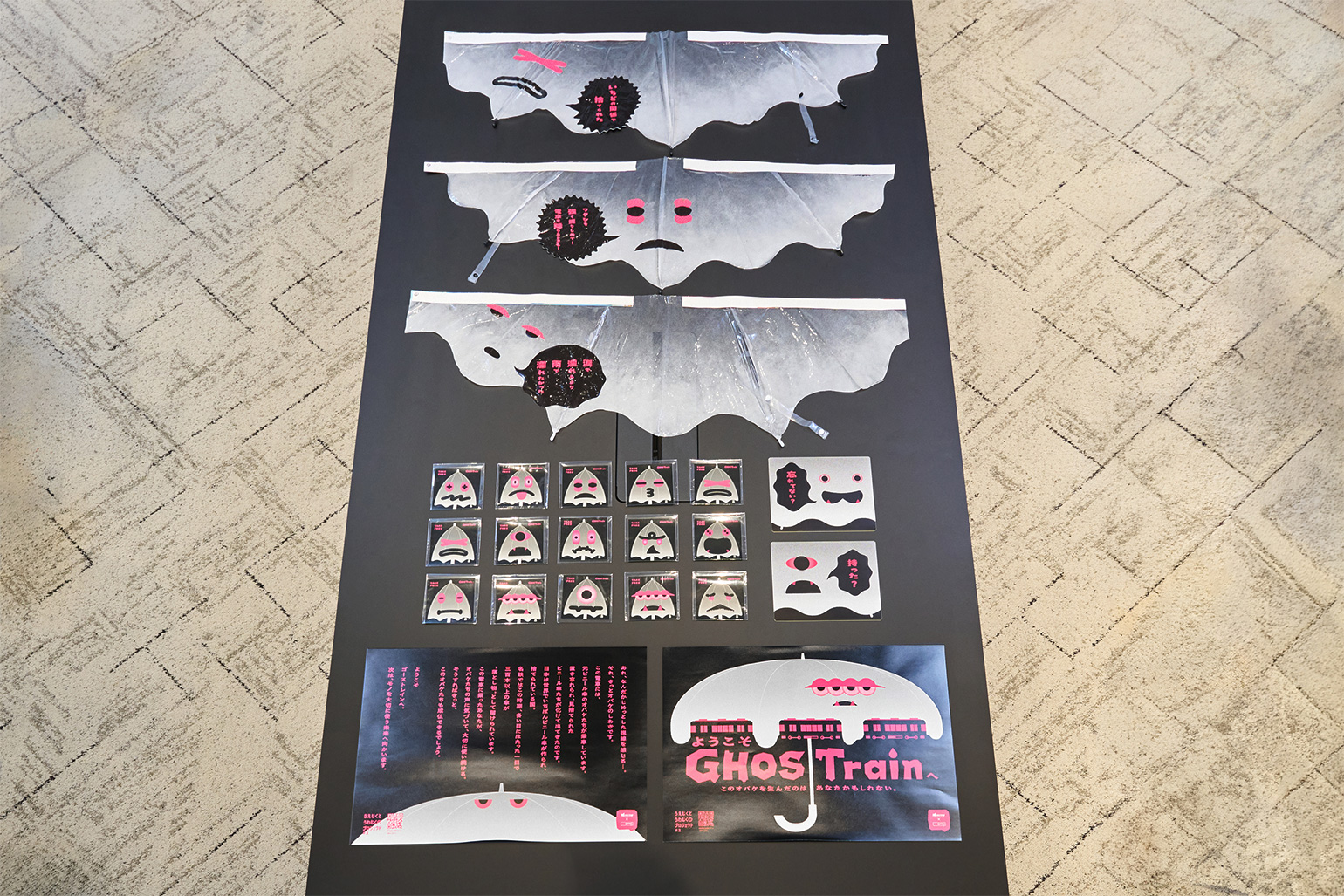
We ran a variety of advertisements, including a hanging ad (above) made from plastic umbrellas recovered from the Lost and Found Exchange.
──Did you go through quite a few prototypes?
Tatsumi: Yes, we did. We examined every detail quite closely—how much spray to apply to prevent light from reflecting off the plastic, whether to include water droplets, and how to adjust the color tones. If the ghost was too scary, it wouldn’t be suitable for public transportation, but if it was too gentle, the impression would be too weak. We tested the color schemes repeatedly to get closer to the final design.
──How was the response after the event?
Hasegawa: Since the first installment generated such a huge response, to be honest, I felt some pressure. But the second installment also received just as much exposure. It was featured extensively in local media, and I was truly happy when I saw it being covered on the news.
Takahashi: We heard a lot of people say, “That’s interesting.” Regarding the peel-off ads, I even heard stories like, “I went to get one during my lunch break, but they were already gone.”
What exceeded our expectations the most was the number of media interviews. I was interviewed myself, and afterward, I had so many people come up to me and say, “I saw it!”—the reach was far greater than we’d imagined.
──Did the success of the first phase lead to the development of the second phase?
Takahashi: A culture of “let’s take on new challenges” was already taking root at Meitetsu, and combined with the success of the first phase, we were able to expand the project’s scale for the second phase by utilizing spaces beyond just the hanging advertisements.
It’s precisely because they’re train ads that we can tackle social issues
──I understand this all started with a request to “enhance the value of hanging advertisements.” Could you tell us about the background behind your decision to combine that with social issues?
Hasegawa: Social issues have become an inseparable theme for companies today. When we received the consultation from Meitetsu, I wanted to think about what we could do specifically because of the unique nature of the train as a space.
Railways are spaces with a very high degree of public accessibility, and they attract a wide range of users. There are commuters and students, as well as homemakers and students who use the trains during the day. In a sense, they reach every demographic. When I considered what we could do within that context, I felt there was a significant overlap with social issues. Furthermore, since we were collaborating with Meitetsu, I wanted to do something that would contribute, even in a small way, to addressing the social issues in this region.
Takahashi: Since I’ve been working in transit advertising for a long time, I’ve always felt that the train environment has strengths that other media lack.
Public transportation is a space used by a truly vast number of people. For that reason, when it comes to content and expression, we’re mindful of creating something that as many people as possible will find acceptable. I felt this proposal effectively leveraged the unique characteristics of that space, and it aligned with the direction we had envisioned.
Furthermore, addressing local social issues also helps enhance our company’s brand image. It benefits society as a whole and, as a result, leads to an increase in corporate value. In that sense, too, I felt this was a very promising initiative.
Tatsumi: At the core of the name “Uemuku to Wamuku” was the desire to “improve the social issues in this area, even if only slightly.”
While the first phase focused mainly on hanging advertisements, in the second phase we were able to create multiple touchpoints, such as door stickers and peel-off ads. As a result, I believe we were able to reach a wider audience.
From Advertising Spaces to New Points of Connection with Society
—Through this project, what potential do you see in train advertising?
Hasegawa: Actually, there’s an underlying theme to this project: “Do hanging advertisements really have to be made of paper?”
Since we were actually able to hang dried flowers and vinyl umbrellas, to take it to the extreme, we might even be able to hang a company’s products. When you think about it that way, there’s potential to utilize hanging advertisements and the train interior itself as a whole as a whole new form of media.
Takahashi: Trains are used by a wide and diverse range of people, and projects like this one have high visibility. There’s also a broad range of possibilities from the perspective of creating a space. Just adding a single idea can drastically change the overall impression and experience inside the train. I think that’s the unique appeal of transit advertising.
Tatsumi: Personally, I think the time when we feel the changing seasons most keenly is during our commutes to work or school. During these daily journeys, people experience a wide range of emotions.
When those moments align well with products, services, or social themes, there’s potential for new value to emerge. The experience of being in a single space for a set period of time is surprisingly valuable. That’s precisely why I think it’s worth creating something a little different or interesting.
Hasegawa: Another goal is to have people recognize transit advertising itself as an interesting medium once again. I’d be delighted if this initiative prompted corporate representatives to think, “Transit advertising is interesting” or “I didn’t realize it could be used this way.”
Solving Social Issues Through Creativity—and Beyond
──Finally, could you tell us about the future of the “Uemuku to Uwamuku Project”?
Hasegawa: Next, I’d like to work with Mr. Takahashi and the rest of the Meitetsu team right from the brainstorming stage. We might come up with new ideas that we haven’t even thought of yet.
Takahashi: This time, we focused on one train set and Meitetsu Nagoya Station, but I think there’s potential to expand to two or three train sets in the future, or even roll out the project at other stations. The larger the scale, the greater the impact. I believe this will not only enhance the value of train and station advertising but also draw attention to transit advertising as a whole.
Tatsumi: I also think it would be interesting to explore themes that help people become more widely aware of the culture and traditions of this region. Beyond just social issues, I’d like to incorporate the perspective of “what only Meitetsu can do.” In the future, I’d be delighted if we could create experiences that lead people to think, “Meitetsu is doing some really interesting things,” or “Riding the Meitetsu is an experience in itself.” Precisely because we’re in an era of advancing digitalization, I feel there are actually opportunities to be found.
Hasegawa: As we continue our work, we inevitably tend to fall back on familiar expressions and standard approaches. However, what this project made me realize once again is that people respond to new things and things they’ve never seen before. It was a project that reminded me that we must constantly deliver fresh expressions and initiatives to the world.
Joined Nagoya Railroad Co., Ltd. in 2018. After gaining experience in budget management and usage analysis, he is currently involved in transit advertising, promotional tickets, and event operations.
Tatsuro Hasegawa
Dentsu Meitetsu Communications Inc.
Business Creation Bureau, Solutions & Creative Department
Creative Director / Art Director
After working at the design firm Taki Kobo, he joined Dentsu Meitetsu Communications Inc. as an art director. He currently oversees a wide range of creative direction projects, from branding to sales promotions and destination campaigns. Going beyond creative work, he finds joy in flexibly devising the ideas necessary for client solutions and bringing them to life by any means necessary.
Graduated from the Faculty of Policy Management at Keio University (after one year of retaking entrance exams and one year of academic leave). For the first three and a half years after joining the company, she worked in the Promotion Department, overseeing Pretty Cure shows. In her fourth year, she transferred to the Creative Department. After a secondment to Dentsu Inc.’s Chubu Branch and stints with various dating apps, she became pregnant with the child of a copywriter from Osaka whom she met at a CCN judging panel. Recipient of the Shigesato Itoi Hobonichi Techo Copywriting Grand Prix Gold Award, the TCC Newcomer Award, and others.